


Year Round School Pros and Cons: A Quick Guide for Private Schools
For private school leaders, the debate around the traditional school calendar is no longer just an academic exercise. It's a strategic conversation with profound implications for everything from student achievement to financial sustainability. The concept of year-round schooling, once a niche idea, is gaining traction as institutions seek a competitive edge and explore new operational models.
According to a 2020 report from the Congressional Research Service, over 3,700 public schools in the U.S., serving over 2 million students, operate on a year-round calendar. While specific data for private schools is less centralized, the trend reflects a growing interest in alternative calendars. For private schools, this model presents a unique set of opportunities and challenges. Moving away from the long summer break can mitigate 'summer slide,' where students, particularly in lower grades, can lose up to two months of reading and math skills. However, it also demands a complete overhaul of operational logistics, staff contracts, family expectations, and marketing strategies. When considering alternative school calendars, understanding various instructional models such as knowing what a hybrid class entails is also crucial for strategic planning and adaptability.
This guide provides a balanced, data-driven analysis of the year round school pros and cons, specifically tailored for private school founders, boards, and administrators. We will dissect the most critical factors, from academic continuity and operational efficiency to enrollment impact and accreditation alignment. Our goal is to equip you with the insights needed to determine if this innovative model is the right strategic move for your institution's future.
Is your school leadership team contemplating a shift to a year-round calendar? Let’s explore the key considerations together. Book a call with JAG Consulting at https://link.jagconsultingservices.com/widget/bookings/prospective/school/consultation/zoom or visit our website for more information.
1. Improved Student Achievement & Academic Continuity
One of the most compelling arguments in the "year round school pros and cons" debate is the potential to significantly reduce "summer learning loss." This phenomenon, where students forget academic material over the traditional 10- to 12-week summer break, can force teachers to spend the first several weeks of a new school year reteaching old concepts. A year-round calendar, which replaces the long summer vacation with shorter, more frequent breaks, creates a cycle of continuous learning that helps maintain academic momentum.
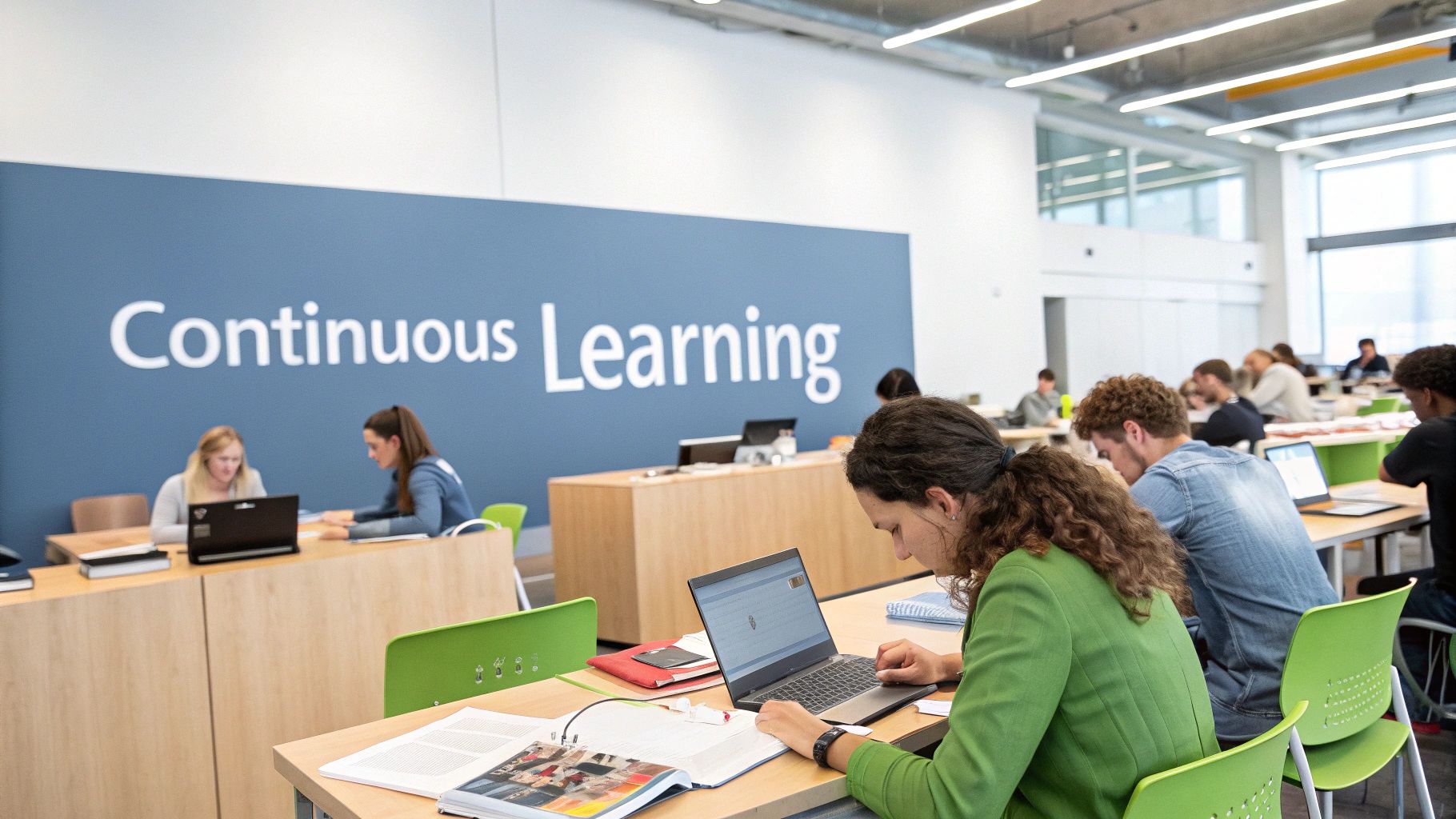
For private schools, demonstrating superior academic outcomes is a powerful marketing tool. By mitigating learning loss, schools can show tangible, data-backed evidence of consistent student progress, a key differentiator for discerning families. This structure allows for more timely remediation and enrichment opportunities during intersession periods, preventing students from falling significantly behind. Research suggests that year-round calendars may benefit students from low-income families the most, narrowing achievement gaps—a compelling mission-driven outcome for many private schools.
How It Works in Practice
Implementing a year-round model involves restructuring the academic calendar to redistribute the typical 180 instructional days. Instead of a long summer break, private schools might adopt a 45-15 plan (45 days of instruction followed by 15 days off) or a 60-20 plan. This approach allows for more consistent reinforcement of complex subjects.
For example, some International Baccalaureate (IB) private schools find this model beneficial for pacing their rigorous curriculum. Similarly, some private schools that have adopted this model report that students retain information more effectively, leading to higher scores on standardized tests and internal assessments.
Actionable Strategies for Implementation
To successfully transition and leverage this academic advantage, private school leaders should consider the following steps:
- Establish Baselines: Before making any changes, collect comprehensive student achievement data. This baseline will be crucial for measuring the new calendar's impact and demonstrating its value to stakeholders.
- Rethink Curriculum Pacing: A year-round schedule requires a new approach to curriculum delivery. To maximize the benefits of year-round schooling for academic continuity, exploring effective course instructional design strategies is crucial for keeping lessons engaging and well-paced.
- Market the Advantage: Clearly articulate the academic benefits in all admissions and marketing materials. Frame the year-round calendar as a strategic investment in student success and a proactive measure against learning regression.
- Monitor Engagement: Track student and teacher engagement metrics closely. The goal is continuous learning, not continuous burnout. Ensure breaks are strategically placed and sufficient for genuine rest and rejuvenation.
By focusing on academic continuity, private schools can turn their calendar into a cornerstone of their educational philosophy and a clear competitive advantage.
Are you exploring a year-round calendar for your school? An expert consultation can help you navigate the complexities and develop a strategic implementation plan. Book a complimentary consultation with JAG Consulting Services today or visit our website to learn more.
2. Operational & Facility Cost Efficiency
Beyond academic metrics, a significant factor in the "year round school pros and cons" discussion is the potential for substantial financial savings. Traditional school calendars often lead to inefficient facility use, with buildings sitting dormant or underutilized for months. A year-round schedule can enhance a school's financial performance by distributing utility, maintenance, and some staffing costs more evenly throughout the year, maximizing the return on investment for a school’s largest physical asset.
For private schools, where operational budgets are meticulously managed, this efficiency is a powerful lever for long-term sustainability. By avoiding the costly cycles of shutting down and reopening facilities, schools can reduce wear and tear and manage maintenance proactively. This fiscal discipline can free up capital for investment in other strategic areas, such as academic programs, technology upgrades, or faculty development. A multi-track year-round system can also increase a school’s enrollment capacity by as much as 33% without new construction, directly boosting tuition revenue.
How It Works in Practice
The financial benefits stem from continuous, predictable operations. Instead of a massive summer deep clean and repair blitz, maintenance becomes an ongoing, manageable process scheduled during shorter intersession breaks. Utilities like HVAC are used more consistently, avoiding the extreme energy spikes associated with cooling a hot, empty building from scratch at the end of summer.
For example, a study of schools that transitioned to year-round calendars reported an average facility cost reduction of 10-15%. Similarly, some Catholic school networks have standardized year-round schedules across multiple campuses to create operational efficiencies and share resources more effectively, providing a replicable model for other private institutions.
Actionable Strategies for Implementation
To capitalize on these potential savings, private school leaders should take a data-driven approach to their facility management:
- Conduct a Comprehensive Facility Audit: Before transitioning, perform a thorough audit of energy consumption, maintenance schedules, and staffing costs. This creates a baseline to measure the financial impact of the new calendar.
- Develop a Predictive Maintenance Schedule: Align your maintenance plan with the new calendar's shorter, more frequent breaks. This proactive approach prevents costly emergency repairs and extends the lifespan of critical systems.
- Implement Energy Management Systems: Use smart technology to track and optimize utility usage in real-time. These systems can identify waste and help manage heating, cooling, and lighting costs more effectively year-round.
- Leverage Savings in Financial Projections: Clearly present the anticipated cost savings in financial reports and budget projections for the board, investors, and other key stakeholders to build support for the transition.
By strategically managing facilities, a year-round calendar can transform a school's operational model from a seasonal expense burden into a model of year-round efficiency.
Are you exploring a year-round calendar for your school? An expert consultation can help you navigate the complexities and develop a strategic implementation plan. Book a complimentary consultation with JAG Consulting Services today or visit our website to learn more.
3. Teacher Recruitment, Retention & Professional Development
Navigating staffing challenges is a critical component of the "year round school pros and cons" discussion for any private school leader. A modified calendar can be a double-edged sword: it requires significant teacher buy-in but also creates unique opportunities for professional growth and rejuvenation. When implemented thoughtfully, a year-round model can enhance teacher satisfaction, mitigate burnout, and ultimately improve retention, which are all vital for a private school's long-term health and stability.

The traditional summer break often forces professional development (PD) into condensed, intensive sessions. A year-round schedule, with its shorter, more frequent breaks (intersessions), allows schools to embed high-quality, reflective PD throughout the year. This approach can lead to more meaningful skill development and prevent the information overload common in pre-semester training rushes, directly combating teacher turnover, which costs private schools between $9,000 and $21,000 per departing teacher.
How It Works in Practice
The key is using intersession periods not just for rest, but for structured, yet flexible, professional growth. Instead of losing momentum over a long summer, teachers can attend workshops, collaborate on curriculum, or pursue certifications during these breaks. This model provides a more sustainable pace for both teaching and learning, with some studies showing teachers in year-round schools report lower levels of stress due to more frequent breaks.
For instance, some international private schools in Dubai have successfully transitioned to year-round calendars by integrating robust PD components, leading to higher staff morale. Similarly, while not a year-round system, Finland's model of frequent breaks and embedded professional development has resulted in world-leading teacher satisfaction and student outcomes, offering a powerful case study for the benefits of a balanced calendar.
Actionable Strategies for Implementation
To transform the calendar into a tool for teacher retention and development, private school administrators should take deliberate steps:
- Involve Faculty in Design: Build ownership from the outset by including teachers in the calendar design process. Survey their preferences and address concerns about break length and timing to foster a sense of shared purpose.
- Offer Competitive Compensation: Provide attractive stipends or compensation for any voluntary intersession PD or curriculum work. This recognizes their time and transforms a potential obligation into a valued opportunity.
- Invest in Leadership: Train department heads and principals to support their teams through the transition. Strong, empathetic leadership is crucial for managing change and maintaining morale.
- Monitor Satisfaction & Turnover: Before and after the transition, closely track key metrics like teacher satisfaction surveys, absenteeism rates, and turnover data. Use this information to make data-driven adjustments to the calendar and support systems.
By strategically aligning the school calendar with professional development, leaders can create an environment that attracts and retains top-tier educators.
Are you exploring a year-round calendar for your school? An expert consultation can help you navigate the complexities and develop a strategic implementation plan. Book a complimentary consultation with JAG Consulting Services today or visit our website to learn more.
4. Family Lifestyle Impact & Enrollment Challenges
A significant downside in the "year round school pros and cons" discussion is the potential disruption to established family lifestyles. Many families, particularly those with working parents, have built their annual schedules around the traditional summer break. This period is often used for childcare arrangements, extended family vacations, and specialized summer camps or activities that are crucial for child development and family bonding. A year-round calendar can create considerable logistical hurdles and may be perceived as a major inconvenience.
For private schools, this challenge directly impacts enrollment and retention. In a competitive market where parents have numerous choices, a non-traditional calendar can become a significant barrier. If competing private schools offer a conventional schedule, families may opt for the path of least resistance, leading to potential enrollment declines and revenue instability. A recent survey indicated that over 40% of parents prefer a traditional school calendar, making understanding family preferences a critical component of any calendar-related decision.
How It Works in Practice
The conflict arises when a school's calendar is out of sync with the broader community. For instance, families with children in multiple schools on different schedules face a logistical nightmare. Some pioneering year-round private schools in California experienced enrollment dips as families prioritized summer flexibility. Conversely, certain international schools successfully maintain year-round models by catering to a transient, global community less tied to traditional American summer activities.
Suburban private schools, in particular, often face the strongest pushback from established family populations who value the conventional summer break. This resistance can derail even the most well-intentioned implementation plans if not managed proactively.
Actionable Strategies for Implementation
To mitigate enrollment risks and address family concerns, private school leaders should adopt a strategic and communicative approach:
- Conduct Market Research: Before any decision is made, survey current and prospective families to gauge their preferences and potential concerns regarding a calendar change. Use this data to forecast potential enrollment impact.
- Develop a Clear Communication Strategy: Proactively communicate the why behind the change. Frame the new calendar as a strategic enhancement to the educational experience, not just a logistical shift.
- Offer Flexible Solutions: Consider offering optional, high-quality intersession programming or summer-style camps during breaks to support working parents. This can turn a potential negative into a new revenue stream and a key benefit.
- Phase in the Transition: To ease the adjustment, you might grandfather existing families under the old calendar for a year or two. A staggered, well-communicated transition can significantly reduce family pushback and attrition.
By anticipating and addressing family lifestyle impacts, schools can navigate this challenge without jeopardizing enrollment.
Are you concerned about how a calendar change might impact your school's enrollment? Our experts can help you analyze your market and develop a strategy that aligns with your families' needs. Book a complimentary consultation with JAG Consulting Services today or visit our website to learn more.
5. Implementation Costs & Infrastructure Requirements
A significant con in the "year round school pros and cons" discussion involves the substantial upfront investment required for a successful transition. Moving to a year-round calendar is not merely a scheduling change; it is a major operational overhaul that demands significant capital for facility upgrades, technology infrastructure, new administrative systems, and comprehensive change management. These implementation costs can be a formidable barrier for private schools, especially if the return on investment is not immediate.
For private institutions, which rely on tuition and donor funding, underestimating these expenses can lead to failed implementations and financial strain. Schools must budget for everything from improved HVAC systems to handle summer heat to robust scheduling software capable of managing complex, multi-track calendars. These are not minor tweaks but foundational investments that ensure the model can operate effectively and sustainably.
How It Works in Practice
The financial planning for a year-round conversion must be meticulous. For instance, many older private school buildings were not designed for full occupancy during peak summer months, necessitating costly air conditioning and ventilation upgrades to ensure a safe and comfortable learning environment. Operating a school year-round can increase annual operational costs by up to 10% due to factors like utilities and maintenance.
As a real-world benchmark, some private school networks have budgeted over $150,000 per campus for these exact infrastructure and technology upgrades. International schools planning for a year-round model often allocate 15-20% of their annual operating budget in the year of transition to cover these one-time costs, a figure that underscores the financial gravity of the decision for any private school.
Actionable Strategies for Implementation
To navigate the financial challenges and ensure a smooth transition, private school leaders should take these strategic steps:
- Conduct a Comprehensive Cost-Benefit Analysis: Before committing, perform a detailed audit of all potential costs versus projected benefits, including increased enrollment and improved student retention. This analysis is your financial roadmap.
- Develop a Phased Rollout Plan: To manage cash flow, consider a phased implementation. You might start with one division of the school or pilot the program before a full-scale launch, allowing costs to be spread over multiple budget cycles.
- Secure Stakeholder Buy-In with Clear Projections: Present a transparent and detailed budget to your board, investors, and parent community. Frame the investment with clear ROI projections, emphasizing long-term gains in academic performance and operational efficiency.
- Partner with Experienced Consultants: Avoid expensive missteps by working with consultants who specialize in school calendar transitions. Their expertise can help you create an accurate budget and a realistic implementation timeline.
By proactively addressing these financial and infrastructural hurdles, your school can position its year-round initiative for long-term success.
Planning a major operational change like a calendar transition? A strategic financial plan is non-negotiable. Book a complimentary consultation with JAG Consulting Services today or visit our website to learn more.
6. Regulatory Compliance & Accreditation Alignment
Navigating the legal and accreditation landscape is a critical, non-negotiable step in the "year round school pros and cons" analysis. A modified calendar is not merely an operational shift; it must satisfy state education regulations concerning minimum instructional hours, calendar days, and teacher certification standards. Failure to comply can lead to significant penalties, while misalignment with accreditation standards can threaten a private school's reputation and credibility.
For private schools, accreditation is a seal of quality that assures families of educational excellence. Bodies like the Western Association of Schools and Colleges (WASC), the National Association of Independent Schools (NAIS), or the Middle States Association Commissions on Elementary and Secondary Schools (MSA-CESS) have explicit requirements for how the school calendar must support curriculum delivery and student learning outcomes. Proactively managing compliance and accreditation alignment turns a potential obstacle into a demonstration of meticulous planning and institutional integrity.
How It Works in Practice
Before a single schedule is changed, school leadership must conduct thorough due diligence. This involves a detailed review of state laws, which can vary significantly. For example, California private schools are required to offer a minimum of 175 instructional days or an equivalent number of instructional minutes. A new year-round calendar must be carefully designed to meet or exceed these legal minimums.
Similarly, an international private school seeking accreditation from the Council of International Schools (CIS) must document how its calendar supports its mission and provides for student and staff well-being. The school must prove that the new schedule is not just different, but better for achieving its stated educational goals. This requires a direct and documented link between the calendar structure and the curriculum framework.
Actionable Strategies for Implementation
To ensure a smooth and compliant transition, private school leaders should integrate these steps into their planning:
- Consult Legal Counsel: Engage an attorney with expertise in private education law to review state statutes and local regulations. This initial investment can prevent costly legal challenges later.
- Engage Accreditors Early: Contact your accreditation agency during the initial planning phase. They can provide invaluable guidance and pre-approval, ensuring your proposed calendar aligns with their standards before it is finalized.
- Map Curriculum to the New Calendar: Develop detailed curriculum maps that demonstrate how every instructional hour is utilized within the new schedule. This documentation is essential for both regulatory and accreditation reviews.
- Maintain Meticulous Records: Keep comprehensive documentation of all compliance efforts, communications with regulatory bodies, and curriculum alignment work. This creates a clear audit trail and protects the school.
By treating regulatory and accreditation requirements as a foundational part of the strategy, schools can implement a year-round calendar that is both innovative and institutionally sound.
Are you concerned about navigating the regulatory complexities of a calendar change? A strategic consultation can provide clarity and a compliant roadmap. Book a complimentary consultation with JAG Consulting Services today or visit our website to learn more.
7. Student Social-Emotional Wellbeing & Mental Health Considerations
A critical, yet often overlooked, aspect of the "year round school pros and cons" discussion is the impact on student mental health. Traditional long summer breaks provide an essential period for students to decompress, pursue non-academic interests, and achieve psychological distance from school-related pressures. Shorter, more frequent breaks in a year-round model might not offer the same restorative benefits, potentially leading to increased stress and burnout if not managed carefully.
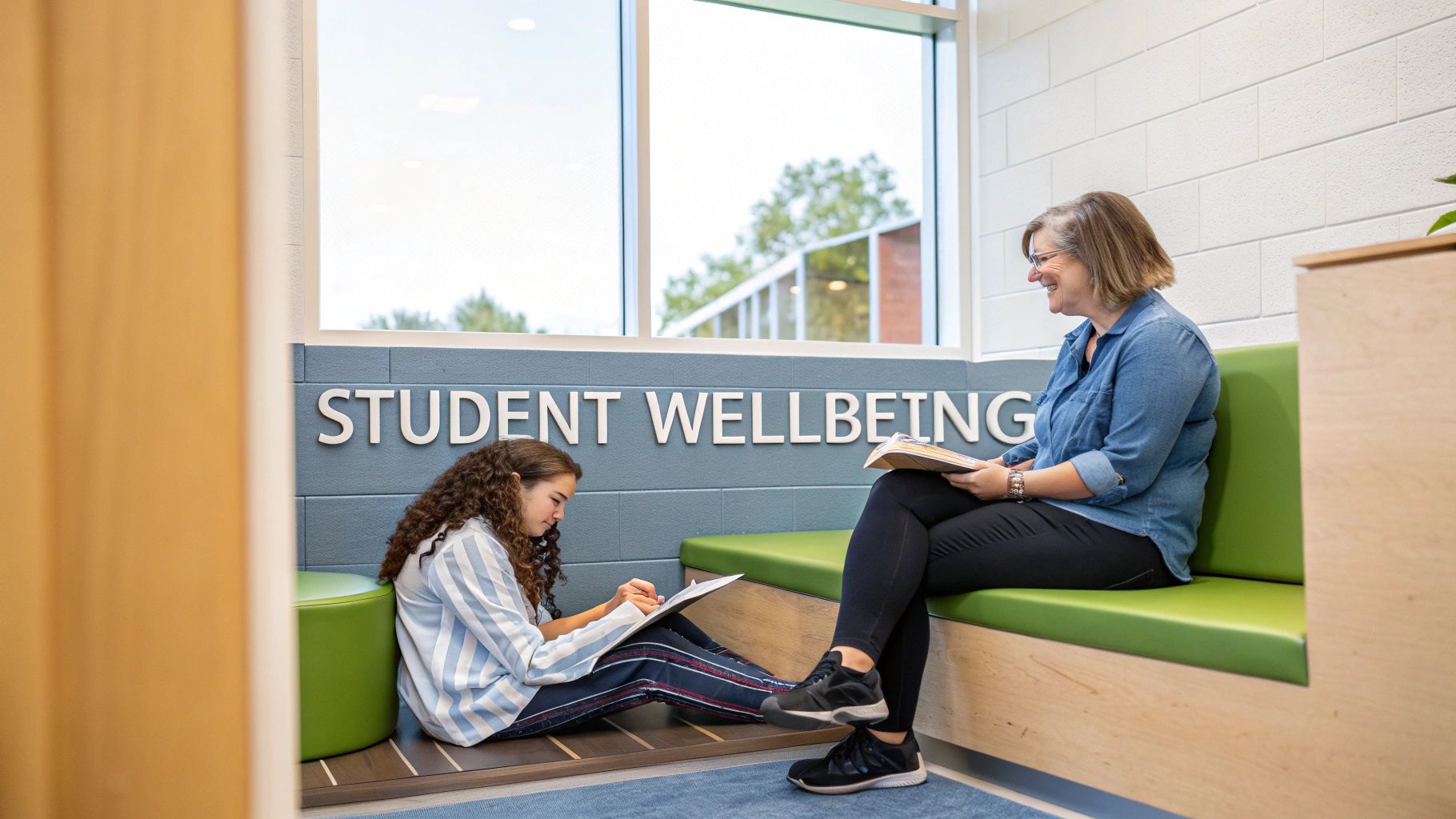
For private schools that pride themselves on holistic student development, calendar design becomes a direct reflection of their commitment to wellbeing. While shorter breaks can offer timely intervention for struggling students, they can also disrupt the natural rhythm of rest and recovery that is vital for social-emotional growth. Statistics show rising rates of anxiety and depression among adolescents, making the mental health impact of any major school policy a primary concern for private school leaders.
How It Works in Practice
The core issue lies in the quality and duration of downtime. Research highlights the importance of extended breaks for adolescent mental health, allowing for deeper family connections and community engagement. A year-round calendar must be intentionally designed to provide genuine disconnection.
For example, some high-pressure independent schools that piloted year-round calendars found student anxiety increased because intersession breaks were filled with "optional" but highly encouraged academic camps, defeating the purpose of a rest period. In contrast, certain Scandinavian schools successfully use frequent breaks by coupling them with robust, integrated mental health support systems and a culture that strictly enforces disconnection from schoolwork during time off.
Actionable Strategies for Implementation
To prioritize student wellbeing within a year-round model, private school leaders should take deliberate steps:
- Integrate Wellbeing Assessments: Before finalizing a new calendar, work with school counselors to assess the potential impact on student stress levels. Use student surveys and focus groups to gather direct feedback.
- Establish "Break Quality" Standards: Define and communicate clear expectations that intersession breaks are for rest, not just academic catch-up. Prohibit mandatory assignments and limit school-related communications during these periods.
- Monitor Mental Health Metrics: Track data on student stress, anxiety, and engagement before and after the transition. This allows for data-driven adjustments to the calendar and support services.
- Align Breaks with Development: Consider the developmental needs of different age groups. Younger students may adapt well to shorter, more frequent breaks, while adolescents might benefit from at least one longer break to accommodate summer jobs, travel, or immersive camps.
By proactively addressing mental health, a private school can position its calendar as a thoughtful, student-centric feature rather than a potential source of stress.
Are you exploring a year-round calendar for your school? An expert consultation can help you navigate the complexities and develop a strategic implementation plan. Book a complimentary consultation with JAG Consulting Services today or visit our website to learn more.
8. Market Differentiation & Competitive Positioning
In a crowded educational marketplace, a year-round calendar can be a powerful tool for differentiation. For private schools looking to stand out, adopting a non-traditional schedule is a strategic move that signals innovation and a commitment to optimizing student learning. This approach directly addresses a key point in the "year round school pros and cons" discussion by turning a logistical change into a unique selling proposition that attracts families seeking alternatives to the conventional model.
For a private institution, market positioning is paramount. A year-round calendar can be framed as a core feature of an advanced educational philosophy focused on academic continuity, deeper learning, and specialized programming. This differentiation is particularly effective in competitive urban or suburban markets where families have numerous schooling options and are actively looking for programs that offer a distinct advantage for their children. Private schools that successfully implement this model can often command premium tuition, with some reporting enrollment inquiry increases of 15-20% after marketing their unique calendar.
How It Works in Practice
The strategy involves more than just changing dates; it requires weaving the calendar's benefits into the school’s core identity. Instead of being just a logistical detail, the year-round schedule becomes a cornerstone of the school’s brand promise. This allows the school to attract a specific type of family that values continuous engagement and sees the long summer break as a potential academic liability.
For example, some progressive private schools have successfully used modified year-round calendars as an enrollment differentiator, marketing their extended learning time and unique intersession programs as a key to student success and holistic development. Similarly, some private schools focused on personalized learning have positioned their flexible calendars as integral to their pedagogical advantage, showing how schedule innovation supports educational innovation.
Actionable Strategies for Implementation
To effectively use a year-round calendar as a competitive advantage, private school leaders should take deliberate steps:
- Align Messaging with Mission: Develop clear, research-backed messaging that connects the year-round calendar directly to your school's mission. If your mission is academic excellence, frame the calendar as a tool to mitigate learning loss. If it's about holistic development, highlight intersession enrichment programs.
- Survey Your Market: Before launching, use prospective family surveys and focus groups to test which benefits of a year-round schedule resonate most powerfully. This data will help you tailor your marketing messages for maximum impact.
- Create Social Proof: Develop compelling case studies and video testimonials from current families and faculty. Authentic stories demonstrating positive outcomes are far more persuasive than abstract claims.
- Track Enrollment Metrics: Monitor key performance indicators such as inquiry volume, application rates, and enrollment conversion from target demographics. Use this data to validate and refine your differentiation strategy over time.
By strategically positioning a year-round calendar, a private school can transform an operational decision into a compelling market identity that drives enrollment and solidifies its brand.
Are you exploring a year-round calendar for your school? An expert consultation can help you navigate the complexities and develop a strategic implementation plan. Book a complimentary consultation with JAG Consulting Services today or visit our website to learn more.
Year-Round School: 8-Point Pros & Cons Comparison
| Item | 🔄 Implementation Complexity | ⚡ Resource Requirements | ⭐ Expected Outcomes | 📊 Ideal Use Cases | 💡 Key Advantages |
|---|---|---|---|---|---|
| Improved Student Achievement & Academic Continuity | Moderate — curriculum redesign, assessment cadence changes | Medium — teacher PD, assessment tools, scheduling systems | High — reduced summer learning loss (~20–30%); steadier progression | Private schools prioritizing measurable academic gains (IB/competitive enrollments) | Strengthens learning retention; natural intervention windows; enrollment marketing differentiator |
| Operational & Facility Cost Efficiency | Moderate — facility scheduling, maintenance protocol changes | Medium — facility audit, energy systems, some capital upgrades | Moderate — ~10–15% facility cost reduction; smoother utilities and maintenance | Private schools with high facility/utility costs or seeking to maximize campus capacity | Evened cash flow; preventive maintenance; up to 33% capacity increase (multi-track) |
| Teacher Recruitment, Retention & Professional Development | High — staff buy‑in, contract/HR adjustments, PD scheduling | Medium — PD budget, compensation for break PD, leadership training | Moderate — potential improved retention and job satisfaction if managed well | Private schools investing in teacher quality and long‑term retention strategies | Integrated PD cycles; distributed workload reduces burnout risk when breaks restorative |
| Family Lifestyle Impact & Enrollment Challenges | Moderate — stakeholder engagement, possible staggered calendars | Low–Medium — market research, family support programs, flexible offerings | Mixed — risk for traditional families; attracts niche/innovation families | Private schools in markets where family preferences vary or niche/early‑adopter families exist | Can differentiate for certain families but requires strong communication and flexible options |
| Implementation Costs & Infrastructure Requirements | High — project management, phased rollout, systems integration | High — capital ($50k–$250k+ typical), consultants, tech and facility upgrades | Long‑term — infrastructure benefits offset by multi‑year payback (3–5+ years) | Well‑resourced private schools planning modernization or scaling operations | Modernized systems; long‑term operational savings; increased facility/valuation appeal |
| Regulatory Compliance & Accreditation Alignment | High — navigate state rules, accreditation reviews, documentation | Medium — legal counsel, accreditation liaison, curriculum mapping | Critical — compliance preserves accreditation; noncompliance risks operations | Any accredited or regulated private school; must consult regulators early | Can exceed instructional requirements and strengthen accreditation when documented |
| Student Social‑Emotional Wellbeing & Mental Health Considerations | Moderate — wellbeing program integration, counselor coordination | Medium — counseling staff, wellbeing programming, monitoring tools | Mixed — can improve recovery if breaks restorative; risk of increased stress otherwise | Private schools with strong mental health supports and intentional calendar design | Frequent recovery opportunities and routine support if breaks allow genuine disconnection |
| Market Differentiation & Competitive Positioning | Moderate — strategic marketing, sustained messaging and case studies | Medium — marketing investment, enrollment analytics, testimonials | High — can drive enrollment, premium pricing (15-20% inquiry increase possible) | Competitive private markets, schools seeking acquisition/investor appeal | Distinct brand identity; attracts innovation‑focused families; supports premium positioning |
From Analysis to Action: Your Next Steps
The journey from a traditional academic calendar to a year-round model is one of the most significant strategic transformations a private school can undertake. As we have explored, the landscape of year round school pros and cons is complex and deeply contextual. It is not a simple operational switch but a fundamental shift that reverberates through every aspect of the institution, from pedagogy and student well-being to financial stability and market identity.
A balanced calendar promises compelling advantages. The potential to mitigate summer learning loss, a phenomenon where students can lose up to two months of grade-level equivalency in math skills, is a powerful academic driver. For private schools grappling with capacity, multi-track systems can increase enrollment by up to 33% without new construction. Furthermore, the opportunity for more frequent, targeted intersession programming can transform remediation and enrichment, creating a more dynamic and responsive learning environment. These benefits position a private school as an innovative leader, a powerful differentiator in a competitive education market.
However, the path is laden with considerable challenges that demand cautious, strategic navigation. The financial implications are significant, with initial implementation costs and potential increases in year-round operational expenses requiring meticulous budgeting. Stakeholder management is paramount; resistance from families accustomed to traditional summer breaks and teachers concerned about burnout can derail even the most well-conceived plan. Successfully addressing these concerns requires more than just communication; it demands genuine engagement, transparent data, and a clear articulation of the mission-driven "why" behind the change.
Distilling the Decision: Key Takeaways for Private School Leaders
For your leadership team, the decision hinges on moving beyond the general debate and into a rigorous, data-informed analysis specific to your school’s unique circumstances. The central question is not "Is year-round school better?" but rather, "Is year-round school the right strategic move for our students, our faculty, and our mission at this moment?"
To guide your deliberations, focus on these critical action points:
- Conduct a Mission-Alignment Audit: Revisit your school's core mission and vision. How does a modified calendar advance your foundational goals? A shift of this magnitude must be an authentic expression of your educational philosophy, not just a response to logistical pressures.
- Initiate Comprehensive Financial Modeling: Move beyond back-of-the-napkin calculations. Develop detailed financial models that account for transition costs, changes in utility and staffing expenses, and potential impacts on enrollment and tuition revenue. Scenario planning is essential here to understand the best- and worst-case financial outcomes.
- Engage in Proactive Stakeholder Analysis: Survey your parents, students, and faculty before a decision is made. Use a combination of quantitative surveys and qualitative focus groups to gauge attitudes, identify key concerns, and pinpoint potential points of friction. Understanding your community's "deal-breakers" early is crucial.
- Evaluate Market Positioning and Competitive Impact: Analyze your local educational landscape. Would a year-round calendar make you a unique and attractive option, or would it alienate you from the community's established rhythm? This decision directly impacts your brand and your ability to attract and retain families.
Ultimately, navigating the intricate web of year round school pros and cons requires a blend of bold vision and pragmatic execution. It demands leaders who can champion the potential benefits while respecting and mitigating the legitimate concerns of their community. This is not a decision to be made lightly or in isolation; it is a strategic inflection point that will define your school's future for years to come.
Making a high-stakes decision like transitioning to a year-round calendar requires expert guidance and objective analysis. JAG Consulting specializes in helping private school leaders navigate complex strategic challenges, providing the data-driven financial modeling, stakeholder engagement strategies, and implementation roadmaps necessary for success. To ensure your school is making the most informed choice, book a complimentary consultation with our team of experts today or visit our website.

I'm Dr. Jeannie Gudith, Founder and CEO of JAG Consulting. We help you develop, improve, buy or sell your private school.
I'm so glad you're here
Hello!


© 2025 JAG CONSULTING.
all rights reserved. privacy policy + REFUND POLICY. TEMPLATE by sugar studios + Showit
