

Unpacking the Issues in American Education System
The problems plaguing America’s education system are as deep as they are complex. We’re not talking about minor tweaks; we’re facing systemic issues from gaping funding inequities and a nationwide teacher shortage to the endless debate over standardized testing. These aren't just public school problems. They create achievement gaps that ripple across the entire sector, challenging educators and parents in private institutions, too.
Navigating the Challenges in American Education
The American education system is at a crossroads. It's grappling with challenges that have been simmering for decades, brought to a boiling point by recent global events.
Think of the system as a complex machine where several key gears are grinding against each other. When one part—like funding—is out of whack, it throws everything else off, from the quality of teachers in the classroom to the resources students can access. This isn't a contained issue. This interconnectedness means no school, public or private, is completely shielded from these widespread challenges.
Getting a handle on these foundational problems is the first step toward building something better. The core issues often cascade into one another, creating a cycle that’s incredibly tough to break.
For instance, this diagram shows how several major problems stem from the core challenge of an aging and under-supported infrastructure.
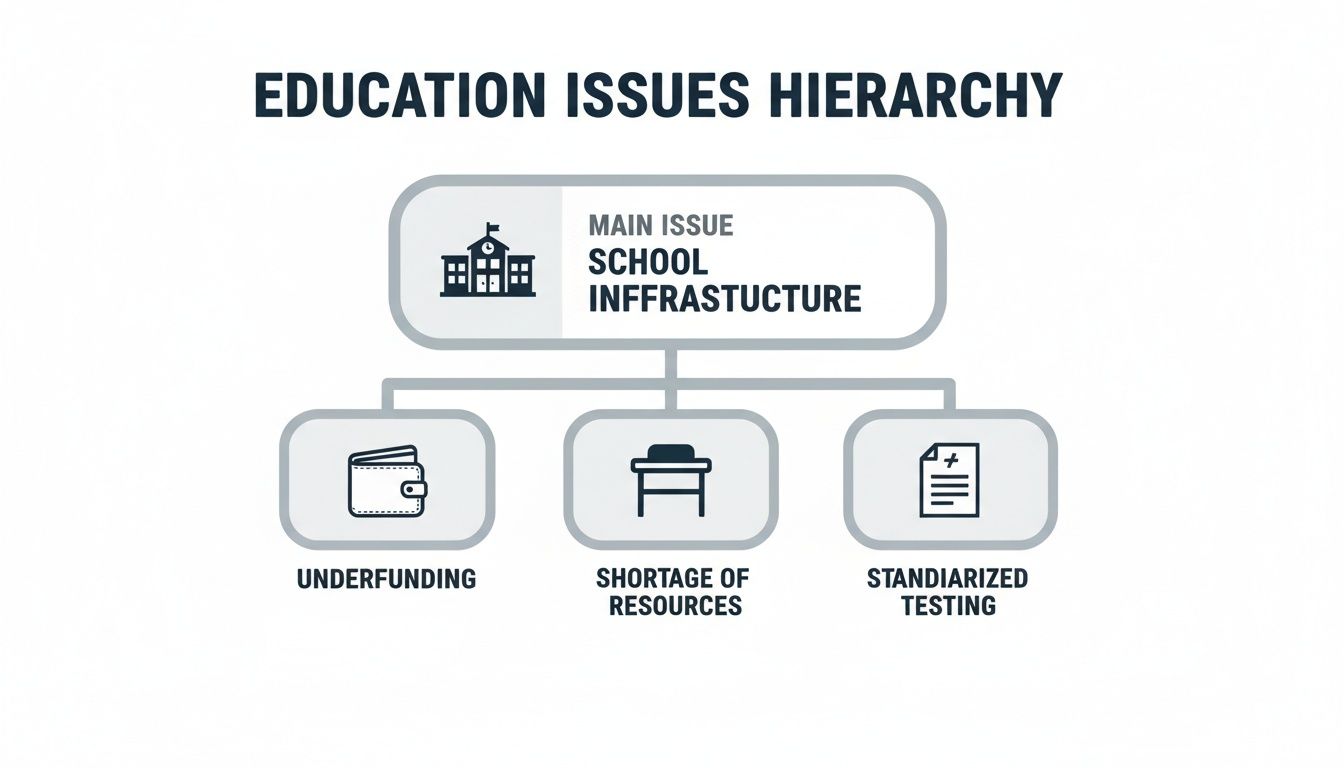
You can see how underfunding directly feeds into teacher shortages and an over-reliance on standardized testing as a cheap, but flawed, measure of success.
To give you a clearer picture, let's look at the major issues one by one. This table breaks down the key challenges we'll be discussing.
At a Glance Key Challenges in US Education
| Issue | Primary Impact on Students | Strategic Relevance for Private Schools |
|---|---|---|
| Funding Inequities | Unequal access to resources, larger class sizes, and outdated materials in low-income areas. | Opportunity to market superior resources and smaller class sizes as a key differentiator. |
| Teacher Shortages | Less experienced teachers, higher turnover, and instability in the learning environment. | A chance to attract top talent with better compensation, culture, and professional support. |
| Standardized Testing | Narrowed curriculum ("teaching to the test"), increased student anxiety, and flawed metrics. | Can position the school as a place for authentic, holistic learning beyond test scores. |
| Curriculum Gaps | Lack of critical life skills, financial literacy, and diverse historical perspectives. | Freedom to design a modern, relevant curriculum that meets the real-world needs of students. |
| Governance & Politics | Inconsistent policies and political battles that disrupt classroom focus and stability. | Ability to maintain a consistent educational philosophy independent of political winds. |
| Special Education | Underfunded programs and overworked staff leading to inadequate support for diverse learners. | Opportunity to build a reputation for excellence in specialized, well-resourced support. |
| Mental Health Crisis | Rising rates of anxiety and depression with insufficient school-based support systems. | Can build a brand around a strong, proactive social-emotional learning program. |
| Aging Infrastructure | Unsafe or inadequate facilities that directly impact student health and learning. | Modern, well-maintained facilities become a powerful marketing and enrollment tool. |
| College Affordability | Soaring tuition costs create immense pressure and limit post-secondary options for families. | A strong college counseling program that secures scholarships becomes a high-value asset. |
This table is just the starting point. Each of these issues represents not just a problem for the country, but a strategic opportunity for private schools that are paying attention.
The Current State of Student Achievement
The fallout from the COVID-19 pandemic continues to cast a long shadow. Five years after classrooms were turned upside down in March 2020, the system is still reeling from significant learning losses that have made existing achievement gaps even wider.
The 2024 National Assessment of Educational Progress (NAEP) results painted a grim picture: only 28% of 8th graders scored proficient or above in math. That’s one of the lowest levels in decades. You can discover more insights about the state of the American student and these deeply concerning trends.
For private school founders and investors, these statistics are not just numbers; they represent a clear market need. Parents are actively searching for educational environments that can bridge these gaps and offer a more stable, resource-rich alternative to a struggling public system.
Why This Matters for Private Schools
While public schools are on the front lines of many of these systemic failures, private institutions are far from immune. You’re competing for talent in the same national teacher shortage, addressing the same student mental health crisis, and trying to stand out in a market where parents are more discerning—and anxious—than ever before.
The key issues in the American education system are not just problems—they are strategic guideposts. By understanding the weaknesses in the broader system, you can build an institution that offers clear, compelling solutions.
Ready to turn these challenges into opportunities? Book a call with JAG Consulting or visit our website to learn how we can help you build a resilient and successful educational institution.
The Widening Chasm of Funding and Resource Inequity
Let’s be honest about one of the most stubborn and damaging truths in American education: where a child lives often dictates the quality of their schooling. Imagine two schools, just a few miles apart. One boasts state-of-the-art science labs, small classes, and a library overflowing with new books. The other is patching leaky roofs, using textbooks from a decade ago, and cramming kids into overcrowded classrooms.
This isn't some rare, unfortunate scenario. It's the direct result of a funding model that leans heavily on local property taxes. This system hardwires school quality to local wealth. Affluent areas with high property values can easily fund top-tier schools. Meanwhile, less wealthy districts are forced to tax their residents at much higher rates just to generate a fraction of that funding, trapping them in a cycle of disadvantage that’s nearly impossible to break. The result is a fractured landscape of educational 'haves' and 'have-nots' where a child's zip code is a better predictor of their future than their potential.
The Real-World Impact of Funding Gaps
These aren't minor differences we're talking about. The numbers are staggering. Predominantly white school districts receive a stunning $23 billion more in funding than non-white districts, even when they serve the exact same number of students. That disparity shows up directly in the classroom.
- Teacher Quality: Well-funded schools can offer competitive salaries and benefits, attracting and keeping the best, most experienced educators. Underfunded schools often become a revolving door for new, less-experienced teachers who leave as soon as a better opportunity comes along.
- Curriculum & Programs: Affluent districts can afford to offer rich arts programs, a wide array of advanced placement courses, and modern technology. Struggling districts are often forced to cut these "non-essential" programs first, narrowing the curriculum and limiting what students believe is possible for themselves.
- Facilities & Resources: The funding gap is visible in the physical learning environment itself—from the safety and upkeep of the building to the availability of computers, lab equipment, and even basic supplies.
"Lower funding means fewer teachers, fewer programs, and diminished resources. For more than 90% of K-12 schools, funding comes from state and local governments, largely generated by sales and income taxes."
This resource gap has profound, long-term consequences. Students in under-resourced schools are simply less likely to be prepared for college and the modern workforce, which perpetuates economic inequality from one generation to the next. It’s a fundamental flaw that undermines the very idea of education as the great equalizer.
The Opportunity for Private Schools
For private school founders and investors, this systemic failure in the public system creates a very clear market opportunity. Parents who see the resource gaps in their local public schools are actively looking for an alternative. They're searching for an environment where their child won't be just another face in a crowded classroom and will have access to the tools they need to truly thrive.
This is your chance to position your institution as the high-value solution. By understanding the specific weaknesses of the public schools around you, you can sharpen your messaging to highlight your strengths. Does the local public high school have a 35-to-1 student-teacher ratio? Your commitment to small class sizes and personalized attention becomes your biggest selling point. Did they just slash their music and arts budget? Now is the time to showcase your state-of-the-art theater and vibrant fine arts curriculum.
The goal isn't just to be different—it's to be the clear and obvious answer to the problems parents are desperate to solve. By proving a superior return on their educational investment through better resources, expert faculty, and a richer learning environment, your school can become a beacon for families who are tired of settling.
Are you ready to position your school as the premier educational choice in your community? Book a call with JAG Consulting or visit our website to learn how to turn the public system's challenges into your institution's greatest strengths.
The National Teacher Shortage: A Looming Crisis
Money isn't the only problem. One of the most urgent issues staring down the American education system is the alarming shortage of qualified teachers. What started as a nagging concern has spiraled into a full-blown national crisis, and its shockwaves are hitting both public and private schools hard. This isn't just about having an adult in every classroom; it's about the quality, experience, and stability of the very people we trust to shape the next generation.
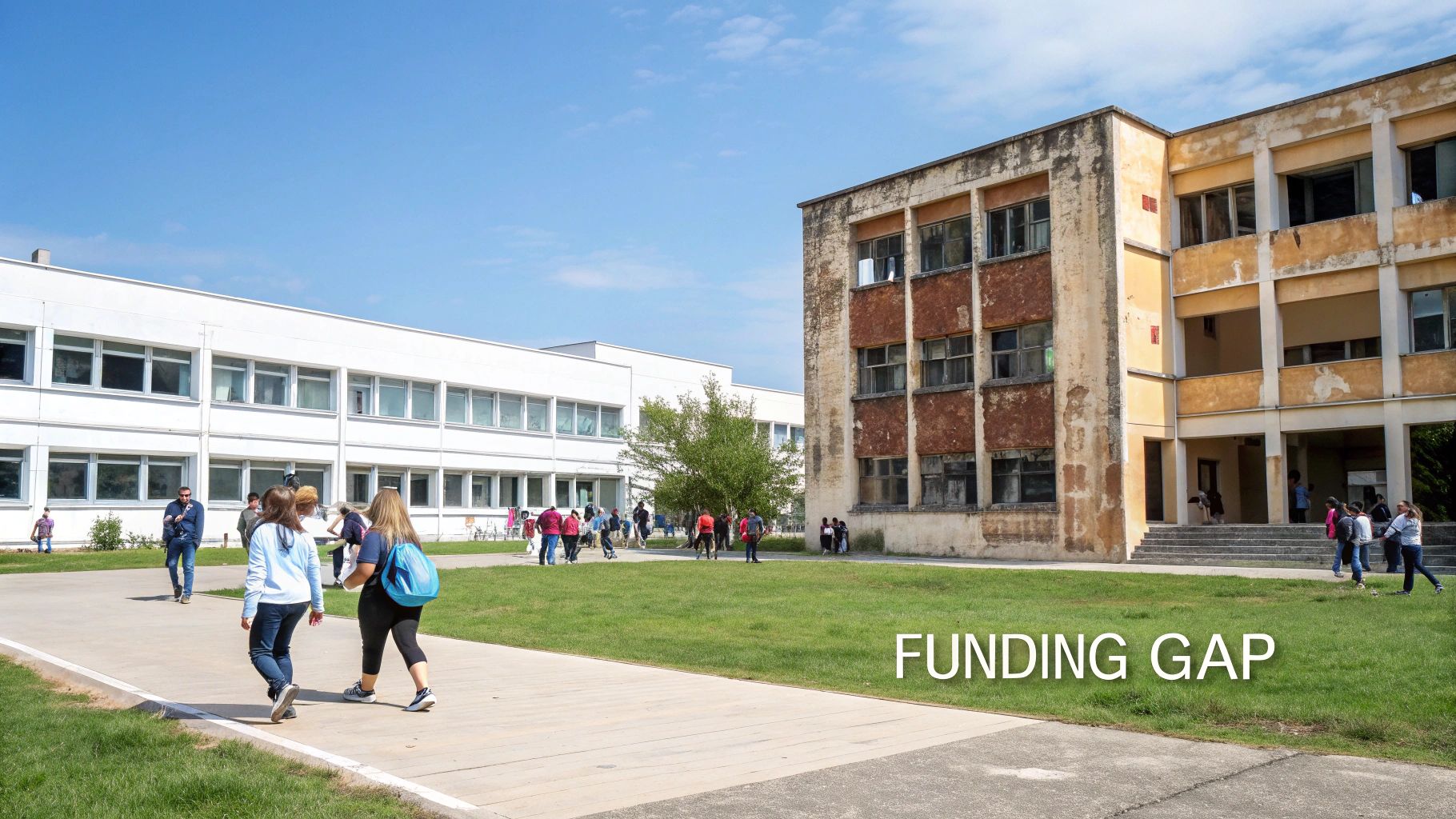
This exodus from the teaching profession didn't happen overnight. It’s the result of a perfect storm that has been brewing for years: stagnant pay, crushing workloads, and a profound lack of professional respect. Talented, passionate educators are being driven out, leaving a vacuum that's becoming nearly impossible to fill.
What's Really Driving Teachers Away?
The teacher shortage is a complex beast with deep roots. While the pandemic absolutely poured gasoline on the fire, the core issues were smoldering long before 2020. For any school leader hoping to build a stable, high-performing faculty, understanding these drivers is the critical first step.
A few key factors are at the heart of the crisis:
- Stagnant Compensation: Let’s be blunt: teacher pay has been abysmal. It hasn't kept up with inflation, let alone the salaries of other professions that require the same level of education. In fact, since the 2009-2010 school year, the average public school teacher's salary has dropped by nearly 5% when adjusted for inflation.
- Intense Workload and Pressure: Teachers are drowning. They're buried under massive workloads, large class sizes, endless administrative tasks, and the heavy emotional labor of supporting students with increasingly complex needs. All this is happening under the high-stakes pressure of standardized test scores.
- Lack of Professional Autonomy and Respect: Many educators feel like they're being treated like cogs in a machine, not respected professionals. They're micromanaged, handed scripted curricula, and given little say in classroom policies. This slow erosion of professional dignity is a major reason why so many skilled teachers are walking away.
These pressures combine to create a perfect environment for burnout, pushing dedicated professionals out of the classroom and scaring new talent away from the field entirely.
The Scale of the Crisis and Its Impact
The numbers are staggering. The teacher shortage has left over 400,000 classrooms across America either vacant or staffed by someone who isn't fully certified. This isn't just a statistic; it directly guts the quality of education, especially in under-resourced districts that are already behind the eight ball. The gaps are most severe in critical areas like special education and STEM, where qualified experts are needed most. You can discover more about the educational crisis and just how far the effects reach.
This isn't just a public school problem. Private schools are fishing from the exact same shrinking talent pool. While they may offer smaller class sizes, they often cannot compete with the salaries and state-backed pension plans of public districts, creating a fierce competition for top-tier educators.
A Strategic Advantage for Private Schools
For private school leaders, this national crisis is both a challenge and a massive strategic opportunity. You're competing in the same tough market, but your school has something public systems don't: flexibility. This is your competitive edge, and you need to lean into it.
Instead of trying to win a salary war you probably can't afford, focus on building a professional culture that the best teachers are desperately seeking. You can attract and retain top talent by offering the things they truly crave:
- Meaningful Autonomy: Give your teachers the freedom to innovate. Empower them to design their own lesson plans and have a real say in the curriculum. When you trust them as professionals, they take ownership and pride in their work.
- Supportive Leadership: Be an instructional partner, not just an evaluator. Create a culture where administrators are in the trenches with their faculty, providing mentorship, meaningful feedback, and collaborative professional development.
- A Positive School Culture: Build a community founded on mutual respect, collaboration, and a shared mission. This is often a more powerful retention tool than a few extra thousand dollars in a paycheck.
By leveraging these advantages, your school can transform from just another employer into a destination—a place where talented educators can build a fulfilling career, not just punch a clock.
Are you ready to build a faculty that sets your school apart? Book a call with JAG Consulting or visit our website to develop a recruitment and retention strategy that actually works in today's market.
Rethinking Curriculum and Standardized Testing
A fierce debate is raging over what students should learn and, just as importantly, how we measure that learning. For decades, the dominant answer has been standardized testing—a seemingly straightforward way to gauge performance and hold schools accountable.
The reality, however, is that this approach has become one of the most contentious issues in the American education system, creating a rigid, one-size-fits-all model that often does more harm than good.
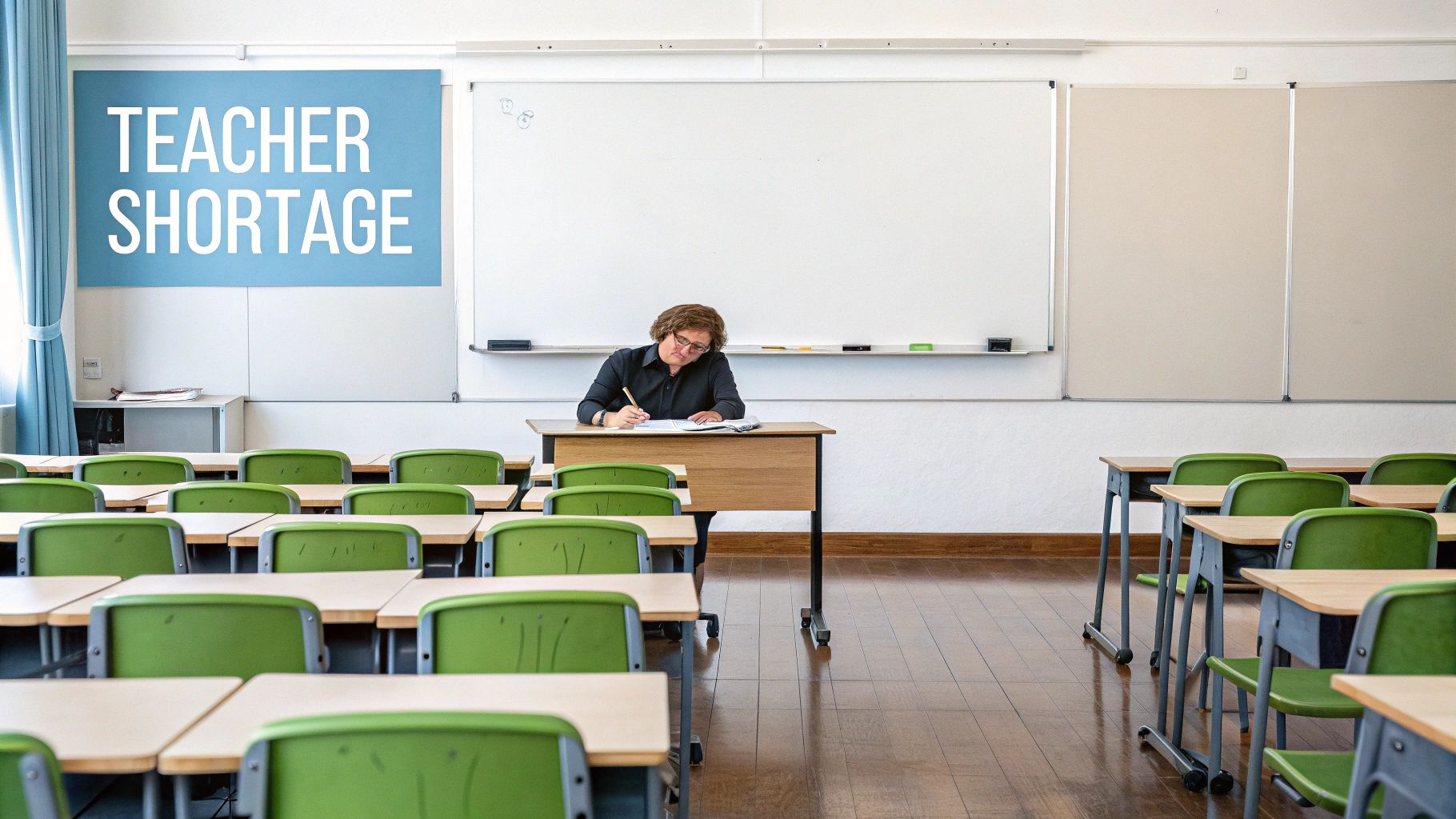
When school funding and teacher evaluations are tied to student scores, a culture of "teaching to the test" inevitably takes over. This pressure narrows the curriculum, pushing subjects like arts, history, and even hands-on science to the side in favor of endless drills for math and reading exams.
The result? An education that prioritizes rote memorization over the very skills students need to thrive: critical thinking, creativity, and genuine intellectual curiosity.
The Downside of Standardized Metrics
While designed to ensure accountability, the obsession with standardized tests has had a cascade of negative consequences. This laser focus on a single metric simply fails to capture the full spectrum of a student's abilities, passions, and potential.
The pressure to perform can be immense, turning classrooms into high-stress environments rather than inspiring places of discovery. Critics have argued for years that these tests are neither fair nor accurate measures of a teacher's effectiveness or a student's true understanding.
"Many critics argue that standardized testing is one of the biggest problems in American education, suggesting that the pressure to produce high test scores leads to a teach-to-the-test approach and reduced focus on non-tested subjects like art."
This singular focus often means other crucial skills—the ones highly valued in the modern workforce—get left behind. Skills like:
- Problem-Solving and Critical Thinking: The ability to analyze complex situations and develop creative solutions.
- Collaboration and Teamwork: Working effectively with others to achieve a common goal.
- Creativity and Innovation: Thinking outside the box and bringing new ideas to life.
- Emotional Intelligence: Understanding and managing one's own emotions while empathizing with others.
When these skills are neglected in favor of test prep, we're leaving students unprepared for the real challenges of college and careers.
The Private School Advantage: Autonomy and Innovation
This is exactly where private schools hold a powerful strategic advantage: autonomy. Unbound by the rigid mandates that govern public districts, private institutions have the freedom to innovate. They can reject the narrow focus of standardized tests and instead build a curriculum that is rich, engaging, and genuinely prepares students for the future.
This curricular freedom allows private school founders to create a distinct educational model. It’s a chance to stand out in a crowded market and connect with parents who are desperately seeking a more meaningful experience for their children.
Just consider the opportunities:
- Project-Based Learning: Ditch the worksheets and move to immersive, hands-on projects where students solve real-world problems.
- Specialized Tracks: Develop focused programs in high-demand fields like STEM, fine arts, or global studies that cater to specific student passions.
- Holistic Assessments: Use a portfolio-based approach to showcase student growth over time, capturing their creativity and critical thinking in a way a multiple-choice test never could.
By embracing this flexibility, your school can offer an education that isn't just different, but demonstrably better. You can build a reputation as an institution that develops well-rounded, curious, and capable young adults, not just good test-takers. That becomes a powerful magnet for attracting families who are disillusioned with the public system's limitations.
Are you ready to design a curriculum that sets your school apart and attracts mission-aligned families? Book a call with JAG Consulting or visit our website to explore how to turn your academic vision into a market-leading reality.
Prioritizing Student Mental Health and School Safety
Academics are only half the story. One of the most urgent issues unfolding in the American education system today is the escalating crisis in student well-being. Today's students are trying to learn while navigating a world filled with pressures that were frankly unimaginable a generation ago. The constant hum of social media, lingering post-pandemic stress, and relentless academic demands have created a perfect storm for anxiety, depression, and other mental health challenges.
This isn't some side issue; it's a direct threat to learning. A student drowning in anxiety can't focus on algebra. A child feeling isolated and alone won't have the mental energy to collaborate on a history project. The mental health crisis is an academic crisis, and schools are standing on the front lines.
The Alarming State of Student Well-being
The numbers don't just tell a story; they shout a warning. Even before the pandemic, a staggering 1 in 5 children aged 3-17 in the U.S. had a diagnosed mental, emotional, or behavioral disorder. In the years since, those numbers have climbed so steeply that experts have declared a national emergency in child and adolescent mental health.
This tidal wave of need has completely swamped the support systems in most schools. While the recommended student-to-counselor ratio is 250-to-1, the national average in public schools is a gut-wrenching 408-to-1. That massive gap means countless students are left without access to the very support they desperately need to succeed.
For private schools, this isn't just a problem to solve—it's a chance to establish a profound and meaningful point of difference. By intentionally building and funding comprehensive wellness programs, you do more than just help students. You forge a core part of your school's identity.
Building a Culture Where Students Feel Safe
School safety goes so much deeper than cameras and locked doors. True safety is about creating an environment where students feel seen, supported, and emotionally secure. It’s a culture where bullying is actively prevented, not just punished after the fact, and where every single student feels like they belong.
According to the National Center for Education Statistics, over 20% of students in grades 6 through 12 report being bullied. This isn't just hallway drama; it's a destructive force that directly craters mental health and academic performance. For a private school, a rock-solid, zero-tolerance stance on bullying, paired with proactive social-emotional learning (SEL) programs, can create a nurturing haven that becomes a powerful magnet for families.
Strategies for Private School Leaders
For founders and heads of school, prioritizing student well-being isn't an expense—it’s one of the smartest investments you can make in your school's reputation and long-term success. More than ever, families are looking for schools that see their children as whole human beings, not just another test score.
Here are a few concrete ways to make wellness a cornerstone of your school:
- Go Beyond the National Average: Don't just meet the abysmal national average for counselors; blow past it. Invest in a robust counseling department with qualified professionals who are genuinely accessible to students.
- Weave SEL into Your DNA: Make social-emotional learning a non-negotiable part of your curriculum from the very first day of kindergarten. Teach essential life skills like empathy, emotional regulation, and responsible decision-making.
- Build a Radically Positive Community: Implement programs that are laser-focused on building strong student-teacher relationships and a peer culture rooted in mutual respect and inclusion.
When you make student mental health and safety a visible, well-funded priority, your school offers a compelling answer to one of the biggest anxieties parents face today.
Before we dive into the next major challenge, let's compare how public and private schools typically handle these key issues. This side-by-side look reveals where the strategic opportunities truly lie for independent school leaders.
Public vs Private Approaches to Key Educational Issues
The table below offers a comparative look at how public and private schools often address major educational challenges. While these are generalizations, they highlight the distinct operational and philosophical differences that create strategic advantages for private institutions willing to invest in key areas.
| Issue | Common Public School Approach | Potential Private School Advantage |
|---|---|---|
| Funding | Reliant on property taxes, leading to vast inequities. Bound by complex state and federal spending rules. | Diverse revenue streams (tuition, fundraising, endowment). Greater flexibility to direct funds toward strategic priorities. |
| Teacher Support | High student-teacher ratios, significant administrative burdens, and often lower, union-scale pay. | Lower ratios, more autonomy, and the ability to offer competitive, merit-based compensation to attract top talent. |
| Curriculum | Often must adhere to state-mandated standards and "teach to the test," limiting innovation. | Freedom to design a unique, mission-aligned curriculum that fosters deeper learning and critical thinking. |
| Student Well-being | Overwhelmed support systems with high student-to-counselor ratios. Focus is often reactive. | Ability to invest in proactive wellness programs, smaller counseling loads, and integrated social-emotional learning. |
| Governance | Governed by large, elected school boards, leading to slow, politicized decision-making. | Agile governance by a smaller, mission-focused board allows for faster innovation and adaptation. |
| Infrastructure | Often faces deferred maintenance and relies on bond measures for major capital projects. | Can fundraise for and build modern facilities designed specifically to support its educational philosophy. |
This comparison makes it clear: private schools possess the structural agility to address systemic educational challenges in ways that public institutions simply cannot. By focusing on these areas of advantage—from teacher support to student well-being—you can build a school that not only succeeds but truly thrives.
Are you ready to build a school where every student feels safe, supported, and ready to learn? Book a call with JAG Consulting or visit our website to start developing a comprehensive wellness strategy.
Turning Public School Problems Into Private School Opportunities
Knowing the deep-seated issues in American education is one thing. Turning those cracks in the system into a strategic advantage for your school is where the real work begins. For private school founders, leaders, and investors, the widespread challenges in public education aren't just headlines—they're market openings.
This is your chance to build an institution that offers a compelling, high-value alternative. It means creating a niche curriculum that fills the exact gaps left by local public schools. It means designing teacher retention programs that become a magnet for top talent fleeing burnout. And it means putting student well-being at the absolute center of your brand, speaking directly to the anxieties of modern families.
From Problem to Value Proposition
Every single challenge we've detailed—from gaping funding inequities to the student mental health crisis—can be reframed as a strategic opportunity for your private school. When you position your institution as the direct answer to these problems, you carve out an incredibly powerful position in the market.
- Curriculum Gaps? Fill Them. Design the specialized STEM, arts, or global studies programs that public schools have been forced to cut. Become the school for that specific focus.
- Teacher Burnout? Be the Haven. Cultivate a professional culture built on autonomy, respect, and support. You'll attract the best educators who are desperate for an environment where they can actually teach.
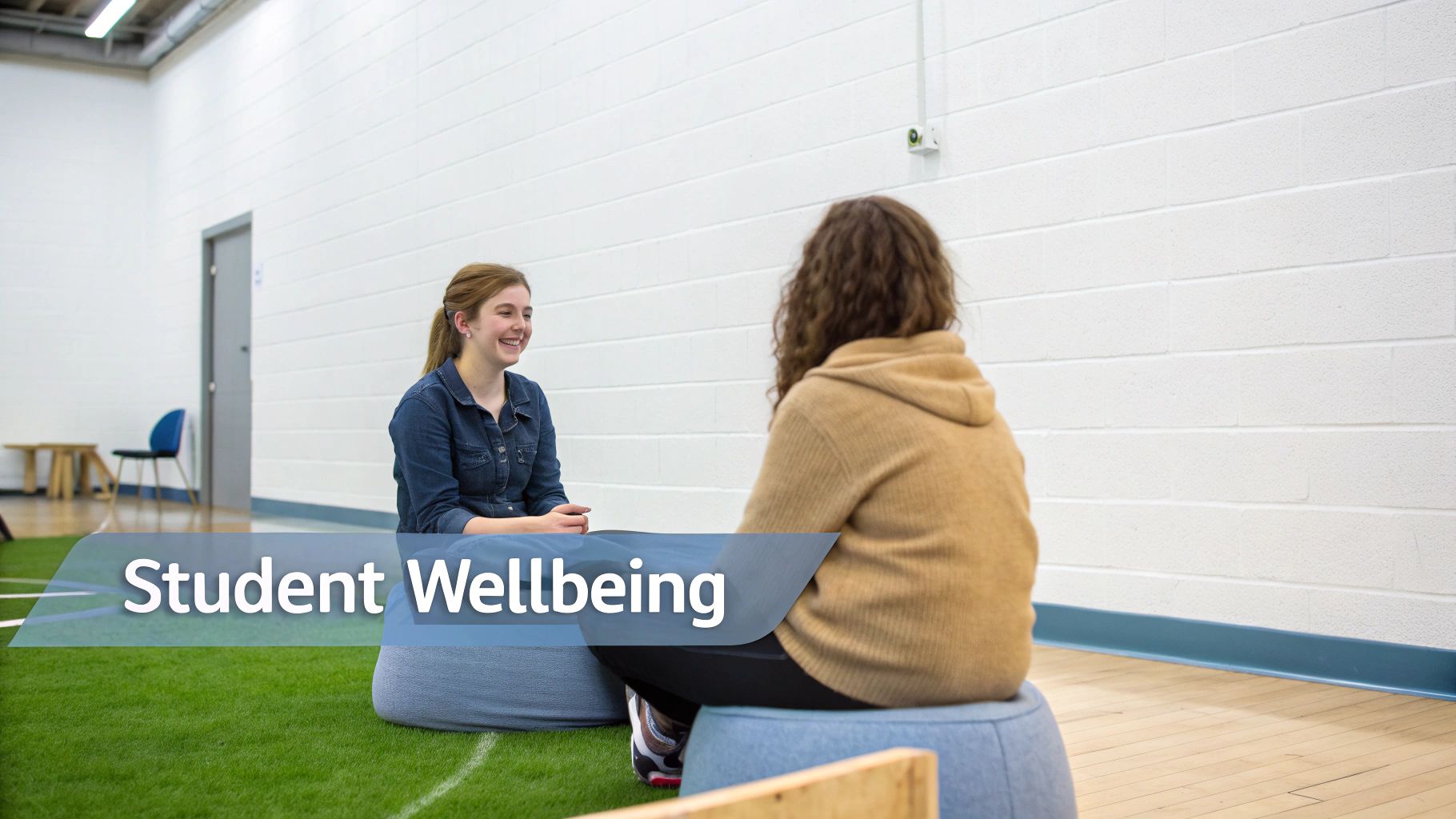
- Student Wellness Crisis? Make It Your Cornerstone. Invest heavily in top-tier counseling and social-emotional learning. Market your school as a place where students are not just educated, but seen, supported, and nurtured.
This isn't just about being different; it's about being the solution. You transform systemic weaknesses into your school's greatest strengths, attracting families who are actively looking for a better way.
The Paradox of Public School Spending
The American education system is stuck in a strange paradox: we're spending more than ever, yet getting stagnant results. With an estimated $20,387 spent per student in 2025—blowing past the OECD average—you'd expect top-tier outcomes. Instead, we see scores flatlining even as per-student spending has jumped 46.3% in the last decade.
For a deeper dive into this disconnect, you can explore more on US educational attainment statistics.
For private schools, this inefficiency creates a clear opening. You have the chance to demonstrate a far better return on educational investment. By running a lean operation and funneling resources directly into what matters—small class sizes, expert faculty, and impactful programs—you can deliver superior outcomes without the bureaucratic waste.
Turning these massive, systemic challenges into a winning strategy requires a clear vision and an expert guide. Building a resilient and impactful private school is a complex journey, but you don't have to walk it alone.
Ready to move from insight to action and build your strategic plan? Book a call with JAG Consulting or visit our website to start building your school's future today.
Frequently Asked Questions
Navigating the American education system's deep-rooted issues can feel overwhelming. This section cuts through the noise to answer the most pressing questions we hear from private school founders, leaders, and investors, focusing on the real-world implications for your school.
How Does Public School Funding Affect Private School Enrollment?
The constant funding battles in public education are, frankly, a direct driver of private school enrollment. When families see local public schools cutting art programs, increasing class sizes, or using outdated textbooks, those who can afford to start looking for a better option. In fact, while public school enrollment has declined by about 4% since the fall of 2019, many private schools have seen a surge in interest.
This creates a clear opening for savvy private school leaders. By staying tuned in to the struggles of nearby public districts, you can position your school as the reliable, high-quality alternative for parents who are fed up and searching for a better return on their educational investment.
Are Private Schools Immune to the National Teacher Shortage?
Not at all. Private schools are fishing from the same shrinking pond of talent as public districts. This crisis has left over 400,000 classrooms across the country without a qualified teacher, and independent schools feel that pressure just as acutely.
While we can offer major perks like smaller classes and more creative freedom, it’s tough to compete with the state-backed pension plans and union-negotiated salaries of public schools.
To win, private schools have to be exceptional places to work. It’s about cultivating a vibrant, empowering professional culture, offering unique leadership pathways, and getting really good at telling the story of why teaching at your school is about more than just the paycheck.
What Is the Biggest Advantage Private Schools Have Today?
In a word: autonomy. This is your superpower. While public schools are tangled in layers of district, state, and federal mandates, private schools have the freedom to innovate, adapt, and build something truly unique.
This flexibility is your ultimate competitive edge. It lets you:
- Build a specialized curriculum from the ground up—whether it's focused on STEM, language immersion, or the arts.
- Embrace a distinct educational philosophy that truly resonates with a specific type of family.
- Create a powerful school culture that’s aligned with a clear, unwavering mission.
For parents, this autonomy means having a real choice—the ability to find a school that’s a perfect fit for their child. For school leaders, it’s the core tool for building an experience that stands out and directly answers the frustrations families have with the broader system.
This freedom to chart your own course is precisely what allows a private school to offer a compelling, high-quality alternative that today's parents are actively seeking.
Turning these systemic challenges into strategic advantages takes insight and experience. JAG Consulting works with private school leaders to build resilient, successful schools that thrive in any environment. Book a call with JAG Consulting or visit our website to get started.

I'm Dr. Jeannie Gudith, Founder and CEO of JAG Consulting. We help you develop, improve, buy or sell your private school.
I'm so glad you're here
Hello!


