


Mastering the Parent and Teacher Conference: Boost Engagement and Trust
A truly effective parent and teacher conference is so much more than a 15-minute chat. It’s a critical moment that shows families your private school's deep commitment to partnership and real student growth. When we move beyond just tracking attendance, we can build a conference season on a foundation of clear goals, thoughtful scheduling, and unified communication. Research shows that strong family-school partnerships can improve student grades, attendance, and social skills.
This transforms a routine obligation into a powerful opportunity to strengthen that vital connection between home and school.
Setting the Stage for a Successful Conference Season
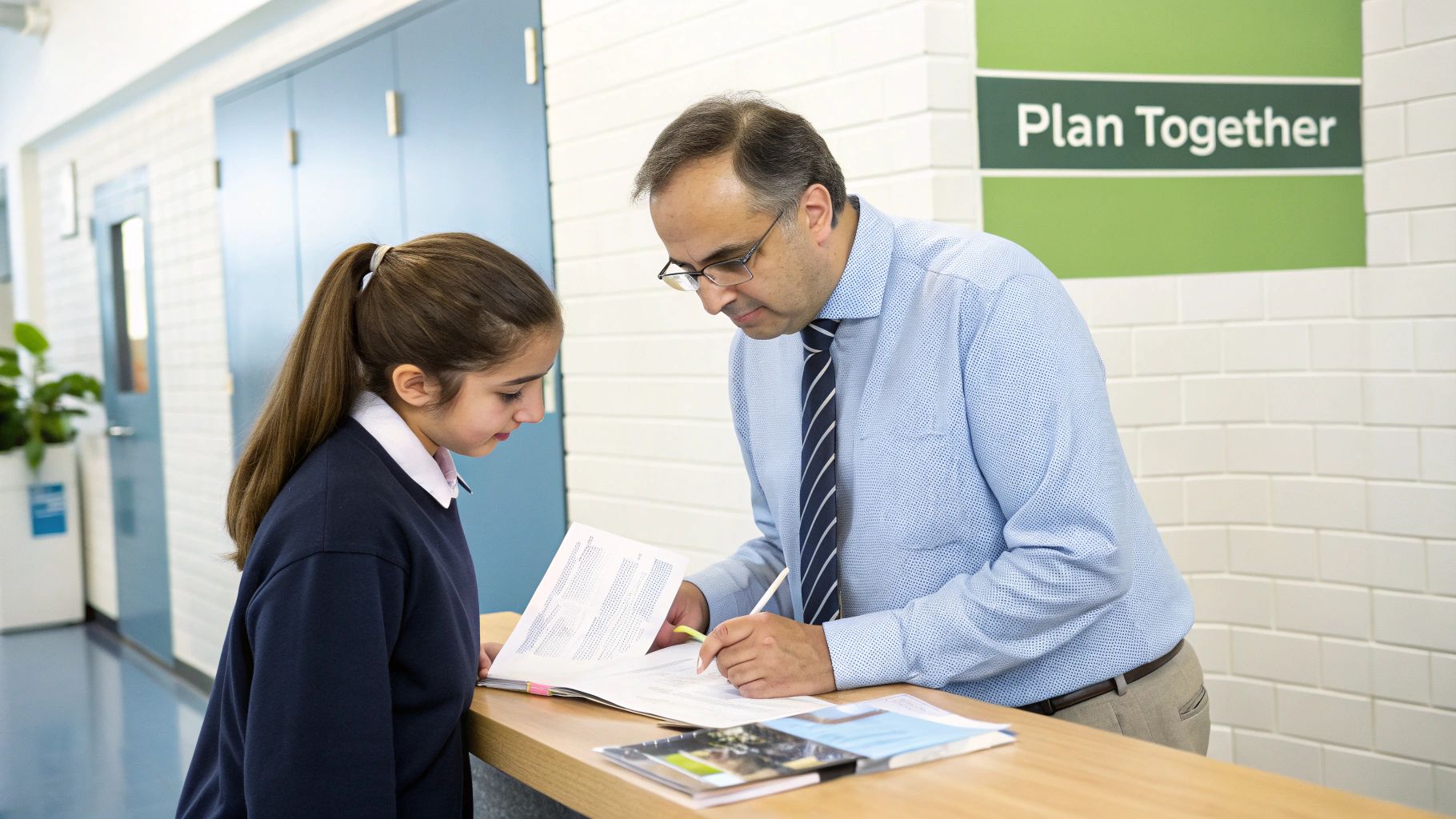
The groundwork for meaningful conferences is laid long before the first family walks through your doors. For private schools, this initial planning phase is your chance to reinforce your core values and prove your commitment to each student's unique journey. It’s about creating an experience that feels collaborative and supportive.
This proactive approach shifts the focus from just reporting progress to actively building partnerships. When parents feel their time is respected and their input is genuinely valued, they become much more engaged allies in their child's education. This foundational work ensures every single conversation is productive and purposeful.
Establishing Clear Goals and Objectives
Before a single email goes out, your leadership team needs to define what a "win" actually looks like. Are you just aiming for high attendance numbers, or is the real goal something deeper? For most private schools, the objective goes far beyond a simple progress report.
Think about setting strategic goals that reflect a more holistic vision for your parent-teacher conference season. We're moving beyond simple attendance tracking to focus on meaningful engagement.
Here’s a look at how you can frame these objectives.
Strategic Goals for Parent-Teacher Conferences
| Goal Category | Objective | Key Performance Indicator (KPI) |
|---|---|---|
| Partnership Building | Create a welcoming environment where parents feel heard and valued as essential partners in the educational process. | Post-conference survey score of 90%+ on "I felt like a valued partner." |
| Student Agency | Develop conference structures that encourage students to reflect on and articulate their own learning progress and challenges. | 75% of conferences are student-led or include a student-led portion (for applicable grades). |
| Action-Oriented Outcomes | Ensure every conference concludes with clear, actionable steps that both the teacher and the parent agree to take. | 95% of conference summary forms include at least one specific, documented follow-up action for both home and school. |
| Teacher Preparedness | Equip teachers with the data, training, and resources needed to lead confident, data-informed conversations. | 100% of teachers complete pre-conference training; average teacher confidence score of 4.5/5 or higher. |
By defining these kinds of objectives upfront, you're giving your entire staff a clear roadmap. It ensures every interaction is aligned with the overarching mission of building a strong, supportive community around each student.
Building a Flexible and Accessible Schedule
A rigid, one-size-fits-all schedule is one of the biggest barriers to parent participation. Busy work commitments, siblings' activities, and other obligations mean that the traditional block of evening slots just won't work for every family.
Offering genuine flexibility is a powerful way to show you respect their time and are committed to making these crucial conversations happen. Modern scheduling tools are a huge help here, allowing parents to book slots that actually fit their lives.
Consider offering a mix of options:
- In-person meetings during and after school hours.
- Virtual conference slots in the early morning or evening.
- A dedicated "conference day" where regular classes are suspended to open up the entire day.
The key is to remove the logistical hurdles. When scheduling is easy and accommodating, parents are far more likely to engage, setting a positive tone before the conversation even begins.
Crafting a Unified Communication Plan
Consistent, positive communication is what builds excitement and alignment around your conference season. This isn't just about sending out a few reminders; it's about framing the parent-teacher conference as a valuable opportunity for collaboration.
A unified plan gets parents, teachers, and your administrative staff all on the same page. Start your communications early, highlighting the purpose and importance of these meetings. Use a multi-channel approach—email, school newsletters, your parent portal—to share key dates, scheduling instructions, and even some tips for how parents can prepare.
This concerted effort ensures everyone sees these meetings not as a requirement, but as a cornerstone of your private school's commitment to partnership.
Ready to build a conference strategy that truly reflects your school's values and boosts parent engagement? Book a complimentary consultation with JAG Consulting today or visit our website to learn how we can help you set the stage for success.
Setting Your Teachers Up for Success in Every Conference
Your teachers are on the front lines of every parent-teacher conference. They're the ones who turn student data into a human story and transform a 20-minute meeting into a lasting partnership. To pull that off, they need more than a grade book. They need a clear game plan, thoughtful preparation, and the confidence to lead with empathy.
This is especially true for private schools, where the promise of individual attention is a cornerstone of your value proposition. A well-prepared teacher ensures every family feels seen, heard, and valued, reinforcing their decision to invest in your school. The goal isn't just to report progress; it's to launch a collaborative strategy for that student's success.
Ground the Conversation in Real Work
Before a single talking point is written, the most powerful tool a teacher can have is a curated portfolio of the student's work. This isn't just a folder of graded assignments—it's the narrative of that student's journey through the semester. It makes learning tangible and shifts the conversation from abstract grades to concrete evidence of both growth and challenge.
A truly effective portfolio tells a story. It should include:
- An Early Benchmark: A piece of work from the beginning of the term to establish a clear starting point.
- A "Productive Struggle" Piece: An assignment that was tough for the student, maybe showing teacher feedback and revisions. This highlights resilience and the messy, beautiful reality of the learning process.
- A "Shining Moment": Something the student is genuinely proud of. This showcases their unique strengths and passions.
- Data in Context: A recent assessment or progress report, but only to support the story told by the work samples, not to lead the conversation.
This collection of work becomes a visual and emotional anchor for the discussion, letting teachers ground their feedback in real, specific examples.
Give Them a Framework for Collaboration
A structured approach helps teachers stay on track, ensuring every meeting is both productive and positive. One of the simplest, most effective methods is the "glow and grow" model. It’s a straightforward framework that balances praise with constructive feedback, making sure parents hear about their child’s strengths first. This simple act makes them far more receptive to discussing areas that need a little more focus.
Research consistently shows that parents are more engaged and satisfied with conferences when they feel it's a two-way street. A Gallup poll revealed that focusing on a student's strengths is ten times more likely to lead to engagement than focusing on weaknesses.
Here’s how to put it into practice:
- Start with a "Glow": Kick things off by sharing a specific, positive story or highlighting a piece from the portfolio that showcases a student's talent, positive character, or a big win.
- Introduce the "Grow": Gently transition to an area for development. It's crucial to frame this not as a failure, but as an opportunity. Use phrases like, "One area we're really focusing on is…" and connect it directly to a work sample.
- Collaborate on a Goal: This is where the partnership solidifies. Ask for the parent's perspective. "Have you seen this at home?" or "What strategies have you found that help?" This simple pivot turns a report into a problem-solving session and positions the parent as a key ally.
Tailor the Talk for Every Grade Level
The conversation you have about a first grader's reading fluency is worlds away from a discussion about a high school junior's college readiness. Equipping your teachers means helping them adapt their language, focus, and goals for different developmental stages.
Elementary School (Grades K-5):
The focus here is all about foundational skills, social-emotional learning, and building great habits. Teachers should be ready to talk about:
- Early literacy and numeracy skills.
- Social development, like collaboration, sharing, and following classroom routines.
- Work habits, including organization and seeing tasks through to completion.
Middle & High School (Grades 6-12):
Now the conversation shifts toward academic independence, personal responsibility, and planning for the future. Teachers should emphasize:
- Executive functioning skills—time management, long-term planning, and study habits.
- Student self-advocacy and taking ownership of their own learning journey.
- Connecting current performance to future goals, whether that's placement in advanced courses or building a strong college application.
By investing in this kind of professional development, you ensure that every single parent-teacher conference at your private school is a productive, partnership-building conversation.
Is your team ready to lead these critical conversations with confidence? Book a call with JAG Consulting to explore our teacher training and leadership development programs, or visit our website for more resources.
Choosing the Right Conference Format
Picking the right format for parent-teacher conferences is a huge strategic decision. It’s not just about logistics—it directly impacts how many families show up and the quality of the conversation. For private schools, where that strong community feel is everything, the choice between in-person, virtual, or a hybrid model has to match your families' lives and your school’s culture.
There's no magic bullet here. The best format is simply the one that removes barriers and genuinely invites partnership.
The world has changed since 2020, and so have parent expectations. While virtual options offer incredible convenience, they can sometimes fall short of the personal connection that a face-to-face meeting provides. Understanding the pros and cons of each approach is the key to designing a conference season that feels both accessible and meaningful for everyone.
Evaluating In-Person Conferences
The classic in-person conference is still a powerful way to build rapport. There’s just something about sitting across from a parent, physically handing them their child’s portfolio, and reading body language that video calls struggle to replicate. For many private schools, this format is a direct reflection of the personalized, high-touch experience families signed up for.
The biggest hurdle, of course, is accessibility. For families with two working parents or those with inflexible jobs, getting to the school in person can be a major logistical headache. This can unintentionally shut out some families, often the very ones who might need that connection the most.
The Rise of Virtual Conferences
Virtual conferences, hosted on platforms like Zoom or Google Meet, are the obvious answer to scheduling nightmares. They allow parents to log on from their office or home, slashing the time commitment and logistical stress. The result? A significant bump in attendance.
But the challenge with going virtual is creating authentic engagement. Without a shared physical space, conversations can sometimes feel more transactional than relational. Teachers have to be much more intentional about building that connection and ensuring the tech runs smoothly so it doesn't become a distraction. It's also critical to think about the digital divide and make sure every family has the tools and know-how to participate.
A recent analysis from the U.S. Department of Education revealed a 3 percentage point drop in K-12 parent conference attendance between 2018-19 and 2022-23, with just 72% of parents attending. This trend suggests that while virtual options boost access for some, they can also create equity gaps for families with limited technology. You can learn more about these post-pandemic attendance trends.
Embracing a Hybrid Model
A hybrid approach truly offers the best of both worlds, giving families a choice that fits their reality. When you offer both in-person and virtual slots, you empower parents to select the format that works for them. This model sends a clear message: your private school is flexible and committed to partnership.
Pulling off a hybrid model does require some careful planning. Your scheduling system needs to clearly mark the format for each slot, and teachers must be prepared to switch gears between in-person and virtual meetings. It’s more logistically demanding, but it almost always leads to the highest participation and parent satisfaction rates.
Conference Format Comparison
To help you decide, here’s a side-by-side look at the three main formats. Think about your school's goals, your teachers' capacity, and most importantly, your families' needs as you review the options.
| Feature | In-Person | Virtual | Hybrid |
|---|---|---|---|
| Rapport Building | Excellent; non-verbal cues are easy to read. | Good; requires more intentional effort. | Strong; caters to individual family comfort levels. |
| Parent Accessibility | Low; requires travel and time off work. | High; parents can join from anywhere. | Excellent; offers maximum flexibility. |
| Participation Rates | Can be lower due to scheduling conflicts. | Often higher due to convenience. | Typically the highest, as it removes most barriers. |
| Technology Needs | Minimal; focused on physical materials. | High; requires reliable internet and platforms. | High; requires seamless integration for both formats. |
| Logistical Complexity | Moderate; managing physical space and flow. | Low; no physical space to manage. | High; requires careful scheduling and tech coordination. |
| Equity Concerns | Scheduling barriers for working parents. | Digital divide and tech literacy issues. | Can mitigate both, but requires thoughtful resource allocation. |
Ultimately, the right choice depends on knowing your community. A simple poll asking families for their preference is an effective first step in designing a conference season that works for everyone.
The format also depends on what teachers need to prepare. This flowchart shows how the focus shifts between grade levels, which can influence which format feels most natural.
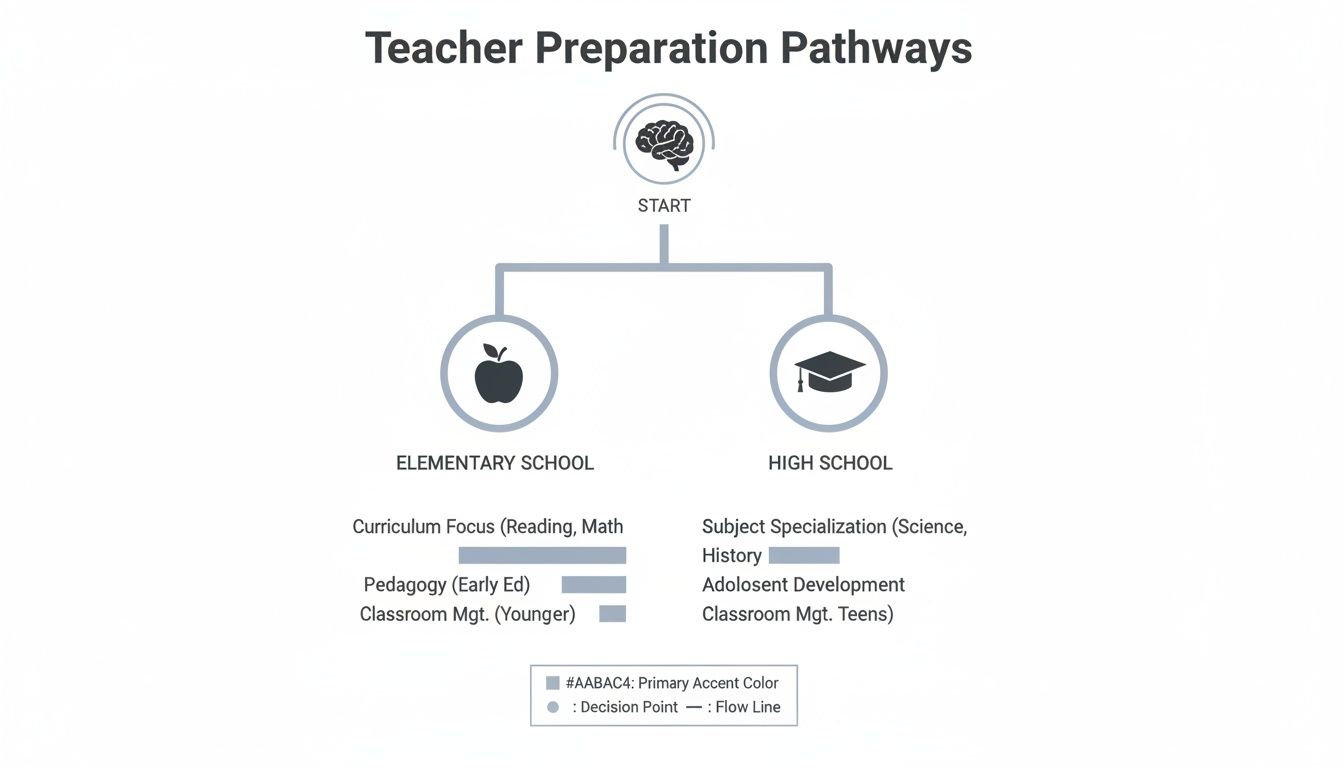
As you can see, elementary conferences often center on foundational skills and social growth, where seeing work samples in person might be key. High school prep, on the other hand, leans toward academic planning, which can be just as effective in a virtual setting.
Here's a quick checklist to make any format a success:
- For Virtual: Test all your tech beforehand, send crystal-clear login instructions, and use screen sharing to look at student work together.
- For In-Person: Create a warm, welcoming waiting area. Have student portfolios organized and ready to go, and ensure the meeting space is private and comfortable.
- For Hybrid: Use an integrated scheduling tool that lets parents pick their format. Make sure to block out transition time for teachers moving between online and face-to-face meetings.
Need help choosing and implementing the right conference format for your school? Book a call with JAG Consulting or visit our website for tailored strategic advice.
Navigating Tough Topics with Confidence and Empathy
Not every parent and teacher conference is going to be a simple celebration of student success. Let's be honest—sometimes the most important conversations we have are the hardest.
Discussing ongoing academic struggles, behavioral patterns, or the possibility of a learning difference requires a delicate balance of skill, empathy, and courage. For private school educators, these conversations are make-or-break moments. Handled well, they build unbreakable trust with a family. Handled poorly, they can create a rift that's hard to repair.
The key is equipping your teachers with the right frameworks so they can walk into these meetings with confidence. We want to transform a potentially tense situation into a collaborative problem-solving session, ensuring parents leave feeling heard, respected, and like they're a crucial part of the solution.
Start with a Collaborative Mindset
The first step in navigating a tough conversation is to frame it correctly from the very beginning. This isn't about delivering bad news; it's about raising a concern because you and the parent share a deep commitment to the student's well-being.
Teachers should kick off the meeting by immediately establishing that common ground. A few simple shifts in language can completely change the dynamic. Instead of leading with the problem, start by expressing genuine care for the student.
- Instead of: "We need to talk about his behavior in class."
- Try: "I'm so glad we have this time. I wanted to partner with you on some ways we can help him feel more successful during group work."
This small change instantly puts the teacher and parent on the same side of the table, focused on the child. It sets a tone of mutual support, which is absolutely essential before diving into the more challenging specifics.
When parents feel the school is a supportive partner, their trust in teachers skyrockets. A collaborative mindset turns a difficult conversation into a powerful opportunity to strengthen that home-school alliance.
Use a Simple Communication Framework
When emotions are running high, having a structure to lean on is a game-changer. A simple, repeatable framework helps teachers stay focused, clear, and respectful, even if the conversation gets heated. One of the most effective models I've seen in action is the "Observe, Share, Inquire" method.
1. Observe: State the Facts
Start by sharing specific, objective observations—no judgment, no labels. This grounds the conversation in concrete evidence, not subjective opinions. For example, instead of saying, "She's just not paying attention," a teacher could say, "I've noticed that during our math lessons over the past month, she has put her head down on her desk three times a week."
2. Share: Explain the Impact
Next, connect that observation to a tangible outcome. Explain how the behavior is affecting the student's learning or the classroom dynamic. A great follow-up would be: "When that happens, she misses the instructions for our independent work, and then she seems to feel frustrated and has a hard time getting started."
3. Inquire: Invite Collaboration
This is the most important step. It's where you turn a monologue into a dialogue. Open the floor to the parent with genuine, open-ended questions like, "I was wondering if you've noticed anything similar at home when it's time for homework?" or "What are your thoughts on what might be going on here?" This validates the parent's expertise on their own child and invites them to become an active partner in finding a solution.
Phrases for De-escalation and Validation
Even with perfect preparation, a parent might become defensive or upset. It’s critical for teachers to have a few phrases in their back pocket to de-escalate tension. The goal is to validate the parent's feelings without necessarily agreeing with their every point.
Here are a few phrases that work wonders:
- "I can absolutely hear how upsetting this is for you. Thank you for being so open with me."
- "That sounds incredibly frustrating. Let's put our heads together and figure out a plan."
- "I really appreciate you bringing that to my attention. It helps me understand your perspective better."
Validating a parent’s emotion doesn't mean you're conceding anything. It simply shows you're listening and you care. That act alone can lower defenses and reopen the door to a productive, child-focused conversation.
Handling these conversations effectively is a cornerstone of a powerful parent engagement strategy. Is your team prepared to navigate these critical moments with empathy and skill? Book a call with JAG Consulting to discuss our leadership and teacher development programs, or visit our website to learn more.
Fresh Ideas to Boost Parent Engagement

If your conference sign-up sheets aren't filling up like they used to, it's probably time to look beyond the traditional 20-minute meeting. For private schools committed to building deep family partnerships, real engagement means creating opportunities for parents to connect in newer, more meaningful ways.
The goal is to evolve the conference from a simple status report into a collaborative, student-centered experience.
This shift often means moving away from the old model where the adults do all the talking. By introducing a few fresh approaches, you can re-energize your entire conference season, see participation climb, and reinforce the value of a strong home-school alliance. These are proven strategies that get families genuinely involved and invested in their child’s education.
Empower Students with Student-Led Conferences
One of the single most powerful ways to reinvigorate parent-teacher conferences is to put the student right at the center of the conversation. It completely changes the dynamic.
In a student-led conference, the child prepares a portfolio of their work and quite literally guides their parents through their learning journey. They articulate their own strengths, identify challenges, and set personal goals for the next term.
The teacher’s role pivots from being the primary speaker to a facilitator. You're there to support the student, clarify a point when needed, and add professional insight. This format is an absolute game-changer for student agency. When kids are asked to reflect on and present their own progress, they take genuine ownership of their learning.
For many schools, this model transforms the entire dynamic. Conversations that were once confrontational become collaborative discussions. Students who were passive bystanders become confident advocates for their own education.
Parents are often floored by their child’s ability to articulate their progress so clearly. It gives them a far richer, more authentic understanding of their child's school experience than a standard progress report ever could.
Build Positive Momentum All Year Long
Real engagement isn’t built in a single day; it’s cultivated over time. A successful parent-teacher conference often has less to do with the meeting itself and more with the relationship you've built throughout the semester. Simple, proactive communication creates a foundation of trust that makes parents want to participate.
Consider weaving these simple, high-impact strategies into your routine:
- "Good News" Notes: Make it a regular practice to send home short, positive notes or emails celebrating a small win. It could be an insightful comment in class, an act of kindness, or a moment of great effort. This builds so much goodwill.
- Digital Portfolios: Use tools like Seesaw or even a shared Google Drive to give parents a real-time window into the classroom. When they see work in progress, the final grade feels less like a surprise and more like the end of a story they've been following.
- Ask for Their Insight: Periodically send out a quick survey asking for parents' perspectives on their child's habits at home. This simple act shows you value their role as the primary expert on their child.
These small touchpoints build positive emotional capital. When conference season arrives, the relationship is already strong and the conversation can start from a place of mutual respect.
Create a Culture of Confident Partnership
Sometimes, parents disengage not because they don't care, but because they feel unequipped to help. The school environment can be intimidating, or they might be unsure how to support their child’s learning at home. This is where evidence-based programs can make a huge difference.
For instance, the Parents as Teachers (PAT) program provides a powerful model for creating a culture where parents feel more confident and competent. Research shows that parents involved in PAT are significantly more likely to attend conferences, volunteer, and communicate regularly with teachers.
By empowering parents with knowledge and support, you transform them from an audience into active partners in education. You can discover more about the positive impact of PAT on parent engagement on their website.
By exploring new conference models and fostering positive connections all year, you can dramatically boost engagement and strengthen your entire school community.
Ready to implement fresh strategies for your parent and teacher conference season? Book a call with JAG Consulting to explore how our team can help you build a culture of deep and lasting parent partnership, or visit our website to learn more.
Keeping the Partnership Strong After the Conference
The conversation doesn’t end when the conference does. In fact, what happens next is often the difference between a meeting that sparks real change and one that becomes a forgotten conversation. Thoughtful, consistent follow-up is what turns talk into action.
For private schools that stake their reputation on strong community and close partnerships, this final step is non-negotiable. It shows families you’re truly invested in their child’s journey. This makes the conference the foundation of a year-round partnership, not just a twice-a-year checkpoint. The goal here is a simple, sustainable system for tracking progress and making adjustments together.
Document the Conversation with a Shared Action Plan
Right after the conference, while everything is still fresh, get the key takeaways down on paper. This isn't about writing formal, lengthy minutes. It’s about capturing the agreed-upon steps in a clear, concise summary you can share with parents. A simple, standardized template helps keep this consistent across every classroom.
This summary should clearly outline what’s next for everyone—the teacher, the parent, and, most importantly, the student. Structuring it this way reinforces that three-way partnership where everyone has a part to play. We know from experience that when parents get clear, actionable steps after a meeting, they are far more likely to stay engaged and supportive at home.
A strong action plan includes:
- A "Glow" and a "Grow": Briefly recap one of the student's key strengths and the primary area for focus you discussed.
- Teacher Commitments: What specific support will the teacher provide in the classroom? (e.g., "Ms. Smith will provide a weekly check-in on long-term assignments.")
- Parent Commitments: What will the parent do at home to support the goal? (e.g., "We will set aside 20 minutes for reading each night.")
- Student Commitments: If they're old enough, what is the student’s role? (e.g., "Alex will use his planner to write down all homework assignments.")
Establish a System for Regular Check-ins
An action plan is only as good as its follow-through. The most effective private schools build a simple system for checking in on the goals set during the conference. This doesn't have to be another formal meeting—in fact, brief, regular touchpoints are usually much more effective.
These check-ins can take different forms, depending on your school’s culture and the student's specific needs.
The key is consistency. When families know that you're tracking progress and are just as invested in the outcome as they are, it builds an incredible amount of trust and reinforces the collaborative spirit of the initial parent and teacher conference.
A quick follow-up email two or three weeks after the conference can be incredibly powerful. A simple note like, "Hi, just wanted to check in on Alex's goal of using his planner. I've seen a real improvement in class! How are things going at home?" keeps the conversation alive and the momentum going. This kind of proactive communication shows you’re a true partner in their child's education.
Turn a Single Event into a Year-Round Partnership
Ultimately, the goal is to shift the entire school's mindset. The parent-teacher conference shouldn't be seen as an isolated event that happens a couple of times a year. Instead, it should be the anchor for an ongoing dialogue that strengthens the home-school connection all year long.
By putting clear documentation, shared action plans, and a system for consistent check-ins in place, you prove that your private school is deeply committed to every student’s success. This follow-through demonstrates accountability and care, turning a single conversation into a dynamic, supportive, and lasting partnership.
Elevating your private school's parent engagement strategy is key to building a thriving educational community. At JAG Consulting, we provide the expert guidance and strategic support private schools need to strengthen these vital partnerships. Book a call with JAG Consulting today or visit our website to discover how we can help your institution achieve its goals.

I'm Dr. Jeannie Gudith, Founder and CEO of JAG Consulting. We help you develop, improve, buy or sell your private school.
I'm so glad you're here
Hello!


© 2025 JAG CONSULTING.
all rights reserved. privacy policy + REFUND POLICY. TEMPLATE by sugar studios + Showit
