

10 Effective Incentives for Students That Private Schools Can Implement in 2025
In the competitive landscape of private education, fostering student motivation is paramount to success. It is no longer enough to rely solely on traditional report cards; a well-designed incentive system can be the catalyst for academic excellence, positive character development, and a vibrant, engaged school culture. But what truly works? The conversation has shifted from simple rewards to sophisticated strategies that blend extrinsic recognition with the cultivation of deep-seated intrinsic drive.
A 2018 study by the National Center for Education Statistics found that over 70% of schools use some form of incentive program, yet their effectiveness varies dramatically based on design and implementation. For private schools, where a bespoke educational experience is the core promise, a one-size-fits-all approach to motivation is insufficient. A thoughtful strategy for using incentives for students is a critical component of institutional excellence and directly impacts student retention and outcomes.
This article explores 10 powerful and actionable incentives for students, providing a strategic roadmap for private school leaders. We will delve into a curated roundup of diverse strategies, from gamified digital platforms to leadership development programs, offering practical blueprints for implementation across all grade levels. You will gain specific, actionable insights to build a system that aligns with your unique mission, drives measurable results, and nurtures a lifelong love of learning.
Ready to build a more motivated and successful student body? Schedule a complimentary consultation with JAG Consulting today to discuss how to tailor these strategies to your institution's specific goals.
1. Grade-Based Rewards and Merit Systems
Grade-based rewards are a foundational incentive system directly linking academic achievement to tangible or intangible recognition. This traditional model uses metrics like grade point averages (GPA), standardized test scores, or class rank to create a clear, measurable path to acknowledgment. It serves as a powerful extrinsic motivator, providing students with a concrete goal to strive for and a public affirmation of their hard work and intellectual abilities.
For private schools, these systems are often a core component of an academic culture that prizes excellence and high achievement. They not only motivate current students but also signal a school’s commitment to rigorous academic standards to prospective families and higher education institutions. When implemented thoughtfully, these programs can be highly effective incentives for students focused on performance.
Implementation Strategies and Examples
A well-structured merit system offers various tiers of recognition to engage a broader range of students.
- Honor Rolls and Dean's Lists: A classic approach, typically recognizing students who achieve a specific GPA, such as a 3.5 or higher. Private schools can create multiple tiers, for example, "Head of School's List" for a 4.0 GPA and "Honor Roll" for 3.5-3.9, making recognition accessible to more high-achievers.
- AP/IB Scholar Designations: Leveraging external benchmarks, schools can celebrate students who earn high scores on multiple Advanced Placement (AP) or International Baccalaureate (IB) exams. This aligns school-level recognition with nationally and internationally respected standards.
- Merit-Based Scholarships: A compelling incentive where top-performing students receive financial awards or grants for the following academic year. A 2022 study highlighted that even small, merit-based financial incentives can significantly boost student effort and outcomes.
Best Practices for Equity and Growth
To ensure grade-based rewards foster a positive and inclusive learning environment, it is crucial to balance recognition of outcomes with acknowledgment of effort and progress.
Key Insight: The most effective merit systems celebrate not just the highest achievers but also those who demonstrate significant academic growth. This prevents the system from solely benefiting students who are already at the top, and instead encourages a growth mindset in all learners.
Consider adding awards for "Most Improved GPA" or recognizing students who meet or exceed personal academic goals. By combining absolute achievement with measures of individual progress, your school can build a more robust and equitable system of incentives for students.
Are you looking to design or refine an incentive program that aligns with your school's unique mission and values? Book a complimentary consultation with JAG Consulting today to develop a strategic plan that drives student motivation and academic excellence.
2. Point and Badge Systems (Gamification)
Point and badge systems apply principles of game design to the learning environment, transforming academic tasks into engaging challenges. This process, known as gamification, uses extrinsic motivators like points, badges, and leaderboards to drive student participation, skill mastery, and positive behavior. By framing learning as a game, this approach taps into students' natural desire for achievement, progression, and recognition, making it a highly effective incentive system.
For private schools aiming to foster innovation and digital literacy, gamification aligns perfectly with modern educational trends. A 2021 review found that gamification can significantly increase student motivation and engagement across various subjects. These systems offer immediate feedback and a clear visual representation of progress, which can be particularly powerful for students who thrive on structured, incremental goals.

Implementation Strategies and Examples
A successful gamification strategy can be implemented with digital tools or through simple, analog classroom systems.
- Digital Learning Platforms: Tools like Classcraft turn the classroom into a collaborative adventure game, where students earn points for good behavior and academic performance. Similarly, Khan Academy rewards users with points and badges for mastering skills, providing a clear path of progression.
- Skill-Based Badges: Instead of rewarding only grades, create digital or physical badges for mastering specific skills, such as "Critical Thinker," "Creative Problem-Solver," or "Collaborative Teammate." This recognizes diverse student strengths beyond traditional academics.
- Classroom Point Economies: Students earn points for completing homework, participating in discussions, or helping peers. They can then "spend" these points on rewards like free reading time, choosing a class activity, or even small school-store items.
Best Practices for Equity and Growth
To maximize the benefits of gamification, the system must be designed to encourage all students, not just the most competitive ones.
Key Insight: The most impactful gamified systems balance competition with collaboration. While leaderboards can motivate some, emphasizing team-based challenges and personal-best achievements ensures the system remains inclusive and supportive for every learner.
Focus on awarding points for effort, improvement, and demonstrating school values, not just correct answers. Regularly resetting leaderboards or creating short-term "sprints" gives all students a fresh chance to succeed. This approach makes these incentives for students a tool for building a positive classroom culture rather than just a competitive hierarchy.
Are you looking to design or refine an incentive program that aligns with your school's unique mission and values? Book a complimentary consultation with JAG Consulting today to develop a strategic plan that drives student motivation and academic excellence.
3. Scholarship and Financial Incentives
Scholarship and financial incentives represent one of the most direct and powerful forms of motivation, tying academic or co-curricular excellence to tangible financial relief. This approach not only rewards high achievement but also addresses significant financial barriers that can hinder student access and persistence. By reducing the burden of tuition and fees, these programs make quality education more accessible and provide a clear, compelling reason for students to excel.
For private schools, a robust scholarship program is a strategic asset. It serves as a key differentiator in a competitive market, attracting a diverse and high-caliber student body. Furthermore, it demonstrates a commitment to both academic merit and accessibility, enhancing the school's reputation and appeal to mission-driven families and philanthropic donors. These financial incentives for students can be a cornerstone of enrollment and retention strategies.
Implementation Strategies and Examples
A well-designed financial incentive program can cater to a variety of student profiles, from top academic performers to those with unique talents.
- Tiered Merit Scholarships: Offer scholarships at different funding levels based on specific criteria like GPA, standardized test scores, or class rank. For example, a "Presidential Scholarship" might cover 50% of tuition for students in the top 5% of their class, while a "Dean's Scholarship" could offer 25% for those in the top 10%.
- Need-Based Grants with Merit Component: Combine financial need with academic performance. This model, used by programs like the QuestBridge National College Match, connects high-achieving, low-income students with full-ride scholarships to partner institutions, ensuring talent is not limited by financial circumstance.
- Specialized Talent Awards: Create scholarships for students who excel in specific areas like arts, athletics, or STEM. This diversifies the student body and rewards a broader range of skills beyond traditional academic metrics. A 2021 report from the National Association of Independent Schools (NAIS) showed that 57.5% of students in NAIS schools received some form of financial aid, highlighting its importance.
Best Practices for Equity and Growth
To maximize impact, financial incentive programs must be transparent, widely promoted, and designed for sustained motivation.
Key Insight: The most effective scholarship programs are not one-time awards but are renewable. Tying renewal to maintained academic standing, such as a minimum GPA, transforms the scholarship from a simple reward into a continuous incentive for student performance and engagement.
Consider pairing financial awards with mentorship or academic support services. This holistic approach ensures that scholarship recipients have the resources they need to thrive, improving retention rates and maximizing the school's investment in its students.
Are you looking to develop a strategic scholarship program that attracts top talent and aligns with your financial goals? Book a complimentary consultation with JAG Consulting today to build a sustainable financial aid model that drives enrollment and student success.
4. Public Recognition and Awards Ceremonies
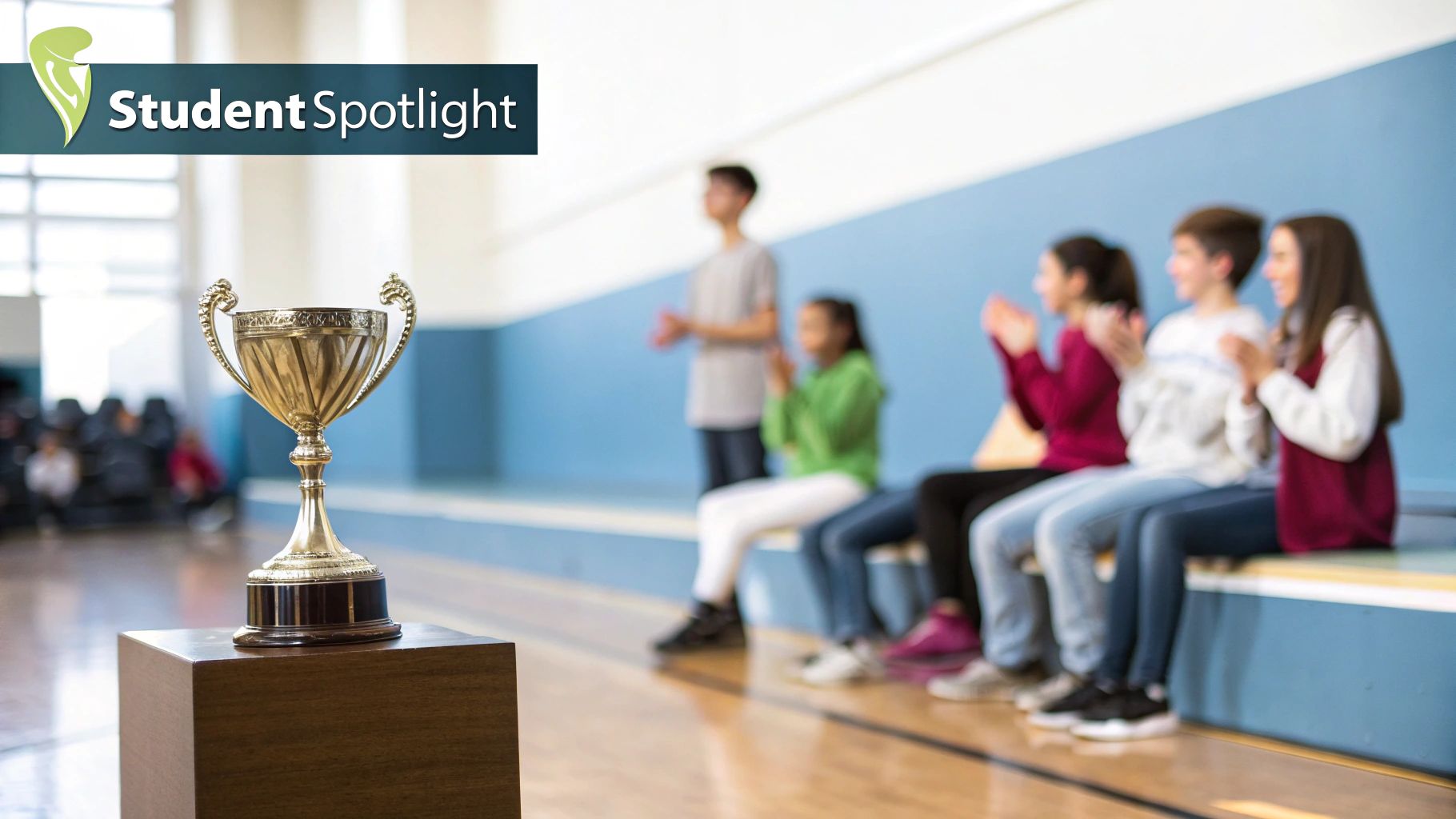
Public recognition leverages the intrinsic human desire for acknowledgment and social validation as a powerful, non-monetary incentive. Formal awards ceremonies, school-wide announcements, and community features create a celebratory culture that honors student achievements in various domains. This method elevates student accomplishments, making them a visible and valued part of the school's identity.
For private schools, public recognition is a vital tool for reinforcing institutional values and building a strong community spirit. These events not only motivate the students being honored but also inspire their peers by providing clear, aspirational models of success. When executed effectively, they serve as potent incentives for students by celebrating hard work and dedication.
Implementation Strategies and Examples
A comprehensive public recognition program should be multifaceted, celebrating a wide range of contributions to the school community.
- Formal Awards Assemblies: Host semesterly or annual ceremonies to present awards for academic excellence, artistic talent, athletic achievement, and outstanding citizenship. Inviting families creates a shared sense of pride and community.
- Highlighting Students in Communications: Feature a "Student of the Week" or "Student Spotlight" on the school's website, social media channels, or in newsletters. This provides consistent, positive reinforcement and showcases diverse talents.
- Community and Media Recognition: Announce major achievements, such as National Honor Society inductions or significant scholarship wins, in local newspapers or community publications to broaden the audience and amplify the recognition.
Best Practices for Equity and Growth
To maximize impact, recognition programs must be inclusive and transparent, ensuring all students feel they have an opportunity to be celebrated.
Key Insight: A truly effective recognition strategy moves beyond celebrating only top performers. By creating awards for categories like "Most Improved," "Community Contributor," or "Creative Innovator," schools can foster a culture where effort, character, and diverse talents are equally valued.
Ensure the criteria for each award are clearly defined, communicated, and accessible to all students and families. This transparency builds trust and ensures the system is perceived as fair and equitable, making it one of the most effective incentives for students across all performance levels.
Are you looking to design or refine an incentive program that aligns with your school's unique mission and values? Book a complimentary consultation with JAG Consulting today to develop a strategic plan that drives student motivation and academic excellence.
5. Extra Privileges and Class Choice Opportunities
Extra privileges are non-monetary incentives that reward student achievement, good behavior, or demonstrated responsibility with increased autonomy and status within the school community. This approach ties positive actions directly to an enhanced daily experience, granting students more control over their learning environment and schedule. It serves as a powerful motivator, appealing to students' desire for independence and recognition from peers and faculty.
For private schools, this system reinforces a culture of maturity, trust, and accountability. Granting privileges signals that the school values student agency and is willing to treat high-performers as respected members of the community. These types of incentives for students can be particularly effective in middle and high school, where developing independence is a key part of personal growth.
Implementation Strategies and Examples
A tiered system of privileges can motivate a wide range of students by offering desirable, attainable perks.
- Priority Course Registration: Granting students with high GPAs or perfect attendance early access to course selection for the next semester. This is a highly coveted privilege, especially for popular electives or limited-enrollment AP and honors courses.
- Flexible Schedule Perks: Offering benefits like off-campus lunch privileges for upperclassmen who meet academic and behavioral standards, or access to designated quiet study areas (like library conference rooms) during free periods.
- Leadership and Mentoring Roles: Creating opportunities for students to serve as peer tutors, admissions tour guides, or committee members on school-wide initiatives. These roles provide valuable experience while acknowledging a student’s reliability.
Best Practices for Equity and Growth
To ensure fairness, it is critical that the criteria for earning privileges are transparent, objective, and accessible to all students.
Key Insight: The most effective privilege-based systems offer multiple pathways to qualification. By rewarding not just top academic performers but also students who show significant improvement, strong citizenship, or consistent effort, schools can motivate a broader and more diverse group of learners.
Clearly communicate the standards required to earn each privilege at the beginning of the year. Consider rotating certain leadership opportunities to allow more students the chance to develop new skills. By balancing exclusive perks with inclusive opportunities, you can create a system of incentives for students that promotes both individual achievement and a stronger school community.
Are you looking to design or refine an incentive program that aligns with your school's unique mission and values? Book a complimentary consultation with JAG Consulting today to develop a strategic plan that drives student motivation and academic excellence.
6. Intrinsic Motivation Development Programs
Intrinsic Motivation Development Programs shift the focus from external rewards to cultivating a student's innate desire to learn and grow. Grounded in psychological frameworks like Self-Determination Theory, this approach centers on fulfilling three core human needs: autonomy (choice and control), competence (mastery and effectiveness), and relatedness (connection and belonging). Instead of asking "What will I get for this?", students begin to ask "What can I learn from this?".
For private schools, these programs are a powerful way to build a culture of genuine intellectual curiosity and lifelong learning. They develop resilient, self-directed students who are prepared for the challenges of higher education and beyond. By investing in these foundational incentives for students, schools can foster motivation that persists long after the grades are posted and the awards are distributed.
Implementation Strategies and Examples
A successful program provides structured opportunities for students to exercise their natural drive.
- Project-Based Learning (PBL): Students explore complex, real-world problems over an extended period, allowing them significant choice in their research topics and final products. This fosters a sense of ownership and mastery.
- Student-Led Conferences and Portfolios: Shifting the focus from teacher-led evaluation to student-led reflection, this practice empowers students to articulate their learning journey, showcase their growth, and set personal goals.
- Maker Spaces and Choice Boards: Providing dedicated time and resources for student-directed creation and exploration gives them the autonomy to pursue their interests. Choice boards offer a menu of learning activities, allowing students to select how they demonstrate their understanding.
- Advisory Programs with Personal Mentoring: Strong student-teacher relationships fulfill the need for relatedness. A 2021 study by the Search Institute found that students with strong developmental relationships are five times more likely to be engaged in school.
Best Practices for Equity and Growth
To cultivate intrinsic motivation effectively, the entire learning environment must support psychological safety and personal growth. Train teachers in autonomy-supportive instruction and use student feedback to help shape curriculum design.
Key Insight: True intrinsic motivation flourishes when the environment celebrates the process of learning, not just the final outcome. Emphasize personal growth, intellectual risk-taking, and resilience in the face of challenges.
This approach ensures that all students, regardless of their starting point, can experience the satisfaction of competence and progress. It transforms the classroom from a place of performance to a community of discovery, creating one of the most sustainable incentives for students.
Are you ready to build a school culture that fosters deep, lasting motivation? Book a complimentary consultation with JAG Consulting today to explore how to integrate intrinsic motivation programs into your school's DNA.
7. Tangible Prizes and Reward Stores
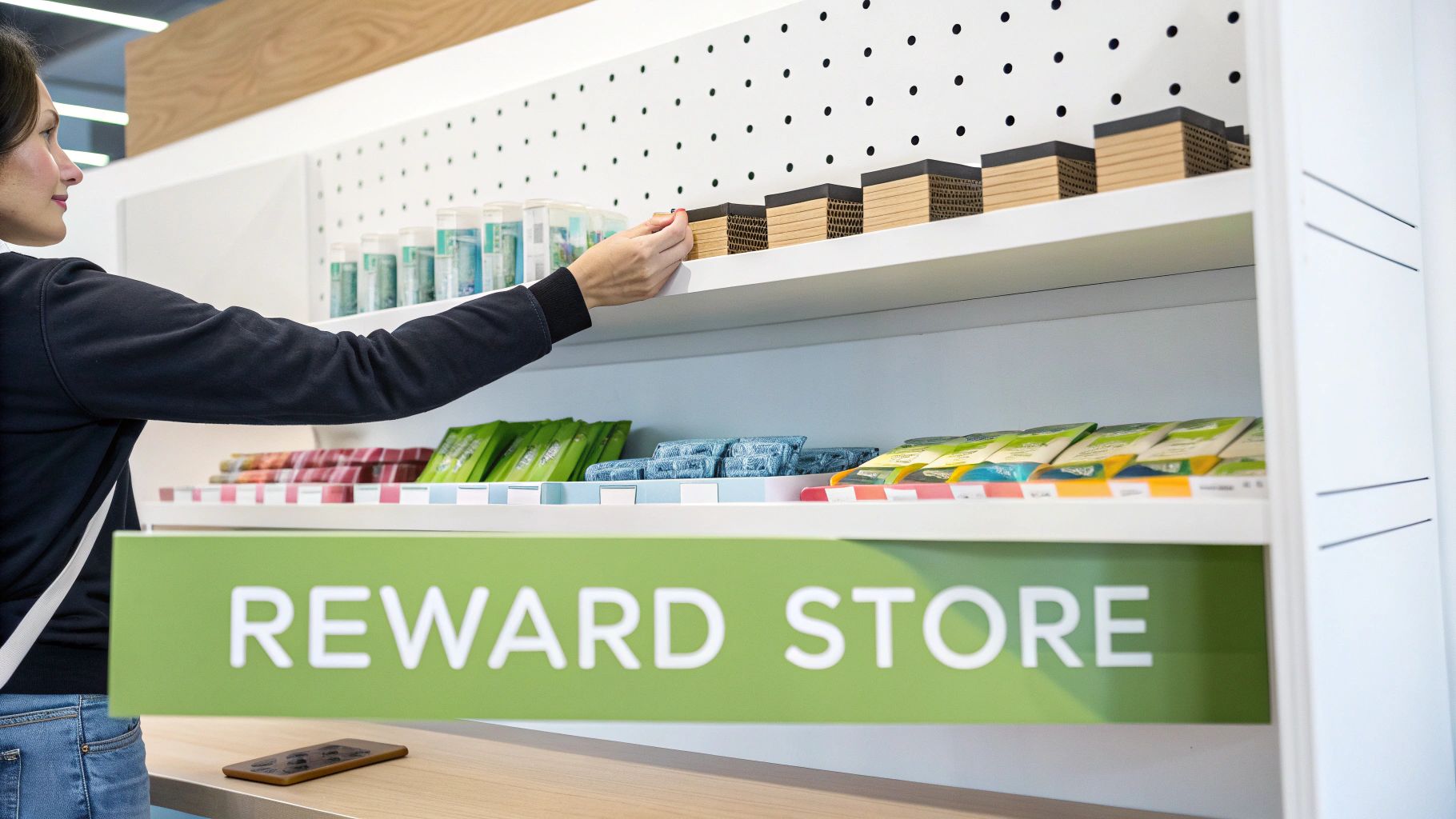
Tangible prizes and reward stores create a micro-economy within the school, where positive behavior and academic achievements are converted into a currency that students can spend on desired items. This system taps into powerful extrinsic motivation by providing immediate, physical reinforcement for effort. Students earn points, tokens, or "school cash" which they can then exchange for items in a physical or digital catalog, empowering them with choice and agency.
For private schools, a well-managed reward store can reinforce a culture of positive behavior and academic diligence. It makes abstract goals like "good citizenship" or "academic effort" concrete, as students can see a direct and appealing payoff for their hard work. This type of program is one of the most direct and easily understood incentives for students, especially in elementary and middle school settings.
Implementation Strategies and Examples
A successful reward store hinges on a diverse and appealing inventory that caters to various student interests and "price points."
- Tiered Prize System: Offer a wide range of rewards, from low-cost items like stickers and school supplies (earned for a small number of points) to high-value prizes like gift cards, electronics, or school-branded merchandise (requiring significant saving). This allows for both frequent, small rewards and long-term aspirational goals.
- Experience-Based Rewards: Supplement physical goods with experiential prizes. These could include a "lunch with the principal" voucher, a "choose your seat for a week" pass, or tickets to a school sporting event or performance.
- Digital Catalogs and Point Tracking: Utilize school management software or dedicated platforms to track student points and host a digital reward catalog. This automates the process, making it easier for faculty to award points and for students to see their progress and "shop" for prizes.
Best Practices for Equity and Growth
To maximize engagement and fairness, the system must be accessible and the path to earning rewards must be transparent and achievable for all students.
Key Insight: A reward store's success is tied to its perceived fairness. Ensure the criteria for earning points are clearly defined and consistently applied, focusing on both achievement and behavioral growth, so every student feels they have a genuine opportunity to participate and be rewarded.
Regularly refresh the prize selection to maintain student interest and solicit student feedback on what rewards they find most motivating. By co-creating the prize list with students, you increase buy-in and ensure the system remains one of the most effective incentives for students at your school.
Are you looking to design or refine an incentive program that aligns with your school's unique mission and values? Book a complimentary consultation with JAG Consulting today to develop a strategic plan that drives student motivation and academic excellence.
8. Mentoring and Leadership Development Programs
Mentoring and leadership development programs offer powerful intrinsic incentives for students by positioning them as valuable contributors to the school community. This approach moves beyond traditional academic rewards, providing opportunities for students to develop real-world skills like communication, responsibility, and empathy. By entrusting students with significant roles, schools can cultivate a deep sense of purpose and belonging.
For private schools, these programs are essential for shaping a well-rounded student body and nurturing the next generation of leaders. They provide a structured pathway for personal growth that complements academic rigor, demonstrating a commitment to holistic education. When students are given the chance to lead and mentor, they become more invested in their own learning and the success of their peers, strengthening the entire school culture.
Implementation Strategies and Examples
A comprehensive leadership program offers a variety of roles to appeal to different student interests and strengths.
- Peer Tutoring and Mentoring: Establish a formal program where older or high-achieving students provide academic support to younger students or peers. This not only reinforces the tutor's own knowledge but also builds confidence and community. A 2020 study found that peer tutors often experience significant gains in their own academic performance and self-esteem.
- Student Government and Ambassador Programs: These formal leadership positions, such as class officer or student ambassador, allow students to represent their peers, organize events, and contribute to school policy. This provides direct experience in governance and public relations.
- Club and Organization Leadership: Encourage students to take on officer roles in extracurricular clubs. This provides a low-stakes environment to practice management, delegation, and project planning skills aligned with their personal interests.
Best Practices for Equity and Growth
To maximize the impact of leadership programs, it is vital to make them accessible and provide robust support for all participants.
Key Insight: The most effective leadership incentives focus on development, not just designation. Providing clear expectations, training, and ongoing support ensures that students in these roles are set up for success and can genuinely grow from the experience.
Ensure leadership opportunities are widely advertised and selection processes are transparent. Rotate positions where possible to allow more students to participate, and create clear role descriptions so participants understand their responsibilities. This approach builds a wider base of student leaders and reinforces a culture of shared responsibility.
Are you looking to build a leadership program that empowers students and enhances your school’s community? Book a complimentary consultation with JAG Consulting today to develop a strategic plan that fosters student growth and leadership excellence.
9. Grade Forgiveness and Redemption Programs
Grade forgiveness and redemption programs are powerful incentives for students that shift the focus from punishment for mistakes to a celebration of learning and perseverance. This approach allows students to revise assignments, retake exams, or otherwise replace a poor grade with a new, higher one. It directly challenges the anxiety associated with a single high-stakes performance, promoting a healthier, more resilient academic mindset.
For private schools, these programs embody a commitment to a growth-oriented pedagogy, demonstrating that the institution values the learning process over a punitive grading system. By reducing the permanence of early academic missteps, schools can motivate students to engage more deeply with challenging material, knowing they have a structured pathway to demonstrate mastery. This approach can be a significant differentiator, appealing to families who seek a supportive yet rigorous educational environment.
Implementation Strategies and Examples
A successful redemption program requires clear policies and a focus on genuine learning between attempts.
- Standards-Based Retakes: In a standards-based grading system, students who do not demonstrate mastery on an assessment are given the opportunity to retake it after further study. The new grade replaces the old one, reflecting their eventual competence.
- Assignment Revision Policies: Common in humanities and writing-intensive courses, students can submit revised essays or projects based on teacher feedback. This iterative process not only improves the grade but also teaches critical revision and editing skills.
- Comprehensive Final Exam Replacement: Some schools allow the score on a cumulative final exam to replace a lower test grade from earlier in the semester. This incentivizes students to master all course material for the final, reinforcing long-term retention. A 2019 study in the Journal of College Science Teaching found that such policies can reduce test anxiety and increase student motivation.
Best Practices for Equity and Growth
To be effective, redemption policies must be structured to ensure they promote genuine learning, not just grade-seeking.
Key Insight: The core principle of a grade redemption program is not to erase failure but to reframe it as a learning opportunity. The most impactful systems require students to demonstrate new effort and understanding before earning a second chance, thereby building academic resilience and a true growth mindset.
Establish clear guidelines, such as requiring students to attend tutoring sessions or complete corrective assignments before a retake is granted. Communicate the policy clearly and consistently to students and families to ensure it is applied equitably. This ensures the program functions as one of the most effective incentives for students to master content rather than simply giving up after a single poor performance.
Are you looking to design or refine an incentive program that aligns with your school's unique mission and values? Book a complimentary consultation with JAG Consulting today to develop a strategic plan that drives student motivation and academic excellence.
10. College and Career Pathway Incentives
College and career pathway incentives connect current academic efforts to future professional success, offering students a tangible vision of their post-graduation life. This model frames education not as an end in itself but as a direct route to rewarding careers and higher learning. By providing clear, structured pathways that include specialized coursework, internships, and mentorship, schools give students a powerful, long-term reason to stay engaged and excel.
For private schools, these programs are a significant value-add, demonstrating a commitment to preparing students for real-world success. They serve as a compelling differentiator in a competitive market, appealing to families who prioritize practical outcomes and a strong return on their educational investment. These forward-looking incentives for students build a bridge between the classroom and the professional world, motivating them with the promise of a successful future.
Implementation Strategies and Examples
A robust pathway program integrates academic learning with hands-on, career-focused experiences.
- Career and Technical Education (CTE) Pathways: Schools can develop specialized tracks in high-demand fields like engineering, healthcare, or information technology. Programs like Project Lead The Way (PLTW) provide structured STEM curricula that culminate in industry-recognized certifications and college credit.
- Internship and Apprenticeship Pipelines: Forging partnerships with local businesses creates invaluable opportunities. A private school could establish an internship pipeline with a local tech firm or a registered apprenticeship with a manufacturing company, giving students paid work experience.
- Dual Enrollment Programs: Collaborating with community colleges or universities allows students to earn college credits while still in high school. This not only accelerates their higher education journey but also provides a low-risk introduction to the rigors of college-level coursework.
Best Practices for Equity and Growth
To maximize impact, pathway programs must be accessible and directly tied to students' academic journeys. It is essential to provide logistical support, such as transportation for internships, and to ensure opportunities are available to a diverse student population.
Key Insight: The most effective career pathway programs are not just extracurricular add-ons; they are deeply integrated with core academic curricula. Linking a physics lesson to an engineering internship or a literature class to a marketing project makes learning more relevant and impactful.
By creating strong alumni mentoring networks, schools can provide ongoing support and professional connections long after graduation. This strengthens the pathway and reinforces the value of the school's network.
Are you looking to build a career-focused incentive program that prepares your students for the future? Book a complimentary consultation with JAG Consulting today to develop a strategic plan that drives student motivation and post-graduation success.
10 Student Incentives Compared
| Incentive | 🔄 Implementation Complexity | ⚡ Resource Requirements | 📊 Expected Outcomes (⭐) | Ideal Use Cases | 💡 Key Advantages |
|---|---|---|---|---|---|
| Grade-Based Rewards and Merit Systems | 🔄 Low — clear metrics; simple rules | ⚡ Low — certificates/prizes, admin time | 📊 ⭐⭐⭐ — raises achievement for top students; may widen gaps | Traditional academic settings; standardized-assessment environments | 💡 Clear goals; easy to implement; visible recognition |
| Point and Badge Systems (Gamification) | 🔄 Medium — system design & maintenance | ⚡ Medium — platform cost, IT & teacher time | 📊 ⭐⭐⭐⭐ — high engagement & immediate feedback; risk of gaming | K–12 blended/digital classrooms; engagement-focused courses | 💡 Immediate feedback; scalable; rewards diverse behaviors |
| Scholarship and Financial Incentives | 🔄 Medium — eligibility, selection & disbursement processes | ⚡ High — significant budget, administration, fundraising | 📊 ⭐⭐⭐⭐ — reduces financial barriers; strong long-term impact for recipients | High-need populations; college-access and retention programs | 💡 Removes financial barriers; high motivational value |
| Public Recognition and Awards Ceremonies | 🔄 Low — event logistics and transparent criteria | ⚡ Low — minimal cost; staff time | 📊 ⭐⭐ — boosts morale and culture; can exclude non-winners | School culture-building; low-budget recognition initiatives | 💡 Low-cost; builds community; memorable milestones |
| Extra Privileges and Class Choice Opportunities | 🔄 Medium — scheduling and policy management | ⚡ Low–Medium — administrative coordination | 📊 ⭐⭐⭐ — improves student experience for achievers; aspirational | Behavior management; rewarding responsibility; honors programs | 💡 Tangible, low-cost perks; motivates responsibility |
| Intrinsic Motivation Development Programs | 🔄 High — curriculum redesign & teacher training | ⚡ Medium–High — training, coaching, time investment | 📊 ⭐⭐⭐⭐ — sustainable engagement and deeper learning outcomes | Long-term reform; project-based or mastery-focused schools | 💡 Builds lasting motivation; transfers beyond school |
| Tangible Prizes and Reward Stores | 🔄 Low — inventory and redemption processes | ⚡ Medium — funding for prizes, storage, logistics | 📊 ⭐⭐ — immediate motivation; can undermine intrinsic drive | Elementary settings; short-term behavior campaigns | 💡 Visible, choice-driven rewards; easy to track |
| Mentoring and Leadership Development Programs | 🔄 Medium — coordination, role design & oversight | ⚡ Medium — staff mentors, training, supervision | 📊 ⭐⭐⭐⭐ — develops leadership skills; strengthens community | Older students; leadership pipelines; peer tutoring programs | 💡 Real-world skills; meaningful responsibilities |
| Grade Forgiveness and Redemption Programs | 🔄 Medium — policy design, tracking retakes | ⚡ Low–Medium — teacher time, tutoring resources | 📊 ⭐⭐⭐ — promotes mastery, reduces anxiety, supports recovery | Remedial instruction; mastery-based classrooms | 💡 Encourages improvement; focuses on learning over single tests |
| College and Career Pathway Incentives | 🔄 High — partnerships, planning & coordination | ⚡ High — staff time, travel, partner resources | 📊 ⭐⭐⭐⭐ — increases readiness and long-term motivation | High schools, CTE programs, college-access initiatives | 💡 Concrete future pathways; builds professional networks |
From Theory to Action: Designing Your School's Incentive Blueprint
Moving from a theoretical understanding of student motivation to a practical, on-the-ground implementation is the most critical step for any educational leader. Throughout this article, we've navigated the diverse landscape of incentives for students, exploring ten distinct models ranging from tangible Grade-Based Rewards and Gamification Systems to the deeply personal impact of Mentorship and Intrinsic Motivation Programs. The core lesson is clear: the most effective strategies are not one-size-fits-all. Instead, they represent a thoughtfully curated blend, a mosaic of approaches tailored to your school's unique mission, culture, and student population.
For private school founders and administrators, this is where strategic vision becomes reality. A generic incentive program may produce fleeting compliance, but a bespoke system aligned with your school's core values cultivates lasting engagement and genuine achievement. This requires moving beyond simple rewards and punishments to create an ecosystem where motivation thrives.
Synthesizing Your Incentive Strategy
As you design your school's blueprint, consider these pivotal takeaways from our exploration:
- Balance is Paramount: The most sustainable incentive systems skillfully weave together extrinsic and intrinsic motivators. While a reward store or a merit badge system can generate initial excitement, programs that foster leadership, autonomy, and a love for learning are what build long-term success. A 2021 study in the Journal of Educational Psychology highlighted that incentive programs tailored to a school's specific demographic and cultural context see a 34% greater uplift in student engagement compared to generic models.
- Equity and Inclusivity are Non-Negotiable: Your incentive framework must be accessible and fair to every student. Programs that exclusively reward top academic performers can inadvertently demotivate the very students who need encouragement the most. Consider incorporating incentives that recognize effort, improvement, citizenship, and collaboration to ensure all students have a pathway to recognition and success.
- Data-Informed Adaptation is Key: An incentive program is a living system, not a static document. Regularly collecting and analyzing data on participation, engagement, and academic outcomes is essential. Use this information to refine your approach, sunset ineffective initiatives, and double down on what works for your student body.
Your Actionable Next Steps
Building a powerful incentive structure is an iterative process. Here are your immediate next steps to translate these ideas into a concrete plan:
- Assemble a Stakeholder Committee: Involve teachers, students, parents, and administrative staff in the design process. Their diverse perspectives will ensure the program is well-rounded and has broad support.
- Audit Your Current System: What formal or informal incentives are already in place? What is working, and where are the gaps?
- Define Your Core Objectives: What specific behaviors or outcomes do you want to encourage? Improved attendance? Higher test scores? Increased participation in extracurriculars? Greater community service? Be specific.
- Draft and Pilot: Select a few incentive models from this guide that align with your objectives. Pilot them in a single grade level or a specific program to gather real-world feedback before a school-wide rollout.
Ultimately, a world-class system of incentives for students does more than just modify behavior; it shapes culture. It sends a clear message about what your institution values, celebrates growth in all its forms, and empowers students to become architects of their own success. By thoughtfully designing your school's incentive blueprint, you are not just rewarding achievement, you are building a more motivated, engaged, and thriving academic community.
Ready to design and implement a bespoke student incentive system that aligns perfectly with your private school's vision and goals? The experts at JAG Consulting specialize in developing strategic academic and operational frameworks that drive student success and institutional growth. Schedule a complimentary consultation by booking a call at https://link.jagconsultingservices.com/widget/bookings/prospective/school/consultation/zoom or visit our website to learn how we can help you build a more motivated and engaged student body.

I'm Dr. Jeannie Gudith, Founder and CEO of JAG Consulting. We help you develop, improve, buy or sell your private school.
I'm so glad you're here
Hello!


