


Proven Teacher Retention Strategies for Private Schools
Effective teacher retention isn't just a "nice-to-have" for private schools; it's a financial and academic necessity. It boils down to creating a culture where great educators want to stay, offering compensation that respects their talent, and building a workload that's sustainable. Nailing these areas is how you stop the bleeding from the high costs of teacher turnover.
The Real Cost of Teacher Turnover in Your School
High teacher turnover is far more than an HR headache. It’s a direct threat to your school's financial health, the continuity of your academic program, and the reputation you've worked so hard to build. For private schools, where stability and quality are key selling points, the teacher turnover rate—which can be as high as 16% annually—is a significant liability.
The constant cycle of recruiting, hiring, and training new staff is a massive drain on your budget and, just as importantly, on your leadership team's time and focus. This churn creates an instability that parents notice and students feel, chipping away at the very quality your families are paying a premium for.

The price tag goes well beyond recruitment ads and interview expenses. You have to account for the hidden costs that pile up every time a teacher walks out the door.
The Financial Drain of High Attrition
When an experienced teacher leaves, your school loses a priceless asset: institutional knowledge. They take with them a deep understanding of your curriculum, your culture, and your students. A new hire, no matter how talented, starts from zero.
This transition period is expensive. New teachers require significant onboarding and mentorship, which means a dip in productivity. It also means your veteran staff have to pick up the slack, mentoring and covering gaps, which pushes them closer to burnout.
The direct costs are staggering. Research suggests replacing a single teacher can cost a private school anywhere from $10,000 to over $20,000, including expenses like:
- Recruitment and Advertising: Placing job postings on specialized education platforms.
- Hiring Process: The administrative hours spent screening résumés, conducting interviews, and vetting candidates.
- Onboarding and Training: The cost of orientation, curriculum training, and mentorship programs.
- Lost Productivity: The time it takes for a new teacher to get up to the same level of effectiveness as the one they replaced.
When you add it all up, the business case for retention becomes undeniable. It's almost always cheaper to keep a great teacher than to find a new one.
The Ripple Effect on School Quality
Beyond the balance sheet, turnover actively degrades the student and parent experience. Inconsistent teaching disrupts academic progress as students are forced to adapt to new styles and expectations. This instability can lead to weaker academic outcomes and a learning environment that feels unpredictable.
Teacher attrition is no longer just a staffing issue; it's a structural risk to educational systems worldwide. For private schools competing for top talent, this challenge is especially acute and demands a strategic response.
This isn't a localized problem; it's a global trend. Data shows the attrition rate for primary teachers nearly doubled from 4.62% in 2015 to 9.06% in 2022. A huge portion of the projected need for 44 million additional teachers by 2030 is simply to replace those leaving the profession.
For any private school with a five-year strategic plan, these numbers are a flashing red light. Proactive teacher retention strategies are non-negotiable for long-term stability. You can dig into the full global report on teacher shortages from UNESCO to see the full scale of the challenge.
Ready to protect your school’s most valuable asset? Book a call with JAG Consulting to develop a retention plan that secures your faculty and your future, or visit our website to learn more.
Uncovering Why Your Best Teachers Really Leave
Before you can build a retention strategy that actually works, you have to get brutally honest about why your best people are walking out the door. It's easy to assume it's just about salary or a long commute, but those are often the polite excuses. The real reasons are usually buried deeper in your school's culture, leadership, and day-to-day operations.
Skipping this diagnostic step is like trying to fix a leaky pipe without knowing where the hole is. You'll waste a ton of time, money, and goodwill on solutions for problems you don't actually have, while the real issues continue to drive away your talent.
The goal here isn't to find blame. It's to stop guessing and start listening—to create channels where your faculty can share unfiltered feedback without fear.
Conducting Exit Interviews That Yield Real Insights
When a teacher you value resigns, it’s a critical learning opportunity. But let’s be honest, the standard HR exit interview is often a waste of time. It’s too formal, too late, and most departing teachers just want to leave on good terms, so they give you polite, surface-level answers.
To get to the heart of the matter, the conversation needs to feel supportive, not procedural.
Consider having a trusted, neutral senior leader—someone other than their direct supervisor—conduct the interview. This simple change can make a world of difference, allowing the teacher to speak candidly about their manager or team dynamics without feeling like they're burning a bridge.
Ditch the checklist and focus on open-ended questions that invite stories, not just "yes" or "no" answers:
- "Walk me through your decision. What was the moment you knew it was time for a change?"
- "Can you describe a time you felt incredibly supported here? What did that look like? And a time you felt unsupported?"
- "If you had a magic wand and could change one or two things about the day-to-day experience for teachers here, what would they be?"
Your job in this conversation is to listen more than you speak. Resist the urge to defend the school or explain away their concerns. The goal is pure understanding. Take detailed notes and start looking for the themes that pop up across multiple departures.
Using Anonymous Surveys to Gauge the Climate
Exit interviews give you depth, but anonymous surveys give you breadth. They are your early warning system, helping you spot systemic issues before they turn into resignation letters. Given that a staggering 90% of teacher vacancies are due to attrition, not retirement, understanding what your current staff is feeling is non-negotiable.
The key word here is anonymous. If your teachers don't trust that their responses are truly confidential, you'll get the same polite, unhelpful feedback you get in a bad exit interview. Use a third-party platform if you have to, and be transparent about how the aggregated data will be shared and used.
Your survey should dig into the areas that truly matter:
- Leadership & Support: Do teachers feel their direct supervisors and school leaders have their backs? Do they get constructive feedback that helps them grow?
- Workload & Balance: Is the workload sustainable? Do teachers have enough planning time, and is their personal time respected?
- School Culture: Is the environment collaborative and trusting, or is it siloed and political?
- Professional Growth: Are there clear, meaningful opportunities to develop their skills and advance their careers within the school?
Once you have the results, share the high-level, anonymized findings with your entire staff. This isn't just about transparency; it's about building trust. It shows you’re serious about listening and, more importantly, about taking action.
An effective diagnostic process turns anecdotal hallway complaints into actionable data. It gives you a clear roadmap, ensuring your retention efforts target the problems your teachers are actually facing.
Before you can create strategies to keep your best teachers, you need a clear, data-informed picture of why they're leaving. Let's look at the most common drivers and the best tools to diagnose them at your school.
Key Drivers of Teacher Turnover and Diagnostic Tools
| Potential Turnover Driver | Primary Diagnostic Tool | Key Question to Ask |
|---|---|---|
| Leadership & Supervision | Anonymous Climate Surveys | "On a scale of 1-10, how supported do you feel by your direct supervisor?" |
| Compensation & Benefits | Exit Interviews & Market Analysis | "How did our compensation package compare to the offer you accepted?" |
| Workload & Burnout | Focus Groups & Time Audits | "What is one task you do every week that feels like a poor use of your professional time?" |
| School Culture & Climate | Anonymous Climate Surveys | "Would you describe our school's culture as more collaborative or more competitive?" |
| Lack of Growth Opportunities | Exit Interviews | "What career growth or professional development opportunities would have encouraged you to stay?" |
| Student Discipline Issues | Focus Groups | "Do you feel consistently supported by administration when it comes to student behavior challenges?" |
| Lack of Voice or Autonomy | Anonymous Climate Surveys | "Do you feel that your professional opinion is valued in school-wide decisions?" |
This table isn't just a checklist; it's a starting point for a deeper conversation. By combining insights from these different tools, you can move from assumptions to a clear, evidence-based diagnosis of your school’s unique retention challenges.
Facilitating Teacher Focus Groups
Focus groups are your middle ground, blending the depth of an interview with the scale of a survey. In these small, guided conversations, teachers can build on each other's ideas, leading to richer insights than you’d get from any single method alone.
The key to a successful focus group is creating a safe space. This means grouping teachers with their peers—never with their direct supervisors. Bring in a neutral facilitator, like a consultant or a trusted leader from a completely different department, to guide the discussion and ensure everyone feels heard.
By weaving together the stories from exit interviews, the hard data from surveys, and the contextual insights from focus groups, you can finally stop guessing and start solving the right problems. This clear, evidence-based understanding is the bedrock of a retention strategy that will build a faculty that not only stays, but thrives.
Ready to diagnose the true drivers of teacher turnover at your school? Book a call with JAG Consulting https://link.jagconsultingservices.com/widget/bookings/prospective/school/consultation/zoom to learn how we can help you gather and analyze faculty feedback, or visit our website for more resources.
Building a Culture That Teachers Won't Want to Leave
While fair compensation is the ticket to entry, a strong, supportive culture is your ultimate competitive advantage. It's the reason great teachers stay for a career, not just a contract. Once you've diagnosed why teachers are leaving, the real work begins: building an environment they won't want to abandon.
These high-impact, often low-cost strategies are all about making your faculty feel valued, connected, and professionally fulfilled. A positive culture isn't about pizza parties or casual Fridays. It’s about intentionally designing systems of support that transform a job into a vocation—built through structured mentorship, meaningful leadership opportunities, and protected time for professionals to collaborate.

Launching a Structured Mentorship Program
Throwing a new teacher the keys and wishing them luck is a recipe for burnout. A structured mentorship program is one of the single most powerful things you can do to prevent early-career exits. It pairs new hires with experienced, well-respected veteran teachers who act as guides, not evaluators. Studies show that comprehensive induction support can cut new teacher turnover by 50%.
This relationship provides a safe space for the new teacher to ask "silly" questions, observe master teaching, and get confidential advice on everything from classroom management to navigating school politics. For the mentor, it’s a chance to lead and share wisdom, which can re-energize their own practice.
To be effective, it needs some basic structure:
- Formal Pairings: Don't leave it to chance. Thoughtfully match mentors and mentees based on subject area, grade level, and even personality.
- Protected Time: Build weekly or bi-weekly check-in times directly into both teachers' schedules. If it's not on the calendar, it won't happen.
- Clear Expectations: Provide a simple framework outlining the mentor's role, covering topics like lesson planning feedback, classroom observation, and goal setting.
This small investment of time pays massive dividends, ensuring your newest faculty feel supported from day one—not isolated and overwhelmed.
Creating Meaningful Teacher Leadership Roles
Not every great teacher wants to become an administrator, but most want to grow. Providing a career ladder within the classroom is essential for keeping your most talented and ambitious educators. When the only path to advancement leads out of the classroom, you risk losing your best practitioners.
Meaningful leadership roles allow teachers to expand their impact without leaving the students they love. These aren't just titles; they come with real responsibility, autonomy, and often, a stipend.
A school culture where teachers feel supported and their expertise is valued is directly linked to lower attrition. It’s the difference between a faculty that feels disposable and one that feels indispensable.
Consider developing roles that leverage your staff's unique strengths:
- Instructional Coaches: Master teachers who work with peers to improve teaching strategies.
- Department Chairs or Team Leads: Experienced educators who coordinate curriculum and mentor colleagues.
- Curriculum Development Leads: Teachers given the time and authority to research and pilot new academic programs.
- Mentorship Coordinators: Veteran teachers who run the school’s mentorship program, providing training and support.
These roles show your staff you see them as professionals with valuable expertise, creating a powerful incentive to build their careers right where they are.
Embedding Collaboration into the School Day
Isolation is the enemy of professional growth and morale. One of the best things you can do for retention is to break down classroom silos and build a culture of genuine collaboration. When teachers have regular, structured time to plan together, solve problems, and share best practices, they simply feel more effective and connected.
The evidence is clear. Teachers who engage in regular collaborative learning report higher job satisfaction. And teachers with high job satisfaction are five times less likely to plan on leaving the profession within five years. Feeling connected makes a measurable difference, as shown in the findings on teacher working conditions from the latest TALIS data report.
This can't be an afterthought. Collaborative time must be embedded into the weekly schedule, not just relegated to occasional after-school meetings. Think common planning periods for grade-level teams or dedicated time for vertical alignment between departments. By making collaboration a non-negotiable part of the school day, you send a clear message: we succeed together.
These cultural cornerstones—mentorship, leadership, and collaboration—are the threads that weave a strong, resilient faculty. They are the investments that make teachers feel like valued partners in your school's mission.
Are you ready to build a school culture that becomes your greatest asset? Book a call with JAG Consulting https://link.jagconsultingservices.com/widget/bookings/prospective/school/consultation/zoom or visit our website to discover how we can help you implement these powerful teacher retention strategies.
Designing Compensation and Onboarding That Attracts and Retains
Let’s be honest. A great culture makes teachers want to stay, but a fair and competitive compensation package is what gets them in the door in the first place. In today's talent market, you simply cannot afford to lose a top candidate over salary. Getting strategic about your pay and benefits isn't just an HR task; it's a foundational part of keeping your best people.
It all starts with a clear-eyed look at your local market. To attract and retain incredible educators, you have to know what "competitive" actually means in your specific zip code. A salary that feels generous in one city might be completely unlivable in another.

Benchmarking Salaries for a Competitive Edge
Conducting a local market analysis is non-negotiable. This means digging in and researching what other independent schools, charter schools, and even top-tier public districts in your immediate area are paying teachers with similar experience and credentials. Losing a star candidate over a few thousand dollars because your data was off is a costly and totally avoidable mistake.
This analysis should lead to a clear salary scale that’s both transparent and equitable. When teachers can see a logical path for salary growth tied to experience and professional development, it gives them a real reason to imagine a long-term future at your school.
Crafting a High-Value Benefits Package
Beyond the base salary, a creative and thoughtful benefits package can be a powerful differentiator. For private schools, this is where you can truly stand out. Think beyond the standard health insurance plan and consider perks that address the real-life needs of your faculty.
High-value benefits could include:
- Full or partial tuition remission for their own children. This is often one of the single most compelling benefits a private school can offer.
- Housing assistance or stipends, especially in high-cost-of-living areas. This can make an otherwise unaffordable location accessible to a great teacher.
- Generous professional development funds that empower teachers to chase their own growth, whether that’s attending a national conference or earning an advanced degree.
- Subsidized childcare options or on-site care can be an absolute game-changer for teachers with young families.
These kinds of benefits show a genuine investment in your teachers' well-being, fostering a loyalty that a simple paycheck can't buy.
Building a World-Class Onboarding and Induction Program
Once you've hired a fantastic new teacher, the real retention work begins. That first year is a make-or-break period, and a well-designed onboarding and induction program is your best defense against early-career burnout. This is about so much more than a one-day orientation; it’s a year-long system of support.
A powerful start, combining structured mentorship with a gradual increase in responsibilities, is the single most effective way to protect your investment in new talent and set them up for long-term success.
Compensation and strong induction are two of the most quantifiable levers you can pull to reduce teacher turnover. Research shows that attrition drives about 90% of annual teacher demand in the U.S., and very few of those leaving are retiring. New teachers who get dedicated mentoring not only become effective faster but are also far more likely to stay in the profession. For private schools, this underscores why a robust onboarding program is an essential financial strategy, not just a nice-to-have. You can discover more about the global challenge of teacher shortages and the proven impact of these supports.
An effective program moves beyond a simple checklist and focuses on genuine integration.
Key Components of a Successful Induction Program
- A Dedicated Mentor: Pair every new teacher with a trained, veteran mentor—someone who is not their direct evaluator. This creates a safe, confidential space for them to ask questions about everything from curriculum to classroom management.
- Phased-In Responsibilities: Avoid overwhelming new hires. If you can, provide a slightly reduced teaching load or fewer extracurricular duties in their first semester. This gives them time to acclimate and focus on their core instruction.
- Regular, Structured Check-ins: Schedule formal and informal check-ins with both the mentor and an administrator. These conversations should be focused on support and problem-solving, not just evaluation.
- Cohort-Based Support: Create opportunities for all your new hires to meet as a group. This builds an instant peer support network and reminds them that they aren’t alone in facing the challenges of a new school year.
Investing deeply in compensation and a truly supportive first-year experience sends a powerful message: we hired you because we believe in you, and we are committed to helping you build a successful, long-term career right here.
Need help designing a competitive compensation structure or a powerful onboarding program? Book a call with JAG Consulting https://link.jagconsultingservices.com/widget/bookings/prospective/school/consultation/zoom today or visit our website to see how we help private schools build faculties that last.
Tackling Teacher Burnout by Creating Sustainable Workloads
Are your teachers constantly running on fumes? You can have a fantastic school culture and offer competitive pay, but a crushing workload will undermine it all. Burnout is the silent killer of teacher retention. It slowly drains your best educators of their passion and energy until all that's left is a desire to walk away. In fact, a recent poll found that 55% of teachers are considering leaving the profession earlier than planned due to burnout.
To build a faculty that sticks around, school leaders have to move beyond performative wellness gestures—like donuts in the breakroom—and attack the root causes of burnout head-on. This means actively reclaiming your teachers' time, fiercely protecting their energy, and building systems that let them focus on what they signed up to do: teach.
Audit Your "Meeting Culture" to Reclaim Focus
The first step to lightening the load is figuring out where your teachers' time is actually going. A common culprit I see in schools is a bloated "meeting culture." An endless cycle of committee meetings, data dives, and administrative check-ins can steal the very hours teachers desperately need for planning and preparation.
Try this: conduct a meeting audit for one month. Ask every faculty member to track the meetings they attend, the stated purpose, and whether the outcome could have been achieved with a simple email. The results are often shocking, and they provide a clear, data-driven mandate to cut non-essential commitments.
A well-rested, focused teacher is an effective teacher. Fostering a culture where rest isn't a weakness but a professional necessity is one of the most powerful retention strategies you can deploy.
This audit gives you the data you need to consolidate, shorten, or just plain eliminate meetings that don't directly move the needle on student learning. Giving a teacher back even two hours of focused time a week can make a massive difference in their capacity and morale.
Lighten the Load with Simple Automation
Let's be honest: much of what burns teachers out isn't the teaching itself. It’s the mountain of administrative tasks that pile up around it. Taking attendance, grading simple assignments, communicating with parents, managing extracurriculars—these duties relentlessly chip away at valuable instructional time.
You can leverage simple, existing technology to automate many of these burdens. Most modern learning management systems (LMS) and parent communication apps are built for this.
- Automated Grading: Use tools that can instantly grade multiple-choice or fill-in-the-blank assessments. This frees up teachers to provide more substantive, thoughtful feedback on complex work where their expertise truly matters.
- Communication Platforms: Adopt a single, school-wide app for parent communication. This allows for streamlined, scheduled messages and eliminates the need for teachers to manage dozens of individual email threads, often late at night.
- Equitable Duty Distribution: Create a transparent system for assigning and tracking non-instructional duties like club sponsorships or event chaperoning. This ensures the work is spread fairly and prevents the same few dedicated teachers from being perpetually overloaded.
Go Beyond Donuts to Foster True Well-Being
A free yoga class or a catered lunch, while well-intentioned, does little to address the systemic causes of burnout. True well-being is about creating a culture that respects professional and personal boundaries. It's about giving your people permission to have a life outside of school.
This starts with clear communication protocols. Establish and—more importantly—enforce "off-hours" during which teachers are not expected to respond to emails from parents or administrators. This simple policy gives them permission to disconnect and recharge, which is absolutely critical for long-term sustainability in this profession.
Furthermore, ensure your benefits package includes easy access to confidential mental health resources. Actively promoting these services and destigmatizing their use shows a genuine commitment to your staff's holistic health. When teachers feel seen and supported as whole people, not just as cogs in a machine, they are far more likely to build a lasting career at your school.
Feeling overwhelmed by faculty burnout? Book a call with JAG Consulting https://link.jagconsultingservices.com/widget/bookings/prospective/school/consultation/zoom to develop a strategy for creating sustainable workloads, or visit our website to learn more.
Putting Your Teacher Retention Plan into Action
Reading about teacher retention is one thing. Actually implementing a plan that works is another beast entirely. This is the moment you have to distill all the research and ideas into a focused, actionable roadmap that starts building momentum from day one.
The goal is to shift your school from a place where teachers simply work to a place where they can build a career. But you can't fix everything at once. The key is to pick a few high-impact areas, secure some early wins, and build trust and confidence among your faculty.
Distilling Your Core Priorities
First things first, you need a clear-eyed look at where you currently stand. This isn't a test; it's a practical checklist to pinpoint your most urgent needs and biggest opportunities.
Ask yourself, honestly:
- Mentorship & Onboarding: Do our new teachers get structured, year-long support from a dedicated mentor who isn't their direct evaluator?
- Compensation & Benefits: Is our salary scale actually competitive in our local market? Do our benefits, like tuition remission, truly address the real-life needs of our faculty?
- Workload & Well-being: Have we audited the administrative tasks and meeting schedules that eat into teachers' planning time and personal lives?
- Culture & Leadership: Do our teachers have a genuine voice in school decisions? Can they see clear pathways for professional growth that don't require leaving the classroom?
This quick assessment gives you the data you need to prioritize. As you move forward, it can be helpful to review proven strategies for reducing employee turnover that have been successful in other fields—many of the core principles translate directly.
This is your roadmap to transforming your school from a place where teachers work to a place where they build a career. A clear, actionable plan is the bridge between good intentions and a stable, high-performing faculty.
Burnout is a huge driver of turnover, and tackling it requires a deliberate management strategy, not just telling teachers to practice better time management.
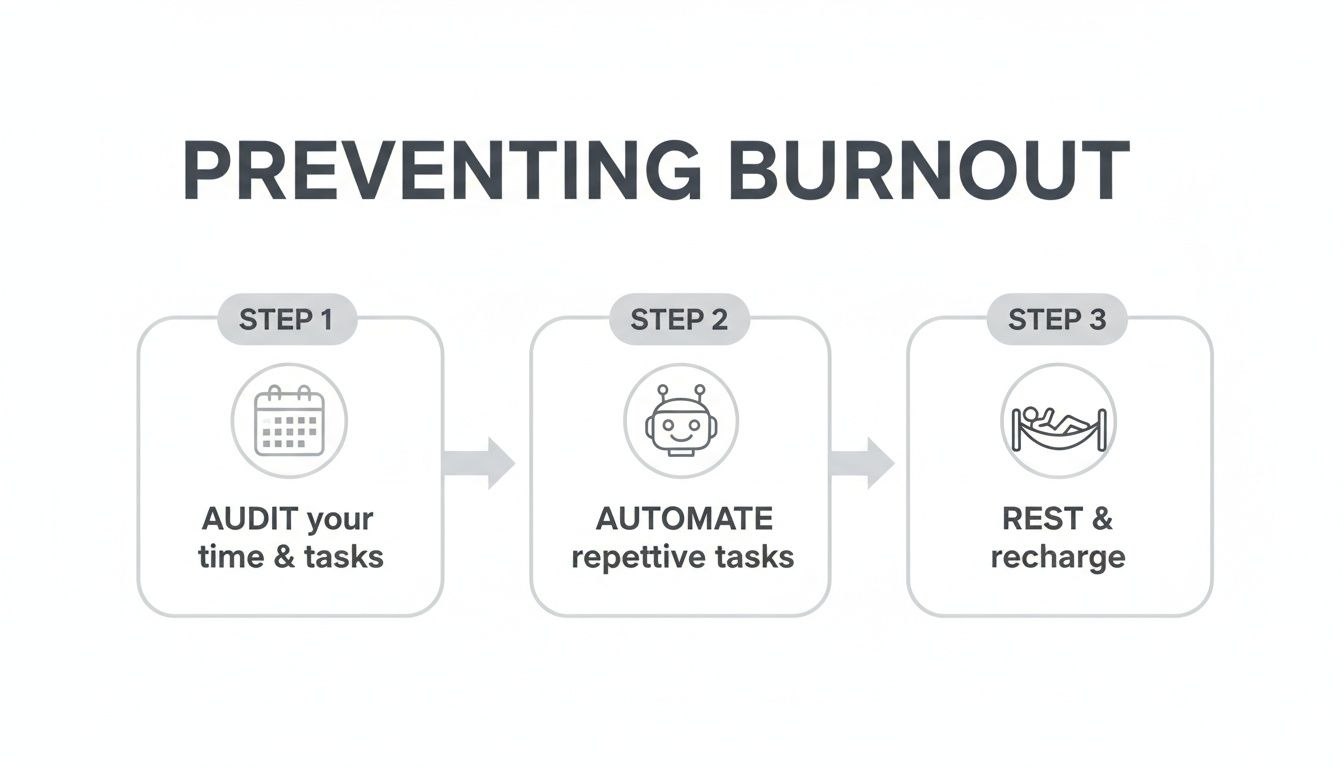
This simple framework—auditing tasks, automating what you can, and protecting time for rest—is a powerful way to show you're serious about creating a sustainable workload.
Three Steps To Take This Month
To get the ball rolling and build momentum, focus on a few visible, high-impact actions you can start right now. These "early wins" show your faculty you're listening and serious about making changes.
Here are three things you can kick off this month:
- Launch a "Meeting Audit." Announce a one-month audit of all recurring meetings. This single move immediately shows you respect your teachers' time and signals a commitment to cutting down on administrative bloat.
- Schedule "Listening Tours." The Head of School or Principal should schedule small-group listening sessions with different departments. Keep the agenda simple: "What's one thing we could do to make your job more sustainable?"
- Benchmark One Key Benefit. Pick one high-value benefit—like professional development funding or tuition remission—and do a quick analysis of how your school's offering stacks up against three local competitors.
These initial steps are powerful because they're concrete, visible, and centered on listening to your staff. They lay the groundwork for the bigger, systemic changes required to build a culture of retention that becomes your school's most valuable asset.
Ready to build a more stable, high-performing faculty? Book a call with JAG Consulting https://link.jagconsultingservices.com/widget/bookings/prospective/school/consultation/zoom today to discuss your school's unique challenges and opportunities. You can also visit our website to learn more.
Answering Your Toughest Questions About Teacher Retention
Even with the best intentions, moving from a plan on paper to real-world changes can feel daunting. As a private school leader, you're not alone in the questions that come up. Here are the most common hurdles we see leaders face, along with some straight talk on how to clear them.
We Have Almost No Budget for This. Where Do We Even Start?
This is, without a doubt, the number one question we hear. And the answer is actually really encouraging. Some of the most powerful retention strategies have less to do with big budgets and more to do with culture, respect, and communication.
If you're working with a tight budget, your first moves should be high-impact and low-cost.
Start by auditing your meeting schedule. Can you eliminate a standing meeting and give that time back to your teachers? This costs absolutely nothing but sends a powerful message: their time is valuable. Another no-cost strategy is to schedule a few "listening tours"—small, informal group chats with faculty. Just showing up and listening signals that you value their perspective.
You could also formalize a peer mentorship program. Pairing a new teacher with a seasoned veteran is often more about smart logistics and scheduling than it is about new funding.
The key is to create visible, meaningful wins that improve the day-to-day reality of teaching at your school. These early cultural victories build the trust you'll need to make a strong case for bigger investments down the line.
How Do We Justify the Cost? What’s the Real ROI?
Measuring the return on investment for your retention efforts isn't just a good idea—it's essential for getting your board on board and securing future funding. While some of the benefits are about morale and culture, the financial case is surprisingly easy to make.
First, you need to calculate your current cost of turnover. This is the number that will get everyone’s attention. For every single teacher who walks out the door, add up the real costs:
- Fees for job postings and recruitment platforms.
- The dollar value of administrative hours spent sifting through resumes, conducting interviews, and checking references.
- Onboarding and training costs for their replacement.
- Any stipends you pay to mentors or department heads for the extra support a new hire requires.
Even a conservative estimate puts the cost of replacing one teacher at $12,000 or more. In many markets, it's significantly higher.
Once you have that number, the math becomes simple. If you invest in a program that prevents even two or three teachers from leaving, you can directly weigh the cost of that program against the $24,000 or $36,000 you just saved in turnover expenses. The data almost always shows that investing in your current team is dramatically more cost-effective than constantly chasing new hires.
What's the Single Biggest Mistake School Leaders Make?
The biggest and most common mistake is assuming you already know why your teachers are leaving.
Too often, leaders jump to the conclusion that it's all about salary. They spend months designing a new compensation plan, only to discover the real issues were a crushing workload, a lack of support from the administration, or a toxic dynamic within a specific department.
Putting a solution in place before you have a clear diagnosis is a recipe for wasting precious time, money, and goodwill.
Before you launch a single new initiative, you have to do the groundwork. Use anonymous climate surveys, conduct truly candid exit interviews (not just a checklist), and facilitate honest focus groups. You have to uncover the actual drivers of turnover at your school. Using data ensures your efforts target the problems your teachers are actually experiencing, not the ones you assume they are.
How Long Until We Actually See a Difference?
Let’s be clear: improving teacher retention is a long game, not a quick fix. Think of it like turning a ship, not a speedboat. While some of your actions can boost morale almost immediately—like canceling that pointless weekly meeting—seeing a measurable drop in your attrition rate will take time.
You can typically expect to see early signs of progress within the first academic year. This might look like more positive feedback on your annual climate survey or just hearing better things in the faculty lounge.
However, a real, sustained reduction in your turnover percentage usually becomes clear after about 18 to 24 months of consistent, focused effort. As you map out your strategy, it can be helpful to have clear definitions for the terms you're using; you might find it useful to consult a comprehensive glossary of employee retention strategies. The two most important ingredients here are patience and consistency.
Ready to build a retention strategy that transforms your school's stability and success? JAG Consulting specializes in helping private school leaders create environments where great teachers choose to build their careers.
Book a call with JAG Consulting https://link.jagconsultingservices.com/widget/bookings/prospective/school/consultation/zoom to discuss your school's unique challenges, or visit our website to learn more about how we can help you build a thriving faculty.

I'm Dr. Jeannie Gudith, Founder and CEO of JAG Consulting. We help you develop, improve, buy or sell your private school.
I'm so glad you're here
Hello!



© 2025 JAG CONSULTING.
all rights reserved. privacy policy + REFUND POLICY. TEMPLATE by sugar studios + Showit
