


Duties of a Principal: A Guide for Private School Leaders
Ask anyone what a private school principal does, and you’ll likely get a picture of someone who handles discipline and makes announcements. But that image is decades out of date. The modern principal’s role has expanded far beyond simple management into strategic leadership, instructional vision, and operational command.
Today, a private school principal is less of a manager and more of a 'Chief Everything Officer.' They are the central pillar holding up the entire institution, responsible for everything from academic excellence and financial health to building a vibrant, engaged school community. For the nearly 30,000 private schools in the United States, this role is the single most critical factor in achieving their mission.
The Principal's Role Beyond the Office Door
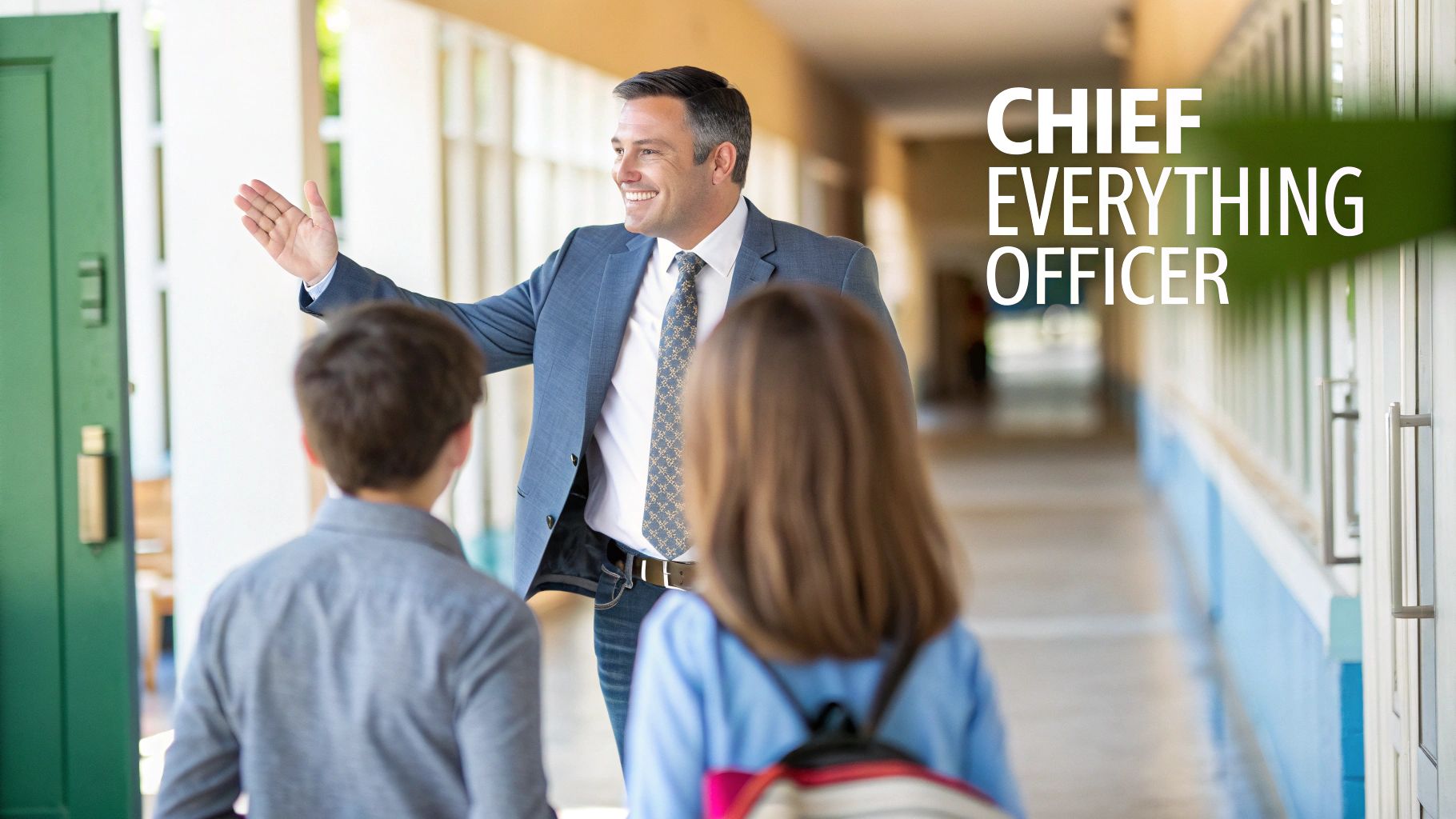
Forget the old idea of a principal buried under paperwork, shut away from the daily life of the school. The best leaders today are visible, dynamic, and deeply involved in every facet of their community. They are the strategic heart of the school, and the demands have never been greater—principals now work an average of 55 hours per week just to keep up.
This isn't one job; it's a dozen rolled into one. On any given day, a principal must be an instructional coach, a financial analyst, a human resources manager, and a community ambassador. It’s a unique balancing act, requiring a leader who can maintain a long-term strategic vision while handling the immediate, pressing needs of the day.
A Strategic Vision for Private Schools
For private school founders and board members, grasping the sheer scope of this position is the first step to hiring the right leader. A truly effective principal doesn't just maintain the status quo; they are the engine of growth and innovation.
Their leadership directly shapes several critical areas:
- Instructional Excellence: They set the academic tone, champion teacher development, and ensure the curriculum not only meets but exceeds the high standards expected by tuition-paying families.
- Operational Integrity: From campus safety to the admissions pipeline, they build an efficient, secure, and welcoming environment where learning can flourish.
- Financial Stewardship: They are entrusted with the school's budget, tasked with allocating resources wisely to ensure long-term financial health and viability, a critical concern for all private institutions.
- Community Engagement: They are the chief relationship-builder, forging strong connections with parents, alumni, and donors to create a powerful network of support essential for fundraising and enrollment.
The modern private school principal's effectiveness is not measured by their ability to manage tasks, but by their capacity to lead people, inspire a shared vision, and build a resilient educational community.
Ultimately, the principal is the living embodiment of the school's mission. Their skill in navigating these diverse responsibilities is what determines whether a school merely functions or truly thrives.
Ready to find a leader who can master these complex duties and elevate your institution? Book a complimentary consultation with JAG Consulting to discuss your school's unique leadership needs, or visit our website to learn more.
Driving Academic Excellence and Instructional Leadership
While a principal certainly wears many hats, their most fundamental duty is to be the school's chief academic officer. This goes way beyond just signing off on the curriculum. It’s about actively building a culture of high standards, genuine curiosity, and a relentless drive to get better every single day. Especially in a private school, where parents are investing in a specific educational promise, this duty is everything.
An effective principal isn't just a building manager; they are an instructional leader. You’ll find them in the classrooms, observing teachers, and talking with them about their craft. This isn't micromanagement. It's about partnership and creating a dynamic feedback loop where teachers feel supported and empowered to elevate their practice.
This hands-on approach is one of the most direct ways a principal shapes both teacher effectiveness and student achievement, making it one of their most impactful responsibilities.
Cultivating a Culture of Feedback and Growth
Just watching a class from the back of the room isn't leadership. True instructional leadership means building meaningful, structured feedback cycles that actually drive professional growth. It’s about moving away from generic annual reviews and toward frequent, constructive conversations focused on specific teaching strategies and what they mean for student outcomes.
For example, a principal might:
- Conduct focused walk-throughs: These are short, informal classroom visits to see a specific instructional practice in action, followed by a quick, supportive email to the teacher.
- Facilitate peer observations: Create structured opportunities for teachers to learn from one another by observing their colleagues' classes.
- Model a growth mindset: Talk openly about their own professional learning, showing that everyone in the school community is a learner.
This commitment to growth isn't just a nice-to-have; it's a globally recognized standard. Providing instructional leadership—observing classrooms, giving feedback, and fostering continuous improvement—is a core duty of a school principal. According to the UNESCO GEM Report 2025, a staggering 73% of countries expect principals to support staff professional development.
However, there's a huge gap between expectation and reality. The data also reveals only 50% of principals frequently followed up with feedback after observations. Closing that gap is what separates a good principal from a great one.
Using Data to Inform Instruction
In the quest for academic excellence, data is a principal's most powerful ally. It turns decision-making from guesswork into a strategic, evidence-based process. And we're not just talking about standardized test scores. In private schools, this includes a rich mosaic of information that helps you understand student learning on a much deeper level.
Great principals use data to answer the most important questions:
- Where are the gaps in our curriculum?
- Which teaching methods are actually working?
- Which students or groups of students need more support?
- How can we best use our resources to improve learning?
By analyzing everything from formative assessments and benchmark tests to student portfolios and even attendance records, a principal can spot trends and work with teachers to implement targeted interventions. This data-informed approach ensures every decision is tied directly to the mission of helping students learn better.
An exceptional private school principal doesn't just collect data; they translate it into a compelling story that guides instructional improvement and rallies the entire academic team around a shared vision of success.
Championing Mission-Aligned Professional Development
Professional development (PD) should never feel like a one-size-fits-all checklist. In a private school, every single PD initiative must be intentionally tied to the institution's unique mission, philosophy, and strategic goals. The principal’s job is to champion learning opportunities that are relevant, engaging, and directly useful in their teachers' classrooms.
This might mean bringing in an expert on project-based learning for a school focused on inquiry, or investing in tech training that supports a personalized learning model. In today's environment, principals are constantly evaluating new innovations. Finding the best AI tools for schools can be a game-changer for streamlining operations and creating new learning opportunities for students.
Ultimately, the principal as an instructional leader is the architect of the school's academic culture. By fostering growth, using data wisely, and aligning development with core values, they create an environment where both teachers and students can reach their highest potential.
Is your school's leadership driving the academic results you need to fulfill your mission? Schedule a call with JAG Consulting today to strengthen your instructional leadership framework, or visit our website to learn more.
Mastering School Operations and Administration
Behind every great private school is a leader who has mastered the art of running the place day-to-day. While shaping the academic culture is the heart of the job, stellar operational management is the skeleton that holds everything together. Think of the principal as the ship's captain: they have to make sure the vessel is sound, secure, and running like clockwork so the crew can focus on the educational voyage.
These aren't just "keeping the lights on" tasks. They are absolutely critical for student safety, parent satisfaction, and the school's long-term reputation and viability. A well-oiled campus creates the stable, predictable foundation that every thriving learning environment needs.
This chart drives home a crucial point: principals want to be instructional leaders, but the daily grind often gets in the way. There's a huge gap between the expectation for providing feedback and how often it actually happens, largely because operational duties demand so much attention.
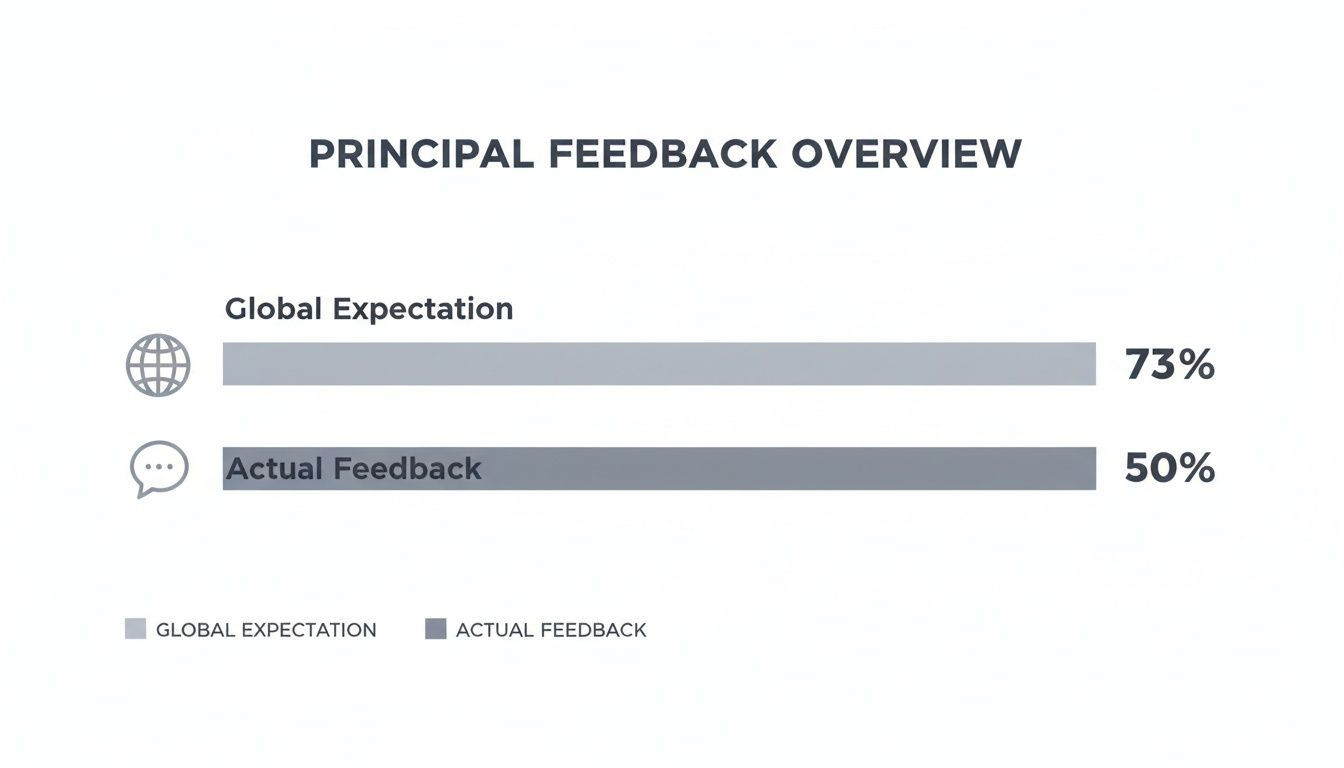
The data doesn't lie. The desire for strong instructional leadership is there, but the reality of running a school often pulls principals away from the very classrooms they're meant to lead.
Juggling Daily Demands with Long-Term Strategy
One of the toughest parts of being a principal is balancing the urgent fires of today with the important strategic goals of tomorrow. The simple truth is that the administrative side of the job can easily swallow the entire day, leaving little room for big-picture educational leadership.
It's an all-consuming challenge. The GEM Report 2025 found that principals spend a staggering 68% of their time on administration, budgets, and operations. This leaves precious little time for mentoring teachers or driving strategic vision. And this isn't a fluke—from the US to Australia, school leaders are putting in grueling 55-hour workweeks, citing the administrative workload as the number one threat to their well-being. You can discover more about these critical leadership findings and see how this impacts schools around the world.
This constant tug-of-war means principals need to be masters of organization, strategic delegation, and implementing efficient systems just to stay afloat.
It's helpful to visualize just how lopsided this time allocation can become. The daily "fires" often take precedence over the long-term, mission-critical work that truly moves a school forward.
A Principal's Time Allocation Daily vs Strategic Duties
| Duty Category | Typical Time Allocation (%) | Examples of Tasks | Strategic Importance |
|---|---|---|---|
| Daily Administration & Operations | 65-75% | Student discipline, parent calls, bus schedules, facility issues, staff coverage | High Urgency, Lower Strategic Impact |
| Instructional Leadership | 10-15% | Classroom observations, teacher feedback, curriculum meetings, data analysis | High Strategic Impact, Often Not Urgent |
| Strategic Planning & Vision | 5-10% | Long-term planning, community partnerships, program development, fundraising | Highest Strategic Impact, Rarely Urgent |
| Human Resources & Staffing | 5-10% | Hiring, staff evaluations, professional development planning, conflict resolution | High Strategic Impact, Cyclical Urgency |
This breakdown makes it clear: without intentional effort, the strategic duties that define a school's future get squeezed out by the administrative demands of the present. The most effective principals find ways to reverse this trend.
Core Operational Responsibilities
A private school principal's operational duties are as broad as they are deep. Success requires a unique blend of skills—from a meticulous eye for detail to the ability to see the forest for the trees.
Key responsibilities typically include:
- Facilities Management: This means ensuring the entire campus—classrooms, labs, athletic fields, and common areas—is safe, clean, and ready for learning. It involves managing maintenance staff, overseeing repairs, and planning for future capital improvements.
- Compliance and Risk Management: A private school principal must stay on top of all local, state, and federal regulations, not to mention accreditation standards. This covers everything from health codes and data privacy laws to ensuring the school has the right insurance coverage.
- Student Admissions and Enrollment: Overseeing the admissions pipeline is the lifeblood of any private school. The principal is ultimately responsible for the entire process, from marketing and recruitment to tours, interviews, and final enrollment, which directly impacts the school's financial health and culture.
- Emergency Preparedness and Safety: This has become a non-negotiable, top-tier responsibility. It means developing, implementing, and regularly drilling comprehensive emergency plans to protect students and staff from any conceivable threat.
A principal's success in operations isn't measured by the crises they handle, but by the ones they prevent. Proactive planning, clear procedures, and a culture of safety are the hallmarks of a well-administered school.
Creating a Secure and Efficient Campus
At the end of the day, all these administrative duties serve one goal: creating an environment where teachers can teach and students can learn, free from distraction or fear. When parents choose a private school, they are placing their most precious asset in your hands.
A principal honors that trust by building a campus that is not only academically excellent but also operationally sound. This means clear visitor protocols, secure entry points, and a school climate where everyone feels safe. It also means nailing the daily logistics—transportation, scheduling, and communication—so the school day runs smoothly for the entire community.
Are your school's operations a foundation for success or a source of constant friction? Book a call with JAG Consulting to refine your administrative frameworks, or visit our website to explore our operational support services.
Ensuring Financial Health and Talent Management
In the high-stakes world of private education, a principal's role doesn't stop at the classroom door. It extends deep into the boardroom, covering the critical domains of financial stewardship and talent management.
These two areas are more than just line items on a job description; they're two sides of the same coin. You simply can't attract and keep world-class teachers without a solid financial footing. And you can't achieve that financial stability without a team that delivers incredible value to your families.
For a private school, financial health isn't just about balancing the books from month to month. It's about smart resource allocation, strategic tuition modeling, and the kind of long-range planning that ensures the school can deliver on its mission for decades. The principal is the one who has to build and defend a budget where every single dollar is tied to an educational priority.
The Principal as Chief Financial Steward
The financial duties of a private school principal are immense. They are, in the end, responsible for the school's economic survival. This comes down to a delicate balancing act between managing revenue (mostly from tuition), controlling operational expenses, and making strategic investments for the future.
This requires both fiscal discipline and a clear vision. Key responsibilities include:
- Budget Development and Oversight: Working hand-in-glove with the board and business office to craft an annual budget that fuels academic goals and keeps the lights on.
- Enrollment-Driven Forecasting: Projecting revenue based on student enrollment and retention—the absolute lifeblood of a private school’s income.
- Resource Allocation: Making the tough calls. Where do we invest our limited funds? Is it in faculty salaries, a campus tech upgrade, or a new marketing campaign? The principal has to decide what will yield the greatest return on mission.
- Philanthropic Support: Often partnering with a development director to cultivate donors and secure the major gifts needed for capital projects and endowment growth.
Any misstep here has immediate and serious consequences, from cutting beloved programs to damaging the school's reputation. The principal must ensure the school runs like a responsible and sustainable enterprise.
The Art of Talent Management
Financial stability provides the resources, but a school’s excellence is built on its people. This brings us to the principal's other critical hat: talent management. This is the art and science of recruiting, developing, evaluating, and retaining a team of educators and staff who are all-in on the school's mission.
It’s about building a professional culture where great teachers don't just work—they want to stay and grow. The cost of teacher turnover is significant, with some estimates putting the cost of replacing a single teacher at over $20,000 in urban districts, a figure that highlights the financial importance of retention for private schools.
Within this, savvy principals focus on sophisticated strategies like integrated talent management. This isn't just HR jargon; it's a powerful approach that connects every piece of the employee lifecycle—hiring, onboarding, performance reviews, professional growth—into one cohesive strategy.
A principal's most important investment is not in buildings or technology, but in the human capital of their faculty. A school is only as strong as the teachers in its classrooms.
Effective talent management really boils down to three things:
- Strategic Recruitment: Proactively searching for educators who not only have impressive credentials but who also genuinely fit the school's unique culture and mission.
- Meaningful Performance Evaluation: Getting beyond simple checklists to provide regular, constructive feedback that actually helps teachers master their craft.
- Fostering a Supportive Culture: Creating a professional home built on collaboration, mutual respect, and a shared obsession with student success. Research is clear: a positive school climate is a huge factor in teacher retention, which saves a fortune in turnover costs.
By mastering both financial stewardship and talent management, a principal ensures the school has both the resources and the people it needs to deliver on its promise to students and families, securing its legacy for years to come.
Does your leadership team have the financial and HR expertise to secure your school's long-term success? Book a call with JAG Consulting to strengthen your frameworks, or visit our website to learn more.
Building Community and Stakeholder Relationships

A private school’s most valuable asset isn’t its state-of-the-art science lab or its beautiful campus. It’s the strength of its community. At the heart of that community stands the principal, serving as the school's Chief Ambassador. This is arguably one of the most critical roles they play—weaving together the web of relationships that allows the school to truly thrive.
This isn’t about sending out a weekly newsletter or showing up for parent-teacher night. It’s about strategically building deep, lasting connections with every single stakeholder: current parents, alumni, the board, faculty, and even local community partners. When these relationships are strong, the benefits are powerful and tangible.
Fostering Transparent Communication and Trust
In any strong community, trust is the currency. For a principal, that trust is built through consistent, open, and honest communication. The principal sets the tone for the entire school, creating channels that ensure information flows freely and reliably in all directions. In an environment where families are making a significant financial investment, this isn't just good practice—it's essential for retention.
Effective principals create a culture of communication by:
- Establishing a Regular Cadence: They implement predictable communication, like weekly updates or monthly town halls, so stakeholders always know when and how they'll hear from leadership. No one is left guessing.
- Being Accessible and Visible: They maintain a true open-door policy and are a constant presence at school events, from Friday night football games to the spring musical. Their visibility signals approachability.
- Managing Crises with Clarity: When things go wrong—and they inevitably do—a principal's ability to communicate calmly, clearly, and proactively is what maintains the community's confidence.
A principal's ability to forge strong stakeholder relationships is directly correlated with school success. A vibrant, engaged community translates into higher enrollment, improved student retention, and greater philanthropic support.
This proactive approach builds a deep reservoir of goodwill that proves invaluable time and time again. A community that feels informed is a community that feels engaged and is ready to rally behind the school's mission.
Managing the School Brand and Driving Enrollment
In a crowded market, every private school has a brand—a unique promise of an educational experience. The principal is the primary storyteller and brand manager, responsible for making sure the school’s identity is clear, compelling, and consistently communicated.
This leadership is absolutely critical for enrollment, the financial engine that keeps the school running. The principal works hand-in-hand with the admissions team to articulate the school’s unique value to prospective families. Often, a principal who can passionately and authentically share the school's story is the single deciding factor for a family choosing between several excellent options.
Spearheading Development and Fundraising
For most private schools, tuition alone doesn't cover the full cost of delivering a world-class education. Fundraising and development aren't just "extras"; they are core to the school's financial health. A key duty of the principal is to partner with the development office and the board to lead these crucial efforts.
This involves more than just asking for money. It means:
- Cultivating Major Donors: Building genuine, personal relationships with key families and alumni who have the capacity to make transformative philanthropic gifts.
- Championing the Annual Fund: Inspiring broad participation from the entire community—every gift matters—to support the school's day-to-day operating budget.
- Leading Capital Campaigns: Articulating a compelling vision for the school's future to secure the funding needed for major projects, like a new arts center or expanded athletic facilities.
Ultimately, the principal as Chief Ambassador is the one who weaves all these diverse threads—parents, alumni, faculty, and donors—into a resilient and supportive tapestry. It’s this powerful network of relationships that provides the resources, loyalty, and energy a private school needs to deliver on its mission.
Is your school’s community engagement driving the results you need? Book a confidential consultation with JAG Consulting to build a powerful stakeholder relations strategy, or visit our website to learn more.
How to Write a Principal Job Description That Attracts Top Talent
Let’s be honest: translating the massive, multifaceted role of a private school principal into a two-page document feels almost impossible. But that job description is your first, and arguably most important, tool for attracting the right kind of leader.
Think of it less as a simple recruitment ad and more as a strategic blueprint. It sets clear expectations, defines what success looks like at your school, and gives candidates a real sense of your mission. For founders, boards, and hiring committees, this is your chance to stop looking for a principal and start looking for your principal.
This template is designed to give you a solid, practical starting point. It’s built around the core duties we’ve been discussing, making sure there are no surprises between what you write and what the job actually demands.
Start with a Compelling Job Summary
This is your elevator pitch. You have about three sentences to grab the attention of a busy, talented professional and convince them to keep reading. It needs to capture the unique spirit of your school and the essence of the role.
- Example: "[School Name], an independent K-8 private school built on the principles of inquiry-based learning and character development, is searching for its next dynamic and visionary Principal. We're looking for an experienced instructional leader with a proven track record in academic excellence, operational management, and community building—someone ready to guide our school into its next chapter of growth."
Breaking Down the Key Responsibilities
This is the real heart of the job description. Forget long, dense paragraphs. Use clear, action-oriented bullet points, and group them by function. This makes the role digestible and shows candidates you have a clear understanding of what you need.
Instructional Leadership:
- Champion and implement a rigorous academic program that is deeply aligned with our school's mission.
- Foster a culture of professional growth through meaningful teacher observation, feedback, and development.
- Use data to drive smart instructional decisions that improve student outcomes.
Operational Management:
- Oversee all daily school operations, ensuring a safe, efficient, and genuinely supportive learning environment.
- Manage student admissions, enrollment, and retention strategies.
- Ensure compliance with all accreditation standards and regulatory requirements.
Financial & Talent Management:
- Develop and manage the annual school budget in close collaboration with the board.
- Lead the recruitment, hiring, evaluation, and retention of high-quality faculty and staff who fit our culture.
Community Engagement:
- Serve as the primary ambassador for the school, building strong, authentic relationships with parents, alumni, and community partners.
- Lead fundraising and development efforts to support the school's long-term financial health.
Your job description is the first impression a candidate will have of your school. Make it clear, professional, and aspirational. It’s the only way to attract the caliber of leadership your students and faculty truly deserve.
Crafting a job description that truly reflects your school's needs is the first step. The next is navigating the complex search process to find the right person. A great job description provides a clear rubric for evaluating every candidate who applies.
To make this process even clearer, here’s a quick-glance table breaking down the essential components of a robust principal job description.
Key Components of a Principal Job Description
| Section | Core Components to Include | Example Language |
|---|---|---|
| Job Summary | Your school’s mission, student body (e.g., K-8), and the core qualities you're seeking in a leader. | "Seeking a visionary Principal to lead our mission-driven private school…" |
| Key Responsibilities | A bulleted list that covers the primary domains: leadership, academics, operations, finance, HR, and community. | "Drive instructional excellence through consistent teacher observation and coaching…" |
| Qualifications | The non-negotiables: degrees, required years of experience, and specific skills like budget management or curriculum development. | "Master's degree in Educational Leadership required; 5+ years of private school administrative experience preferred." |
| Leadership Attributes | The crucial soft skills: strategic vision, emotional intelligence, communication style, and collaborative spirit. | "A collaborative and empathetic leader with exceptional interpersonal and communication skills." |
This structured approach ensures that you not only outline the "what" of the job but also the "how" and "who" that will make a principal successful in your unique environment.
Finding a leader who truly excels across all these domains is a formidable challenge. JAG Consulting specializes in leadership searches for private schools, ensuring you find the perfect fit for your unique mission. Book a complimentary consultation to discuss your hiring needs, or visit our website to learn more.
Your Questions About a Principal's Duties, Answered
When you're running a private school, questions about the principal's role come up all the time—from founders, board members, and even aspiring leaders looking to step into the job. Let's cut through the noise and get to some clear, direct answers about what this critical leadership role really entails.
What Is the Single Most Important Duty of a Principal?
While a private school principal wears countless hats, one stands above all others: instructional leadership. It's the one responsibility that directly shapes the very core of your school's mission—student learning. A great principal’s ability to mentor teachers, refine the curriculum, and cultivate a genuine culture of academic curiosity is what truly defines a school’s success and builds its reputation. Everything else is secondary.
How Much Time Should a Principal Spend on Administrative Tasks?
In a perfect world, a principal would spend most of their day in classrooms and coaching teachers. The reality on the ground is often quite different. Research shows that principals can get buried in administrative and operational duties, spending up to 68% of their time on everything from budget spreadsheets to leaky faucets. One of the biggest challenges for any school leader is building efficient systems and learning to delegate effectively, all in the service of clawing back more time for academic oversight and long-range planning.
What Legal Responsibilities Does a Principal Have for School Safety?
Principals carry a heavy legal "duty of care" to provide a safe environment for every student and staff member on campus. This isn't just a moral obligation; it's a legal one. This includes creating, implementing, and regularly drilling emergency plans, maintaining a secure campus, and taking every single threat seriously. A failure to act on credible warnings of potential harm can expose both the principal and the school to devastating legal liability.
The ultimate measure of a principal's leadership is their ability to balance the urgent demands of daily operations with the important, long-term work of building a thriving academic community.
How Is a Private School Principal's Role Different?
The private school principal's job description often includes duties that their public school counterparts never touch. They are almost always deeply involved in enrollment management, marketing, and fundraising—the very functions that ensure the school’s financial survival. They have to be the chief brand ambassador, building rock-solid relationships with tuition-paying parents, alumni, and donors to secure the school's future and fulfill its mission.
Mastering the extensive duties of a principal is non-negotiable for building a successful private school. At JAG Consulting, we specialize in helping school leaders meet these challenges head-on.
Ready to find, develop, or support a principal who can take your school to the next level? Book a complimentary consultation with JAG Consulting today, or visit our website to see how our leadership development services can help.

I'm Dr. Jeannie Gudith, Founder and CEO of JAG Consulting. We help you develop, improve, buy or sell your private school.
I'm so glad you're here
Hello!



© 2025 JAG CONSULTING.
all rights reserved. privacy policy + REFUND POLICY. TEMPLATE by sugar studios + Showit
