


Alternative Classroom Seating: A Strategic Guide for Private Schools
When you picture a classroom, what comes to mind? For most of us, it’s rows of silent students sitting at identical desks. That classic image is fading fast, and for good reason.
For private school leaders trying to create exceptional learning experiences, moving beyond that rigid model is essential. Adopting alternative classroom seating isn’t just about buying new furniture. It’s a strategic decision that gives students more agency and has a direct impact on their engagement and even their academic performance.
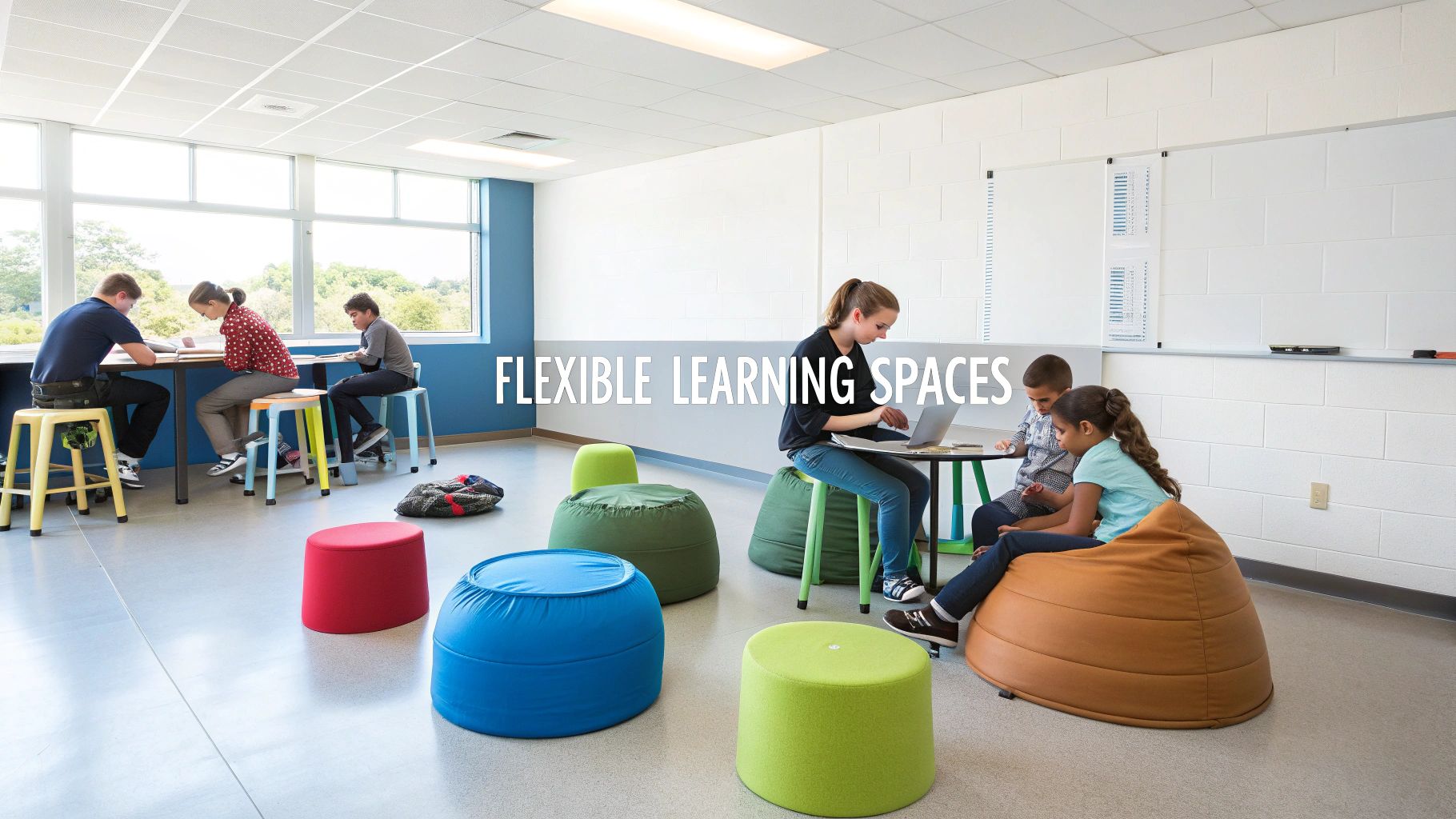
When students get to choose where and how they learn, they immediately take more ownership of their education. This simple act of empowerment can completely shift the classroom atmosphere from passive listening to active, hands-on participation. Instead of forcing every child into a one-size-fits-all box, flexible seating honors and supports their unique needs, a critical differentiator for private schools that pride themselves on personalized education.
Catering to Diverse Learning Needs
One of the biggest wins with this model is how well it serves a whole spectrum of learning styles. Kinesthetic learners, who absorb information best when they can move, absolutely thrive with options like wobble stools or standing desks. These choices provide just enough subtle sensory input to help them focus on the lesson instead of fighting the urge to fidget.
It's not just a hunch; the research backs this up. One study found that 88% of students with conditions like anxiety, ADHD, or dyslexia reported better concentration when they had flexible seating choices.
This approach really benefits all students by letting them find a position that feels comfortable and effective. Common options include:
- Wobble Stools: Great for encouraging active sitting and building core strength.
- Standing Desks: Allow students to change their posture and stay energized throughout the day.
- Scoop Rockers: Perfect for comfortable floor-level seating during group work or quiet reading time.
- Bean Bag Chairs: Help create relaxed, cozy corners for independent tasks.
By offering this kind of variety, you can create more inclusive and supportive learning spaces where fidgeting and off-task behavior naturally decrease.
Fostering Collaboration and Community
Flexible seating also has a powerful, organic way of encouraging collaboration. Think about it: large tables, comfy floor cushions, and furniture that can be easily rearranged make group projects and peer-to-peer learning feel seamless and natural. This is particularly relevant for private schools that often emphasize small-group instruction and project-based learning.
Students learn to communicate, negotiate, and work together in a setting that looks a lot more like a modern, collaborative workplace. This dynamic setup helps break down social barriers and builds a much stronger sense of classroom community.
Ready to see how a tailored seating strategy could elevate your school's learning environment? Book a complimentary consultation with JAG Consulting today, or visit our website to learn more about our strategic planning services for private schools.
Evaluating Your School's Readiness for Flexible Seating
Jumping into a full-scale classroom redesign without a clear plan is a recipe for wasted resources and frustrated staff. A successful move to alternative classroom seating starts with an honest look at your private school’s unique environment. Before you buy a single wobble stool, you have to understand your current reality—what's working, what isn't, and what your community truly needs.
This isn't about guesswork. It's about a data-driven approach that ensures your investment aligns with your educational mission and builds a solid foundation for a rollout that teachers and students will actually embrace.
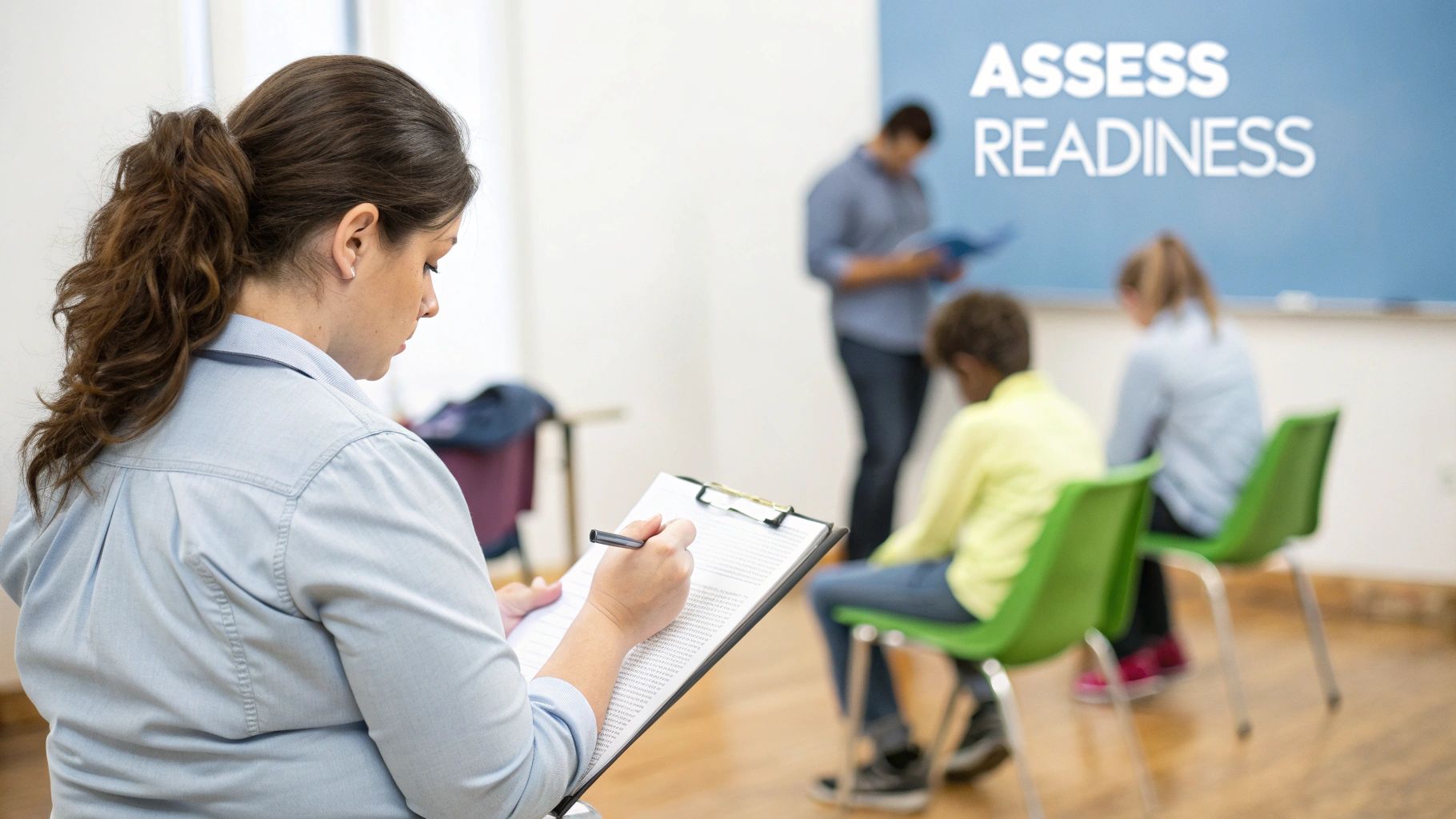
Start with Your Educators
Your teachers are on the front lines every day. They hold the real-world insights you can't get anywhere else. A full-scale adoption of flexible seating is far more likely to succeed with their buy-in, so bring them into the conversation from day one.
Anonymous surveys are a fantastic tool for gathering honest feedback without pressure. Ask targeted questions to get a clear picture of their perspectives:
- What are your biggest classroom management challenges tied to the current seating arrangement?
- How much instructional time is lost redirecting students who are fidgeting or off-task?
- What are your primary concerns about managing a classroom with varied seating options?
- On a scale of 1-10, how open are you to piloting a flexible seating model?
This feedback gives you a qualitative baseline. It helps you identify enthusiastic teachers who can champion a pilot program and pinpoints specific training needs for those who are a bit more hesitant.
Observe Your Classroom Dynamics
Survey data is powerful, but nothing beats direct observation for revealing the unspoken truths. Spend time in different classrooms across various grade levels and just watch. Look for the subtle cues that the current setup is falling short.
Are students constantly rocking on their chair legs? Lying on the floor during reading time? Shifting in their seats trying to get comfortable? These aren't signs of misbehavior; they’re signals that the environment isn’t meeting their physical or sensory needs. Document how kids use the space for both individual and group work. Pinpointing these friction points will directly inform which types of alternative classroom seating will have the most immediate and meaningful impact.
Bring Students into the Conversation
Who knows what students need better than the students themselves? Involving them in the process isn't just a nice gesture—it builds excitement and a real sense of ownership over their learning space.
For younger kids, this could be as simple as asking them to draw their ideal classroom. For older students, formal surveys or focus groups can yield surprisingly sophisticated insights.
A key takeaway from successful implementations is that student choice is paramount. When students feel heard and respected in the design of their learning environment, they become more invested in their own success and the classroom community.
Ask them directly about their preferences. Do they focus better with a little bit of movement, in a quiet corner, or standing up? Their answers will help you build a seating "ecosystem" that truly caters to a wide range of learning profiles, rather than just replacing one rigid setup with another.
This proactive assessment phase is crucial. The global K-12 furniture market is a massive $93 billion industry, with growth driven by ergonomic and flexible designs. North American schools alone represent over $2.58 billion in demand for these solutions. To make sure your investment becomes part of this positive trend instead of a costly mistake, you have to ground your decisions in the specific, observed needs of your school. Read the full research about the K-12 furniture market to see where the industry is headed.
By thoroughly evaluating your school's readiness, you move from guessing what might work to knowing what will.
To help you get started, here's a checklist to guide your classroom observations and stakeholder conversations. It’s designed to turn abstract goals into concrete data points.
Classroom Readiness Assessment Checklist
Use this checklist to evaluate key factors before implementing alternative seating.
| Assessment Area | Key Questions to Ask | Success Indicator |
|---|---|---|
| Teacher Buy-In | Are teachers open to piloting new seating? What are their biggest concerns (management, fairness, etc.)? | At least 2-3 teachers per grade level express strong interest or curiosity. |
| Student Behavior | What percentage of students are visibly fidgeting, rocking, or leaving their seats inappropriately? | Observations show consistent off-task physical behaviors not related to instruction. |
| Space Utilization | How are students currently using floor space or unconventional spots for learning? Is collaboration hindered by furniture? | Students are already self-selecting alternative spots (floor, standing) when given the chance. |
| Instructional Style | Does the current pedagogy (e.g., project-based learning, small groups) conflict with the rigid seating arrangement? | Teachers express frustration that furniture limits their ability to run collaborative activities. |
| Physical Infrastructure | Is there adequate space for varied seating? Are there safety concerns (e.g., blocked exits)? | Classrooms have flexible zones that can accommodate different furniture footprints. |
This checklist isn't about getting a perfect score. It's about building a clear picture of your starting point so you can design an implementation plan that addresses real needs and sets your school up for success.
Ready to build a strategic plan for your school's future? Book a call with JAG Consulting to discuss how we can help you navigate this process, or visit our website for more resources.
Selecting the Right Mix of Seating Options
Choosing the right pieces for an alternative classroom seating arrangement is less about picking trendy furniture and more about building a thoughtful ecosystem. A common mistake is simply swapping every desk for a wobble stool. That one-size-fits-all approach, even with flexible furniture, completely misses the point.
The real goal is to curate a collection that supports a whole range of learning tasks and meets a wide spectrum of student needs—from the student who needs quiet focus to the group that needs to dynamically collaborate. Instead of hunting for the single perfect chair, think in terms of zones and functions. How can you create a space that offers sensory input, a quiet retreat, and active engagement all at the same time?
Furnishing for Focus and Movement
For a surprising number of students, the ability to move is directly wired to their ability to focus. That constant fidgeting you see isn't always a sign of distraction; often, it’s a subconscious attempt to get the sensory input their brain needs to concentrate. The research is clear: giving students an outlet for this energy can dramatically increase their on-task behavior.
Here are a few foundational pieces that allow for subtle, productive movement:
- Wobble Stools: These backless, rounded-bottom stools are fantastic. They require students to engage their core just to stay balanced, and that gentle, continuous motion provides crucial vestibular input that can calm a restless mind.
- Stability Balls: Often used as chairs, these large inflatable balls work much like wobble stools. They encourage what's known as "active sitting," which is great for improving posture and concentration for students who thrive on movement.
- Standing Desks: This is such a simple but powerful option. Standing desks let students shift their weight, stretch their legs, and change position without being disruptive. They are incredibly effective for breaking up long stretches of sedentary work.
By providing these kinds of options, you’re giving students a productive way to channel their physical energy. It’s a simple shift that can cut down on disruptive behaviors and foster a more focused atmosphere for everyone.
Creating Zones for Different Tasks
A well-run flexible classroom is the opposite of chaotic; it's intentionally designed for different kinds of learning. The most effective way to do this is by creating distinct zones, each furnished to support a specific type of work. This structure also helps students learn to self-regulate, teaching them to choose the spot that best fits their current task.
The key is offering a spectrum of choice. A student who needs the tight, secure feeling of a compression seat for focused writing may prefer the openness of a large collaborative table for a group science project. The environment should adapt to the task, not the other way around.
Consider setting up zones like these in your classrooms:
- Collaboration Zone: Think large tables, maybe with whiteboard surfaces, and stools that can be easily rearranged. This is the spot built for teamwork.
- Quiet/Reading Zone: Outfit a corner with comfortable options like beanbag chairs, scoop rockers, or soft cushions. This creates a calm retreat for independent reading or deep study.
- Floor Work Zone: An open carpeted area with floor cushions and lap desks gives students a great low-to-the-ground option. It's perfect for tasks that don’t require a traditional desk.
- Focused Work Zone: This area might feature individual desks or carrels—some of which could be standing desks—for students who need minimal distractions to really dig into an assignment.
This zoned approach provides the underlying structure that makes an alternative classroom seating model work. It teaches students to make intentional choices about their learning environment—a valuable skill that will serve them long after they've left your school.
The right mix of seating is a direct investment in your students' well-being and academic success. If you're ready to explore how a tailored furniture strategy can elevate your school's learning environments, we're here to help. Book a free consultation with a JAG Consulting expert today or visit our website to learn more about our strategic planning services.
Measuring the Impact on Student Success
Let's be honest. Investing in new classroom furniture is a big decision for any school. While the updated look is nice, the real win—the argument that convinces your board, parents, and donors—is the measurable, data-backed impact on student success.
This isn't about making a classroom look more modern. It's a strategic investment that pays dividends in student focus, engagement, and academic performance. You need more than just feel-good stories; you need concrete data that shows exactly how these changes create a better learning environment.
Thankfully, the research is on our side.
Quantifying Improvements in On-Task Behavior
One of the first things teachers notice when they introduce flexible seating is a dramatic drop in off-task behaviors. Think about it: for a student who struggles with focus, especially those with sensory needs or attention-related challenges, a traditional chair can feel like a cage. Giving them an outlet for movement completely changes that dynamic.
This is especially true for your youngest learners.
A powerful study focusing on kindergarteners at risk for emotional and behavioral disorders (EBD) found staggering results. Before the change, these students were in their seats an average of just 38-42% of the time. After introducing stability stools and scoop rockers, that number shot up to an incredible 96-99%.
Their on-task behavior saw a similar jump, climbing from a baseline of 32-83% to a consistent 85-95%. These aren't small gains. They represent a complete shift in the learning experience for these kids.
This data gives school leaders a powerful story to tell. It moves the conversation from "buying new chairs" to "implementing a proven strategy to nearly double on-task behavior for our most vulnerable learners."
This infographic breaks down how different types of seating support specific learning needs, from active sitting to focused teamwork.
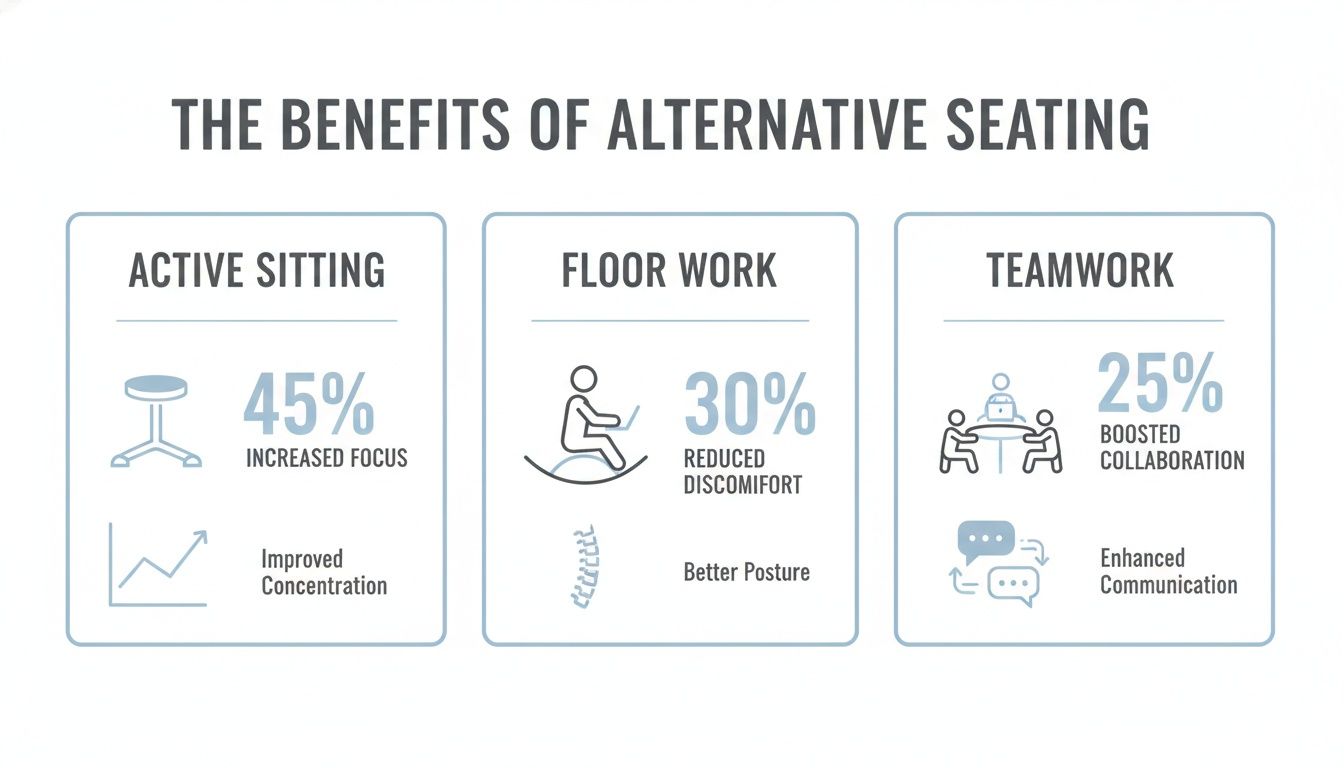
As you can see, offering a mix of options is key. It allows you to support a range of activities and student needs all at once, right in the same classroom.
Boosting Concentration Across All Learning Profiles
The benefits aren't just for students with diagnosed needs. The vast majority of all students report a real difference when they have some control over their learning space.
Research shows that a stunning 88% of students with common challenges like anxiety, ADHD, or dyslexia report being able to concentrate better in classrooms with flexible seating.
This is a critical statistic for any private school committed to differentiated instruction and supporting every single learner. It proves that alternative classroom seating isn't just a trend; it's a core component of an inclusive, effective educational strategy. By offering choices, you empower students to self-regulate and pick the tool that helps their brain focus on the task at hand.
Collecting Your Own School-Specific Data
While all this research builds a solid foundation, nothing is more persuasive than data from your own classrooms. This is where a well-run pilot program (which we'll cover later) becomes your best friend for gathering evidence.
Here are a few simple metrics you can track to measure the impact:
- Teacher Observations: Use a simple tally sheet. Before you make the change, track the number of times students get out of their seats or distract others during a lesson. Do it again a few weeks after introducing the new seating. The numbers will speak for themselves.
- Student Surveys: Keep it simple. Ask students to rate their ability to focus, their comfort level, and their general engagement on a 1-5 scale. Capturing their perspective provides powerful qualitative data to back up your observations.
- Time-on-Task Analysis: Have an administrator or instructional coach observe a class for 20 minutes and simply count the percentage of students actively engaged in their work. Comparing the pre- and post-implementation numbers can be incredibly revealing.
By measuring these outcomes, you build a compelling, data-driven case that proves alternative seating is an investment with a clear and positive return for your students and your school's mission.
Ready to explore how to build a data-backed case for transforming your learning spaces? Book a complimentary consultation with JAG Consulting to discuss how to measure what matters. You can also visit our website to see how we help private schools thrive.
How to Launch a Budget-Friendly Pilot Program
A school-wide overhaul of your classroom furniture is a massive undertaking. Let's be honest, it's rarely practical to do it all at once. The good news? You don't have to.
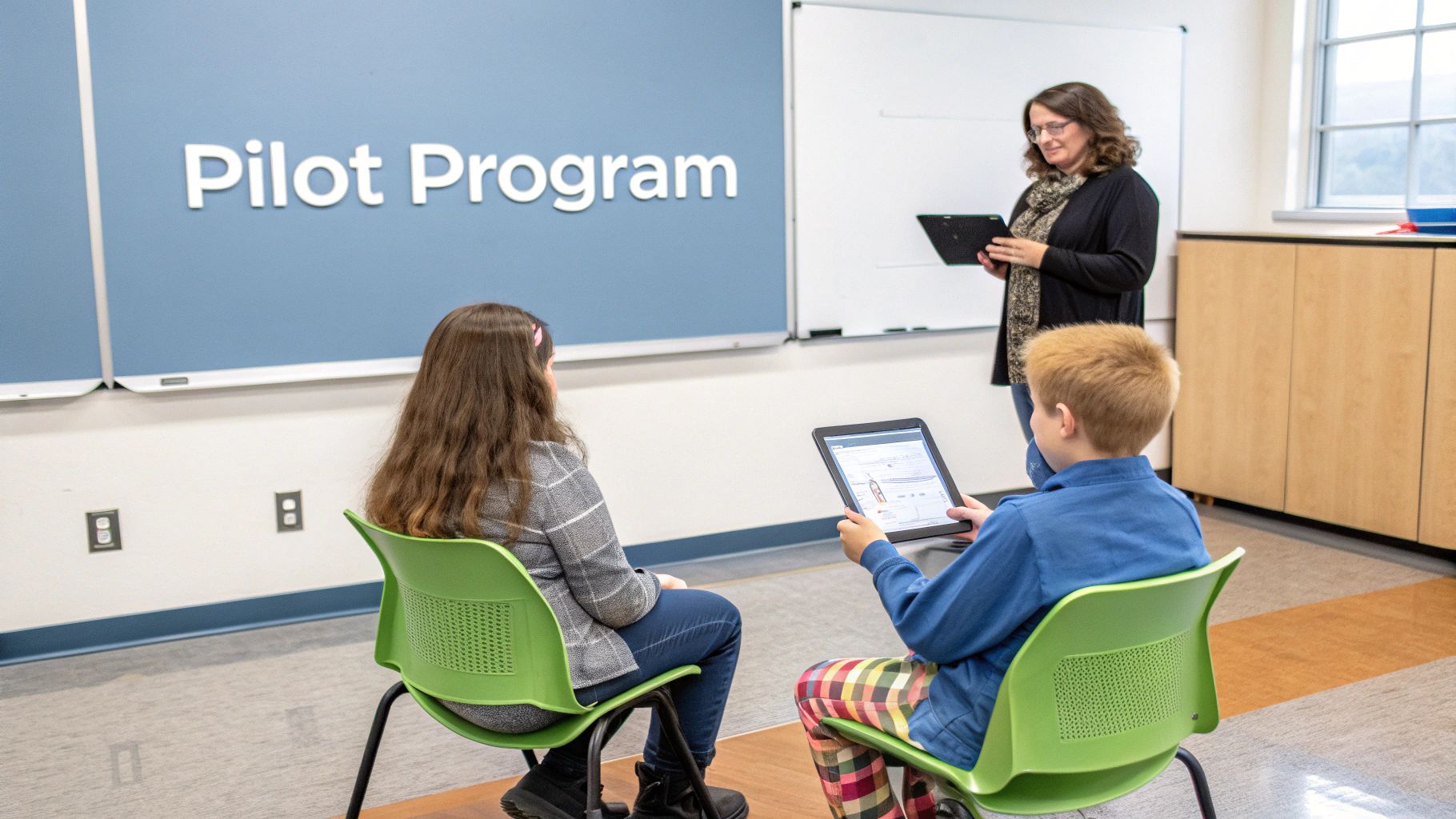
The smartest, most sustainable way to bring alternative seating into your school is to start small. Think one or two classrooms, not an entire grade level. This is how you test the waters, gather invaluable data from your school, and build undeniable momentum before asking for a big investment.
A successful pilot becomes a living, breathing case study right down the hall. It turns an abstract idea into a tangible success story that gets teachers, parents, and your board excited.
Setting a Realistic and Phased Budget
The first step is to shift from an all-or-nothing mindset. Instead of budgeting to equip an entire year group, focus on fully outfitting just one or two classrooms with enthusiastic, volunteer teachers. This move alone dramatically reduces the initial financial ask and minimizes any perceived risk.
You can often equip a single pilot classroom for $1,500 to $4,000. That's a far more approachable figure than a six-figure, school-wide initiative.
When you build that pilot budget, think in terms of variety, not volume. The goal isn’t to buy 25 of the same new wobble stool. It's to acquire a curated collection of 4-6 different types of seating. This is how you learn which options actually work best for your students and your teachers' instructional styles.
Your pilot budget should prioritize durability and function. It’s better to invest in fewer high-quality, commercial-grade pieces that will withstand daily classroom use than to purchase cheaper residential items that will need frequent replacement.
This phased approach keeps the investment manageable and lets the early results justify future spending.
Finding Cost-Effective and Durable Furniture
You don't need the most expensive furniture on the market to run a successful pilot. There are plenty of ways to acquire durable and effective seating without breaking the bank. It's all about smart sourcing.
Consider these cost-effective strategies:
- Educational Suppliers: Many suppliers offer discounts for pilot programs or have starter packs specifically designed for flexible seating. Never hesitate to ask for a few samples you can test drive before making a larger purchase.
- Look for Multipurpose Pieces: Get more bang for your buck. Items like cushioned cube chairs can be used as seats, small tables, or even building blocks, offering more value for every dollar spent.
- DonorsChoose & Local Grants: We've seen many private schools successfully fund pilot classrooms through platforms like DonorsChoose or by applying for small grants from local community foundations focused on education.
And always factor in longevity. Classroom furniture has to be tough. Focus on pieces with solid warranties and easy-to-clean surfaces to ensure your investment lasts well beyond the initial pilot phase.
Structuring a Compelling Grant Proposal
When you're seeking funding from donors or foundations, your proposal needs to be clear, data-driven, and relentlessly focused on student outcomes. Don't just ask for money for "new chairs."
You're requesting an investment in a proven educational strategy that directly impacts student success. Frame it that way.
Your proposal has to clearly articulate the "why" behind this pilot. Use the compelling research that’s already out there. For instance, studies show that in-seat behavior for at-risk students can jump from under 40% to nearly 99% with the right seating options. Lead with powerful statistics like that.
A strong grant proposal always includes:
- A Clear Problem Statement: Briefly describe the challenges you see in traditional classrooms—off-task behavior, difficulty meeting diverse learning needs, fidgeting, you name it.
- A Data-Informed Solution: Explain how alternative classroom seating directly addresses these issues. Cite the research on improved focus, collaboration, and engagement.
- A Detailed Pilot Plan: Outline which classrooms will participate, the types of furniture you plan to purchase, and exactly how you will measure success (e.g., teacher observations, student surveys, focus metrics).
- A Specific and Transparent Budget: Itemize your requested furniture and costs. Show them you've done your homework and every dollar has a purpose.
By launching a smart, cost-conscious pilot, you build an ironclad internal argument for wider adoption. The results from your own classrooms provide the hard evidence you need to move forward with confidence.
Are you ready to design a pilot program that sets your school up for long-term success? Book a call with JAG Consulting today or visit our website to learn how we help schools navigate strategic change.
Developing Policies for a Smooth Transition
New furniture is only half the battle. I've seen schools invest thousands in beautiful, flexible seating only to watch it descend into chaos because they skipped the most important part: building the human systems to support it.
A successful transition to alternative classroom seating hinges on crystal-clear expectations and solid training for both students and staff. Without structure, choice becomes a distraction. Real success comes from establishing the routines that allow a dynamic classroom to thrive, not just survive.
The key is to proactively teach students how to make smart choices about their learning environment. This isn't something they just know. It requires explicit instruction on selecting a spot that best fits the task at hand. Is it time for quiet, independent reading? A beanbag chair or scoop rocker might be perfect. Is it a collaborative science project? The large group table is the obvious choice.
Establishing Clear Routines and Expectations
To avoid a daily scramble for the "best" seats, you need simple, visual management systems. A popular and incredibly effective tool is a seating choice chart or a pocket chart system.
It’s straightforward: each student gets a clothespin or magnet with their name on it, which they place next to their chosen seating area for a particular activity or part of the day.
This simple approach accomplishes several critical goals:
- Ensures Fairness: It stops the same kids from grabbing the same popular spots every single day.
- Builds Self-Regulation: It forces a moment of intentionality, prompting students to pause and think about what they actually need to learn best.
- Provides Data: It gives teachers a quick visual of where everyone is and helps them guide students who might be making poor choices for the task.
Ultimately, this structure transforms the environment from a potential free-for-all into a powerful tool for teaching self-management skills.
Shifting the Teacher's Role from Manager to Facilitator
For this model to truly work, your teachers need support. Their role has to evolve from being a manager of static rows to a facilitator of a dynamic learning space. This requires professional development that’s laser-focused on classroom management strategies specific to flexible seating.
The data strongly supports making this shift. Research consistently shows flexible seating dramatically boosts engagement and concentration. One study found 78% of students reported better concentration, with 64% noting increased participation. For students with challenges like anxiety or ADHD, an incredible 88% experienced improved concentration. You can read more about these classroom engagement findings to understand the potential impact.
By proactively developing clear policies and providing targeted training, you empower your teachers to confidently lead their reimagined classrooms. This ensures the transition is smooth, sustainable, and actually delivers the academic and behavioral benefits you’re seeking.
Ready to build the policies and provide the training needed to transform your learning spaces? Book a complimentary consultation with JAG Consulting to start planning your school's future, or visit our website for more expert guidance.
Your Questions Answered: Alternative Seating in Practice
When private school leaders start exploring a move to alternative classroom seating, a few key questions always come up. Let's tackle them head-on, because getting these answers right is crucial for building the confidence you need across your entire school community.
How Do You Manage Student Choice Without Creating Chaos?
This is the big one, and the answer is simpler than you might think: structure. Success here hinges entirely on teaching, not just offering.
Great teachers don't just roll out new chairs and say, "Go for it." They explicitly model and teach students how to choose a "best fit" seat for the task at hand. This is a learned skill, not an intuitive one, and it's a powerful lesson in self-regulation.
Many of the most successful classrooms we've worked with use visual aids like choice charts and establish clear routines from day one. A gradual rollout often works best—maybe starting with a rotation system to let every student try each new option before you open the floodgates to free choice. This structured freedom is what turns a potential free-for-all into a powerful tool for learning.
What Is the Typical Cost and ROI for a Classroom?
Costs can vary dramatically. You might spend a few hundred dollars to supplement an existing classroom or several thousand for a complete redesign. But the real return on investment (ROI) isn't just about the furniture; it’s measured in powerful educational outcomes.
Studies show that in-seat behavior for at-risk students can soar from a baseline average of 38% to nearly 99% with the right seating.
Think about what that number really means. It translates directly to higher student engagement, fewer classroom disruptions, and a more positive school culture. Those are invaluable assets for any private school. The best way to see this for yourself is to start with a pilot program. It’s the perfect way to measure this ROI on a smaller, more manageable scale before committing to a wider rollout.
Does Flexible Seating Work for Middle and High School Students?
Absolutely. While the furniture might look different, the core principles are just as effective for older students. You'll likely be looking at cafe-style tables, standing desks, and collaborative lounge areas instead of wobble stools and floor rockers.
In fact, this approach perfectly mirrors modern university and workplace environments. It helps them develop essential skills like time management, collaboration, and personal responsibility. You're treating them like the young adults they are, which is one of the best ways to prepare them for what comes next.
Ready to transform your learning spaces with a proven strategy? JAG Consulting provides the expert guidance private school leaders need to navigate change successfully. Book a complimentary consultation today or visit our website to learn how we can help your school thrive.

I'm Dr. Jeannie Gudith, Founder and CEO of JAG Consulting. We help you develop, improve, buy or sell your private school.
I'm so glad you're here
Hello!


© 2025 JAG CONSULTING.
all rights reserved. privacy policy + REFUND POLICY. TEMPLATE by sugar studios + Showit
