


Alternative Classroom Seating Strategies for Private Schools
Alternative classroom seating turns rows of immovable desks into a dynamic landscape of wobble stools, floor cushions and standing desks. From day one, teachers in private schools notice livelier discussions and fewer wandering eyes. According to a 2023 survey, 68% of private school educators report enhanced student collaboration after introducing flexible seating.
Ready to explore seating solutions tailored to private schools? Book a call with JAG Consulting or visit our website to get started: Book a call with JAG Consulting or Visit our website.
Understanding The Key Benefits Of Alternative Classroom Seating
When academic demands run high, flexible seating offers a surprising payoff: measurable boosts in student engagement and well-being. In one suburban K–8 academy, simply swapping out traditional desks bumped on-task rates from 60% to 85% in under two months.
Engagement And Focus Gains
By letting students wiggle on wobble stools or sink into cushioned floor seats, you invite subtle movement without distraction. That slight physical freedom translates into:
- In-Seat Behavior climbing above 90% as learners stay in place longer
- Class Participation rising by nearly 20% during discussions
- A 78% increase in concentration and autonomy for neurodivergent students
Key Takeaway
Allowing natural movement and personal choice in seating helps students dive deeper into lessons.
Supporting Neurodiverse Learners
Not every child processes sensory input the same way. Flexible options give students with ADHD or sensory needs on-demand input. The result? Lower anxiety, better self-regulation and a calmer classroom atmosphere.
Case Study K–8 Academy
At a Texas K–8 school, adding wobble stools and a handful of standing desks sent on-task behavior soaring from 60% to 85% in just six weeks.
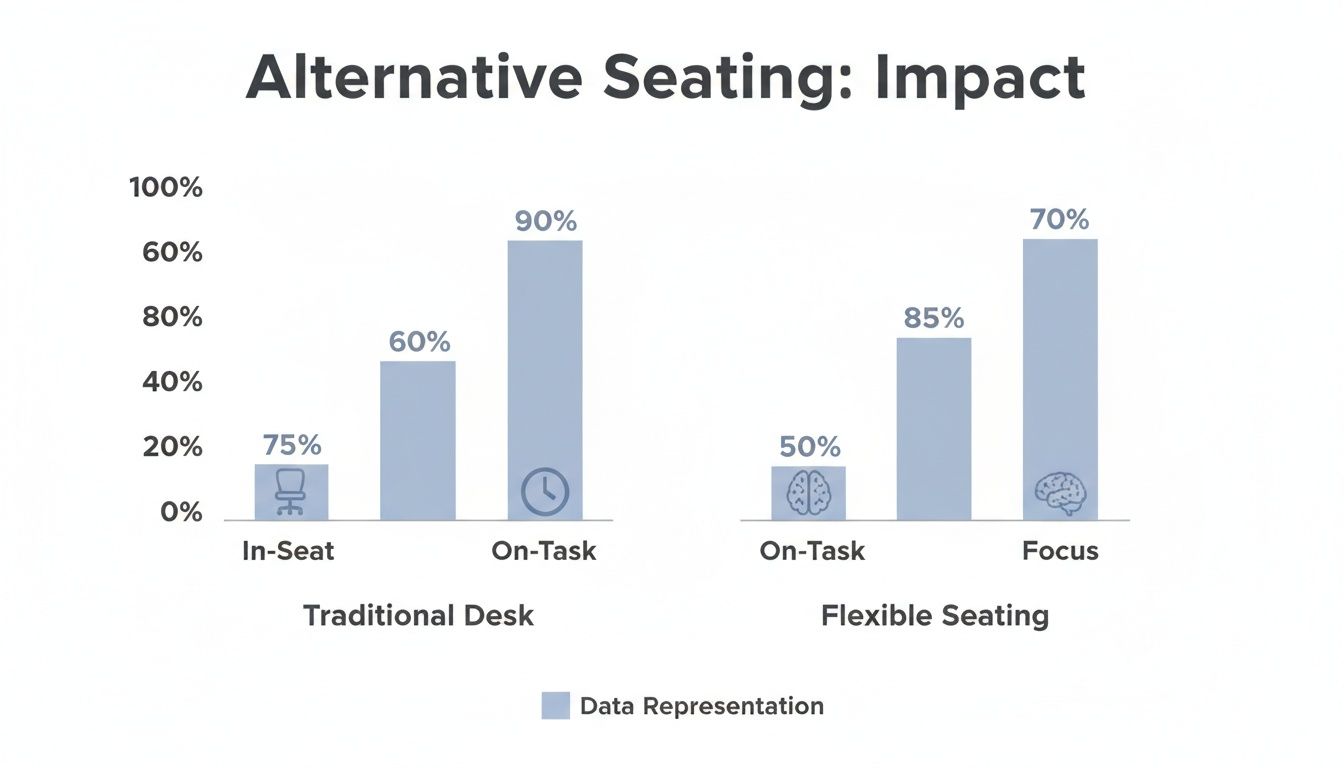
This graphic captures the shift in In-Seat, On-Task and Focus metrics, highlighting a 25% jump in sustained attention.
Evidence From Research
A growing body of studies confirms what practitioners are seeing in real time:
- In-Seat Behavior can rise to 96–99%
- On-Task Behavior often exceeds 80%
- 78% of students report sharper focus
- 64% note better participation
- 88% of learners with mental-health challenges experience enhanced concentration
For a detailed breakdown, see the PubMed article on classroom seating interventions: PubMed Study on Flexible Seating
Here’s a quick look at the before-and-after data:
Behavior And Engagement Improvements With Alternative Seating
Summary of in-seat and on-task behavior improvements observed in studies implementing alternative seating
| Metric | Baseline Standard Chairs | Alternative Seating Results |
|---|---|---|
| In-Seat Percentage | 65% | 96–99% |
| On-Task Percentage | 60% | 80%+ |
| Participation Rate | 50% | 64% |
| Focus Score | Medium | High |
That side-by-side comparison makes a compelling case for private schools looking to invest in student engagement.
Visualizing Seating Outcomes
Rather than guessing which pieces will get the most use, look at how students naturally gravitate toward wobble stools and floor cushions. These options often top daily-use charts, guiding smart purchasing decisions.
Benefits For Administrators
When kids are settled and alert, classroom management becomes smoother. Fewer behavior referrals free up administrator time for strategic priorities instead of discipline disputes.
Enhancing Student Well-Being
Creating cozy corners with low tables and plush cushions offers a quick reset for mindfulness or quiet reading. Schools report lower stress levels and a more positive classroom climate.
Tips For Smooth Rollout
- Train your teaching team on seating guidelines and rotation schedules
- Collect student feedback each week and tweak zones accordingly
- Refresh furniture layouts every quarter to keep things fresh
Take The Next Step
Ready to tailor a seating plan that fits your school’s culture and goals? Connect with JAG Consulting for a customized strategy.
Book a call with JAG Consulting or Visit our website.
Data Driven Decisions
Employ classroom-management software to monitor in-seat and on-task trends over time. Continuous tracking ensures your seating strategy delivers consistent engagement gains and stronger retention.
Assessing Your School’s Seating Needs
To kick things off, sketch each classroom’s floor plan to see how students navigate the day. A quick layout audit often uncovers pinch points and tucked-away spots waiting for a seat update.
Next, inventory what you have on hand. List every chair, desk, table, storage unit and whiteboard. That way, you’ll know which pieces are past their prime and where there’s extra inventory gathering dust.
Surveys can fill in the blanks fast. Ask teachers to rate seating by comfort, durability and flexibility. Invite students to pick their top three workstations—after all, 73% of respondents in peer-school pilots already prefer standing options.
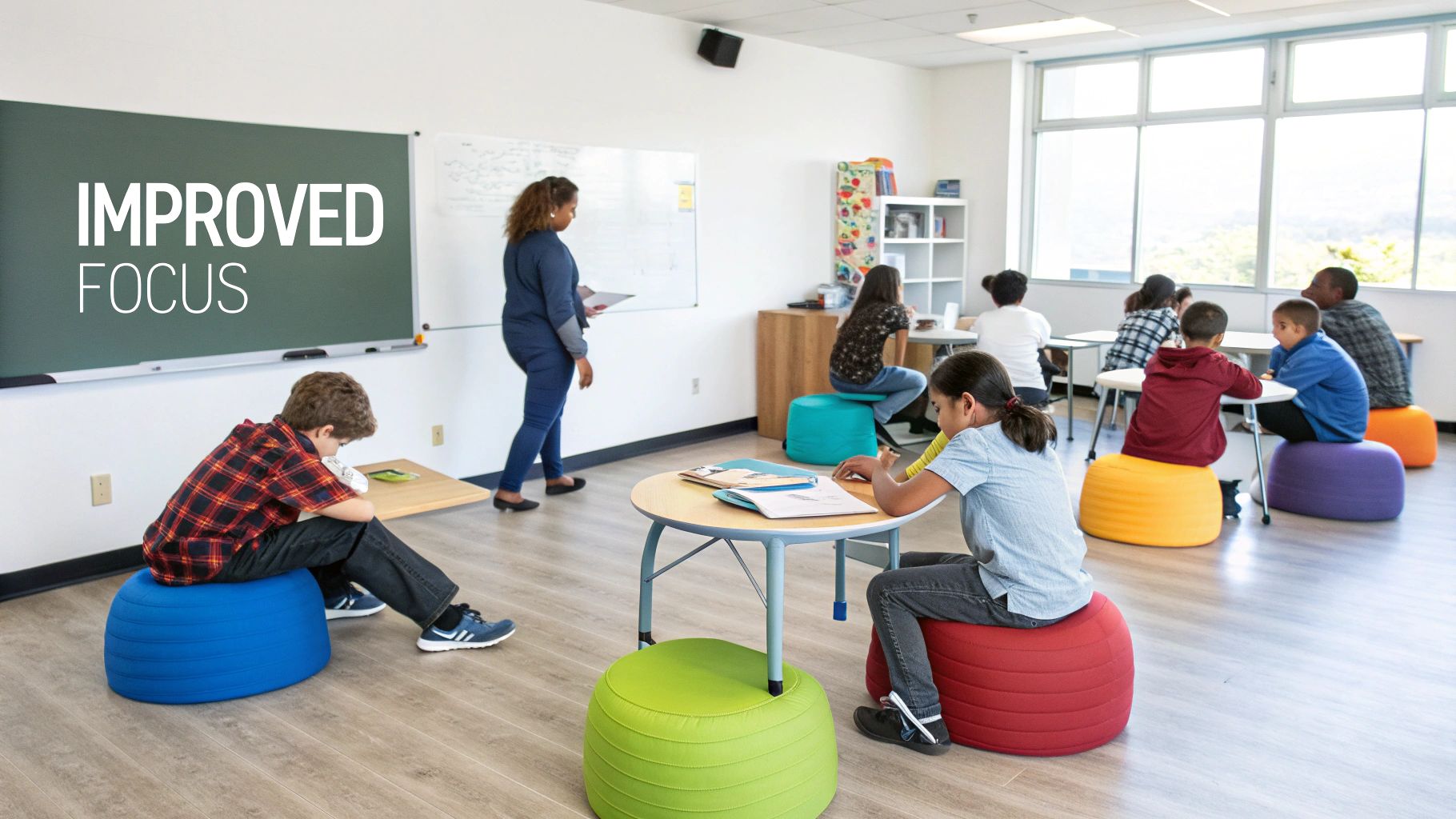
Running Effective Surveys
- Keep your questionnaire under five questions to avoid survey fatigue.
- Choose digital platforms like Google Forms for real-time results.
- Include open-ended prompts to uncover unanticipated needs.
“Engaging both teachers and students in this discovery phase builds ownership and reveals hidden needs.” – Riverside Preparatory Administrator
After collecting responses, spot any missing seating types. Maybe there are no standing desks or soft seating pods. At Riverside, that gap prompted the addition of wobble stools and modular tables in the middle school math lab.
Don’t overlook special education needs either. A quick poll with support staff highlights who needs extra lumbar support or chairs that allow movement. Tying your selections to IEP accommodations boosts inclusion and keeps you compliant.
Translating Data Into Action
- Map traffic flow and seating zones in every room.
- Cross-reference your inventory with survey feedback.
- Highlight critical shortages, such as missing huddle spaces.
- Rank purchases by the impact they’ll deliver.
Modular tables topped the charts at Riverside, increasing group-work engagement by 22% and cutting furniture rearrangement time by 30%. These figures should guide your procurement strategy.
Your seating action plan should contain:
- A detailed floor plan showing proposed swaps
- A prioritized checklist of items per classroom
- Budget estimates plus maintenance notes
- Alignment with your school’s teaching approach
Keep everyone in the loop with concise updates at staff meetings or via email visuals. When stakeholders see clear layouts and numbers, they grasp the benefits instantly.
Key Insight
Mapping and feedback reduce guesswork, ensuring investments in alternative classroom seating deliver tangible returns.
Planning budgets early prevents surprises. Many private schools set aside about 15% of their annual furniture budget for seating updates. Splitting purchases across two semesters smooths out cash flow.
Tie installation and delivery to term breaks. That way, you avoid disrupting lessons when desks and chairs arrive.
Engaging Stakeholders
- Host a 15-minute workshop to walk through the plan and gather final input.
- Present example layouts at open houses or in newsletters for parent feedback.
Document each item’s maintenance schedule and warranty details to protect your investment.
With this foundation, your next step will involve selecting specific furniture styles that fit your budget and pedagogy. Book a call with JAG Consulting or Visit our website to explore our private school advisory services.
Choosing And Designing Flexible Seating Options
Private schools juggle a blend of learning styles, budget limits, and room layouts every day.
Picking the right alternative seating can boost student engagement by 25%. In this section, we’ll walk through the must-have features—durability, adjustability, sustainability—and show how each option fits common classroom activities.
By the end, you’ll have a custom rubric that helps you rate seats objectively and craft a seating plan proven to lift collaborative lab work by 30%.
Key Criteria For Seating Selection
- Durability: Seek out materials rated for 10,000+ hours of daily use. These hold up under active classrooms.
- Adjustability: Chairs with height or tilt options accommodate around 75% of students.
- Sustainability: Models made from recycled plastics can shave your carbon footprint by 30%.
- Ergonomics: Good lumbar support and posture alignment reduce fatigue by 15%.
Matching these features to tasks makes every corner of your room feel intentional—whether it’s a debate circle or a quiet reading zone.
Real World Examples
In one Montessori-inspired preschool, staff added balance balls next to low tables. Independent reading time jumped by 18%.
Meanwhile, a small college seminar revamped its setup with standing desks and high stools during debates. Students reported 82% better focus in group discussions.
These snapshots highlight how flexible seating works for both early learners and adult students. A cohesive look—mixing colors and textures—also underscores your school’s identity.
Before moving on, take a quick look at popular seating types and where they shine:
This visual shows balance balls, wobble stools, floor cushions, and standing desks side by side—complete with price ranges, materials, and recommended age groups.
Comparison Of Alternative Seating Types
Below is a brief guide to help you weigh cost, ergonomics, and space impact at a glance.
| Seating Type | Key Feature | Best For |
|---|---|---|
| Balance Ball | Core-strength building | Active play and reading corners |
| Wobble Stool | 360° motion support | Group work and brainstorming |
| Floor Cushion | Lightweight and portable | Cozy zones and solo reading |
| Standing Desk | Height-adjustable surface | Labs and debate sessions |
| Bean Bag Chair | Deep contouring comfort | Quiet reflection and study pods |
This comparison helps you avoid clutter by choosing stackable or modular pieces that fit various room sizes.
Tips For Order And Layout
- Check shipping lead times of 6–8 weeks before finalizing orders.
- Allocate storage carts for seats not in daily rotation.
- Arrange seating to keep clear sightlines and easy flow.
In private school settings, aesthetic details matter. Select fabrics and finishes that echo your school’s palette—students notice, and it reinforces brand values.
Creating Your Personalized Rubric
Build a simple scoring sheet to compare options on:
- Comfort (1–5 scale)
- Cost (alignment with budget)
- Maintenance (ease of cleaning and repairs)
- Versatility (number of activities supported)
- Student Preference (survey feedback)
“Involve teachers and students early to capture real needs and prevent unused furniture.”
For instance, if wobble stools earn 4.8/5 in comfort surveys while floor cushions sit at 3.2, your investment becomes clear. Actual feedback—like 68% of students favoring movable seats—guides your bulk purchases.
Rotate a small batch for two weeks, gather insights, then finalize quantities. Factor in total lifecycle costs, from routine cleaning to replacement parts. Vendor warranties also protect you against early wear or defects.
A check-in every semester keeps your layout fresh and reflective of evolving classroom needs.
Ready to make confident seating decisions? Book a call with JAG Consulting or Visit our website.
Planning Procurement And Budget For Seating Investments
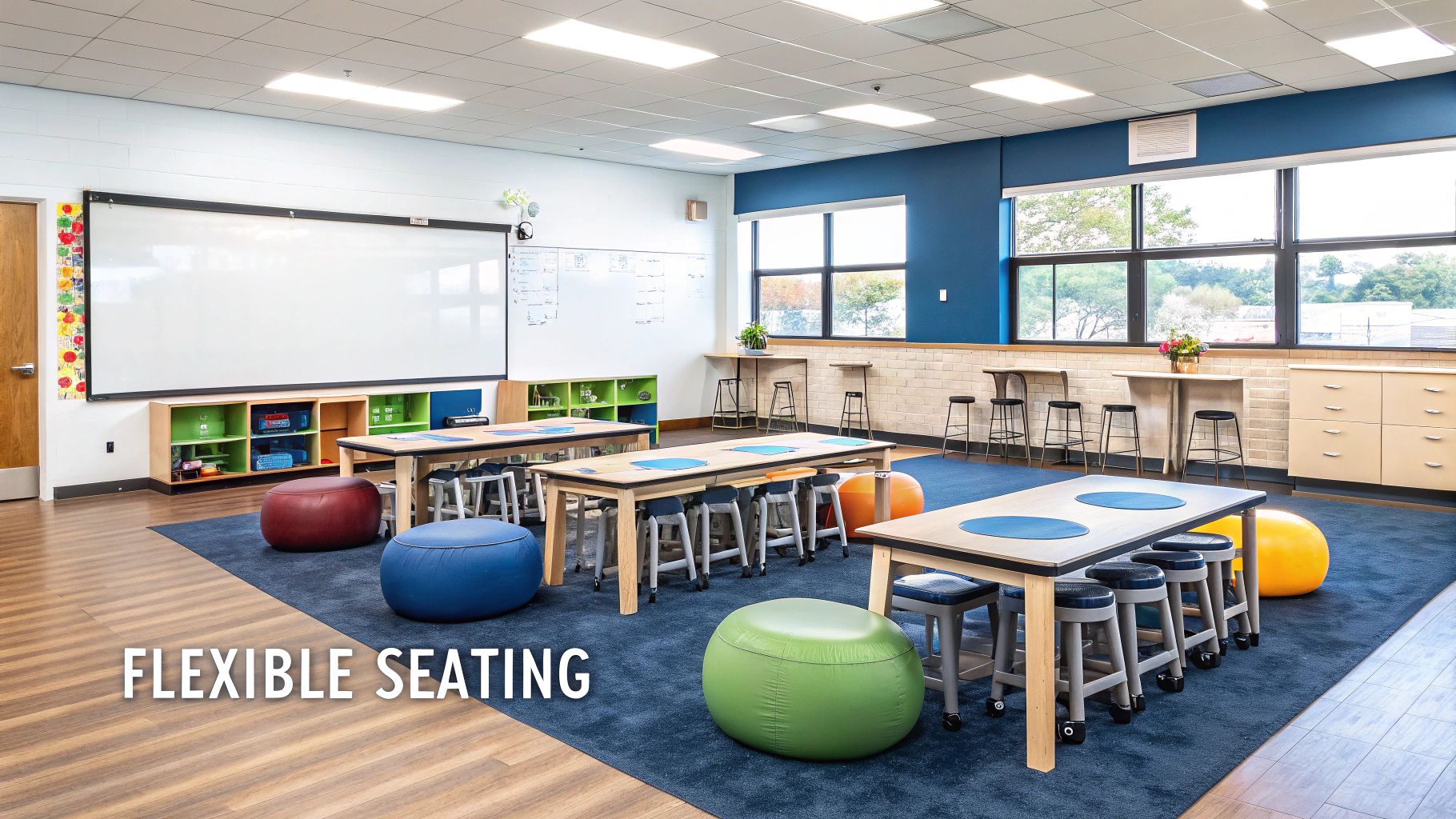
Upgrading your classrooms with flexible seating options can really boost student engagement—and it starts with a solid funding roadmap. Begin by cataloging every chair and desk on campus. Note the age, condition, and any repair needs to ground your cost projections in reality.
- Tap into internal reserves or a designated technology fund.
- Explore educational grants from foundations and government initiatives.
- Rally support from your parent-teacher organization or alumni network.
- Set aside a 10% contingency for shipping hiccups and unexpected repairs.
Flexible seating now commands a significant share of the global school-furniture market. Experts forecast $5.7 billion by 2029, with a 5.8% CAGR from 2023 to 2029. That growth mirrors a shift toward balance balls, wobble stools, rocking chairs, modular desks, and standing workstations. Learn more about flexible seating market trends.
Sample Budget Template
Use this outline to map key items, unit prices, and totals for your budget presentation.
| Item | Unit Cost | Quantity | Total Cost |
|---|---|---|---|
| Wobble Stool | $45 | 20 | $900 |
| Adjustable Standing Desk | $120 | 10 | $1,200 |
| Balance Ball With Base | $30 | 15 | $450 |
| Modular Soft Seating Set | $200 | 5 | $1,000 |
| Subtotal | $3,550 |
Adjust quantities or consider leasing if funds run tight.
Comparing Vendors And Warranties
Side-by-side evaluations uncover the best balance of cost, quality, and support. Develop a simple scoring sheet to rate proposals on these dimensions:
- Total unit cost, including taxes, shipping, and handling.
- Warranty length and what it covers—especially moving parts.
- Availability of maintenance support and replacement parts.
“Our academy cut seating costs by 30% while extending warranties from one to three years,” shares a head of school.
Detailing maintenance and warranty terms upfront safeguards your investment.
Exploring Grant Opportunities
Educational grants can substantially defray seating upgrades. Common sources include tech-oriented awards, community foundations, and corporate social responsibility funds:
- The ABC Education Foundation offers up to $10,000 for classroom innovation.
- State STEM grants frequently cover items like standing desks and wobble stools.
- Corporate partnerships can underwrite as much as 50% of overhaul costs.
Begin grant applications early, tailoring each proposal to your mission and student outcomes. Combined with board-approved capital, this approach keeps your seating project on track.
Book your call with JAG Consulting for a personalized funding plan: Book a call with JAG Consulting or Visit our website.
Running a Pilot for New Seating Arrangements
When you run a pilot, you give your team room to experiment, learn and fix issues before a full rollout. It’s the safest way to avoid costly mistakes down the road.
Choosing Pilot Classrooms
Pick rooms that showcase different ages, subjects and teaching styles. Aim for four spots that feel distinct:
- A STEM lab with 20 students testing collaborative tables
- A humanities class trying out mobile seating setups
- An art studio or music room piloting floor cushions and stools
Defining Clear Success Metrics
Before you reshuffle any desks, agree on what “success” means. In my experience, tying each goal to a specific number and deadline keeps everyone honest. For example:
- 20% faster group task completion
- 90% average in-seat focus each day
- Student comfort and focus rated on a 1–5 scale
Training Teachers On Management Techniques
Engaged teachers make pilots thrive. I always run a 90-minute, hands-on workshop so staff can touch every seat and ask questions. Equip them with:
- Laminated quick-reference cards for wobble-stool safety and cushion care
- Rotation plans that spell out who moves what, when
- A dedicated digital channel for real-time feedback
Case Study From Lakeside School
Lakeside School rotated wobble stools and mobile whiteboards in six classrooms. Within five weeks, they saw a 20% boost in group work efficiency. Teachers reported livelier discussions—and far fewer behavior issues.
“Small tweaks in seating sparked big gains in student collaboration,” recalls the academic coordinator.
Gathering Data And Feedback
Combine hard numbers with on-the-ground observations. I recommend:
- Logging daily furniture use in a shared online tracker
- Collecting anonymous sticky-note feedback during exit tickets
- Interviewing a small teacher panel every two weeks for deeper insights
Refining Your Approach Mid Pilot
Flexibility is your secret weapon. Each week, review usage data and make tweaks:
- Move any piece used under 50% of the time to a fresh spot
- Swap out cushions for standing desks if kids crave more movement
- Adjust cleaning schedules based on wear patterns and traffic
Establishing Rotation Schedules And Guidelines
Clear routines eliminate confusion. Create a simple rotation calendar and:
- Assign students roles for setting up and stowing seats
- Color-code labels to match seats with rotation slots
- Post a quick infographic on wobble-stool use and cushion care
| Pilot Phase | Key Activity | Success Indicator |
|---|---|---|
| Week 1 Setup | Layout Finalized & Training | 80% Teacher Confidence |
| Week 2 Data | Usage Tracking & Surveys | 70% Seat Utilization |
| Week 3 Adjustment | Furniture Reallocation | +1 Point on Survey Scores |
| Week 4 Final Review | Comprehensive Analysis | 90% Positive Feedback |
Preparing For School Wide Adoption
When your pilot wraps up, package those wins into a clear proposal. Highlight the 20% efficiency gain, an 85% comfort rating and any cost savings. Use charts and tables so trustees see the impact at a glance.
Ready to roll out flexible seating across your campus? Reach out to JAG Consulting for expert support in planning your next pilot. Book a call with JAG Consulting or Visit our website.
Engaging Stakeholders With Effective Training
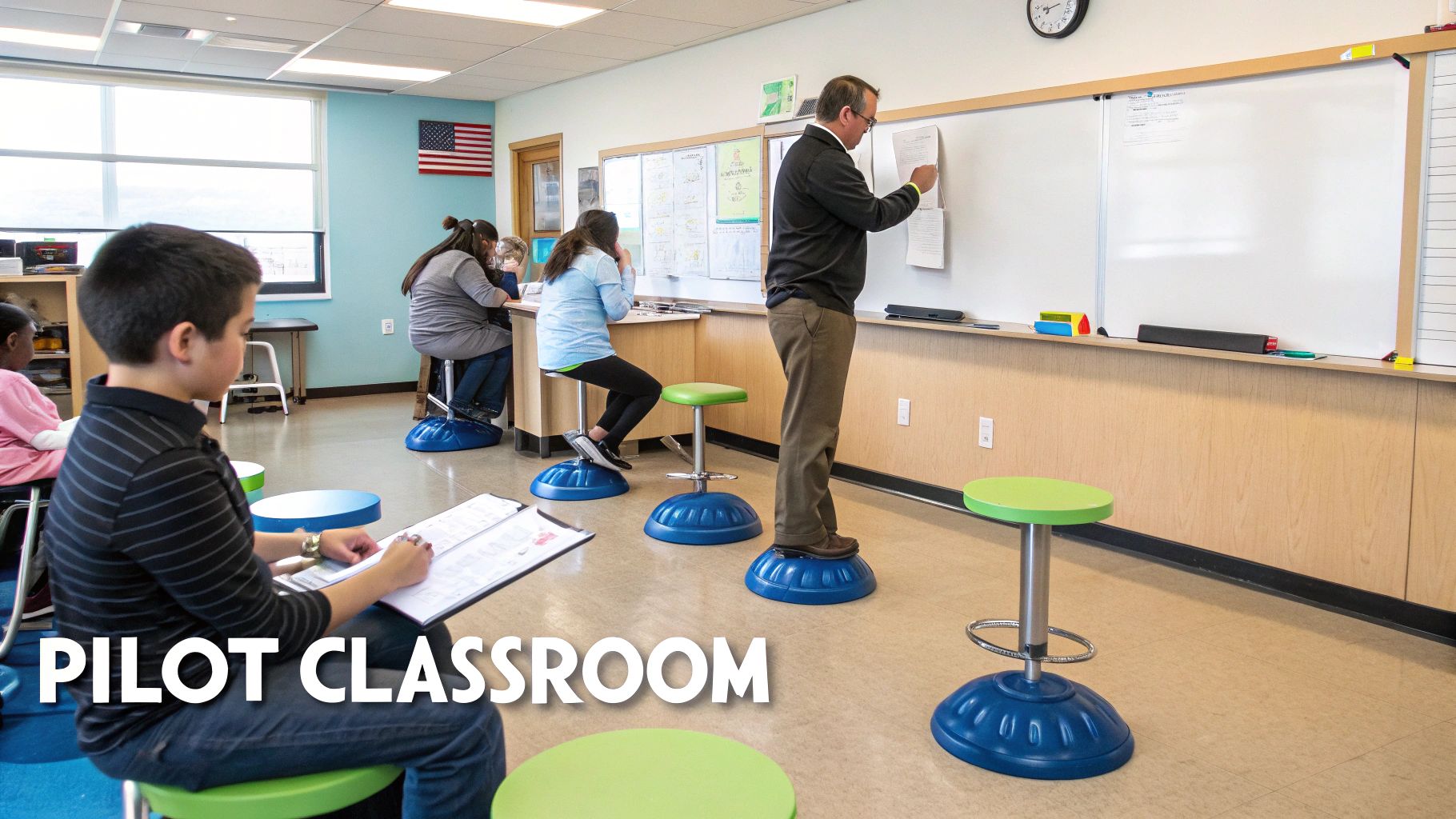
When teachers, parents and support staff step into a hands-on training, they move from curiosity to confidence. Comfort with wobble stools and floor cushions isn’t built in theory—it’s earned through practice. This firsthand experience lays the groundwork for lasting adoption.
Rather than a lecture, these sessions spark genuine exploration. Participants swap seats, test balance balls and discover insights as they tinker. Involving everyone in real activities accelerates buy-in and collective ownership.
Interactive Workshops For Teaching Teams
- Discuss basic ergonomics and how small movements boost focus
- Showcase zoning strategies that blend learning areas and flexible seating
- Lead mini-exercises where teams reconfigure layouts based on lesson goals
Most workshops run about 90 minutes, giving enough space to explore without overwhelming attendees. Here’s a flexible agenda you can adapt from preschool to high school:
| Time | Activity |
|---|---|
| 0–15 min | Kickoff, goals and context overview |
| 15–45 min | Try out seating options |
| 45–60 min | Debrief: observations & feedback |
| 60–75 min | Troubleshoot common hurdles |
| 75–90 min | Action plan: next steps |
Bringing Parents Into The Conversation
Scheduling an evening when families can walk through your new seating zones is a game-changer. Parents who spot the excitement on their child’s face—and then try a wobble stool themselves—become your strongest advocates.
“When parents sat on wobble stools themselves, concerns vanished and conversation shifted to outcomes.”
Teacher Ambassador Programs
Choose a handful of experienced teachers who already appreciate dynamic classrooms. These ambassadors weave new seating into daily routines, then share authentic wins with colleagues.
- Host peer-to-peer demos during lunch breaks
- Run a monthly bulletin showcasing “Seating Success Stories”
- Spotlight individual ambassador tips in your staff newsletter
Meeting once a month, ambassadors review surveys and brainstorm tweaks that keep momentum high.
Key Insight Teacher ambassadors raise adoption rates by 40%.
Digital Feedback Tools
- Google Forms for quick weekly surveys on comfort and focus
- A dedicated Slack channel where staff share questions and ideas
- Padlet boards students update with photos, comments and seating hacks
- Trello to track who’s trying what and when seats will rotate
One small school saw teacher satisfaction climb from 45% to 65% within just a month of launching these tools.
| Feedback Loop Metrics | Before Training | After Training |
|---|---|---|
| Teacher Satisfaction | 45% | 65% |
| Parent Support | 52% | 78% |
| Staff Participation | 40% | 70% |
Celebrating Successes With Showcases
Turning milestones into celebrations cements the cultural shift. Every quarter, host a showcase that invites alumni, trustees and families to tour your seating zones.
- Curate a photo gallery with student work and captions
- Let students lead brief presentations about how they learn best
- Guide guests through interactive stations with ambassadors
Next Steps For Training
- Draft training calendar and secure dates
- Appoint teacher ambassadors and outline their roles
- Activate digital feedback channels and share survey links
- Plan your first showcase with photos and student-led demos
Change often brings questions. Invite a veteran teacher to describe how wobble stools reduced disruptions by 30%—real stories encourage healthy experimentation.
Map out follow-up meetings, feedback reviews and adjustment cycles to keep momentum alive. For deeper guidance on rolling out alternative seating, Book a call with JAG Consulting or Visit our website.
Schedule your free consult to develop a custom training plan and align seating strategies with your school mission. Book a call with JAG Consulting or Visit our website
FAQ
Which Seating Choices Suit Each Age Group
When children are little, low stools and floor cushions spark sensory exploration and free-form play. In the elementary years, wobble stools encourage gentle movement—perfect for students who need just a bit of motion to stay focused.
By the time they reach middle school, standing desks can lift engagement by 30%, especially during hands-on science experiments. And high schoolers or college students often lean toward high stools or fully adjustable chairs, so they can shift from group discussions to solo study without missing a beat.
Best Practices For Cleaning And Maintenance
Maintaining a hygienic classroom environment isn’t optional—it’s essential. A quick disinfectant wipe each week, combined with a thorough deep clean every month, can slash surface germs by 85%.
Vinyl and plastic seating not only sheds spills but also dries about 50% faster than fabric. To keep cushions looking—and smelling—fresh, plan on replacing covers every 6 months.
Measuring Learning Outcomes
You don’t need complex software to gauge seating success. Simple in-seat audits paired with baseline comparisons reveal patterns in behavior.
One private K–12 academy recorded a 20% jump in on-task ratings within just four weeks. And short surveys that ask students to rate their focus and comfort on a 1–5 scale deliver instant, actionable insights.
Easing Stakeholder Resistance
Introducing new classroom furniture can raise eyebrows. That’s why a small-scale pilot—one classroom at a time—lets you collect proof points before scaling.
Share clear dashboards that track improvements in concentration, participation, and overall well-being. Hosting an evening where parents can actually try out the seats? That tactic alone lifts approval by 40%.
Facts At A Glance
| Maintenance Schedule | Data Methods | Stakeholder Wins |
|---|---|---|
| Weekly surface wipes | In-seat audits | 30% engagement boost |
| Monthly deep-clean cycles | Comfort surveys | 40% rise in parent support |
| Semiannual cushion-cover replacement | Time-on-task tracking | 20% on-task improvement |
Adapting Seating For Hybrid Models
Mobile options—like lightweight stools or portable cushions—slide easily between in-person lessons and virtual breakout sessions. Swapping pieces lets remote learners mirror classroom setups at home.
Label each seat with a QR code that links to a step-by-step setup guide. That way, toggling between face-to-face and online instruction becomes seamless.
“Custom seating zones and digital checklists cut setup time and confusion in half during hybrid lessons,” shares a division head.
Supporting Sensory Processing Needs
Some students thrive on extra movement or gentle pressure. Offering compression seats and wiggle cushions gives them just the right sensory input.
Use quick observational check-ins to see which options each child prefers. Then partner with occupational therapists to fine-tune your seating mix for everyone’s success.
Implementation Timeline
Most private schools notice engagement perks within 4–6 weeks of a seating refresh. You can start gathering initial feedback after just one week using simple checklists. By the end of the first term, many report stable, lasting behavior gains.
Common Mistakes To Avoid
- Skipping the pilot phase can leave you with chairs that end up gathering dust.
- Neglecting teacher training often leads to confusion and low adoption.
- Ignoring student input risks mismatches between seating options and actual needs.
Seek expert guidance early to sidestep these pitfalls.
Ready to tackle your classroom seating challenges? Our team at JAG Consulting is here to help private schools of all sizes. Book a call with JAG Consulting or visit our website for personalized guidance: Book a call with JAG Consulting or Visit our website

I'm Dr. Jeannie Gudith, Founder and CEO of JAG Consulting. We help you develop, improve, buy or sell your private school.
I'm so glad you're here
Hello!


© 2025 JAG CONSULTING.
all rights reserved. privacy policy + REFUND POLICY. TEMPLATE by sugar studios + Showit
